[Editor’s note]Zhang Yushu, a famous translator and professor of Peking University, died in Beijing on January 5th at the age of 85. Zhang Yushu, born in Shanghai in 1934, translated Zweig’s novels "Anxiety of the Mind" and "Letter from an Unknown Woman". Authorized by People’s Literature Publishing House, The Paper, the following is the full text of A Letter from an Unknown Woman translated by Zhang Yushu in memory of Mr. Zhang Yushu.
A Letter from an Unknown Woman
R, a famous novelist, returned to Vienna early this morning after a three-day outing in the mountains and bought a newspaper at the railway station. He glanced at the date and suddenly remembered that today is his birthday. "Forty-one years old," the idea flashed in his mind quickly, and he was neither happy nor sad. He casually leafed through the rustling pages of the newspaper and took a car back to his apartment. The servant told him that two guests came to visit him while he was away from home, and several people called, and then gave him the collected mail with a tray. He glanced at it lazily, and when the senders of some letters aroused his interest, he opened the envelope and looked at it. There was a letter with strange handwriting and thick touch, so he put it aside first. At this time, the servant brought tea, so he leaned back in the armchair comfortably and leafed through the newspaper and some printed materials again. Then I lit a cigar, and then I reached out to get the letter that was put aside.
This letter is about twenty or thirty pages, and it is written in the handwriting of a strange woman. It is not so much a letter as a manuscript. He can’t help but touch the envelope again to see if there are any attachments in it, but the envelope is empty. Neither the envelope nor the writing paper has written the sender’s address, or even a signature. He thought to himself, "That’s strange," and took the letter to read. "You, you have never known me!" This sentence is written at the head, which is a title and a title. He stopped in surprise; Does this refer to him or an imaginary person? His curiosity was suddenly aroused. He began to read on:
My son died yesterday-I struggled with death for three days and nights for this young and delicate life. I sat by his bed for forty hours. At that time, the flu hit him. He had a high fever and his poor body was burning hot. I put a cold towel on his hot forehead and held his little twitching hands in mine all day long. On the third night, I collapsed by myself. My eyes couldn’t hold on any longer, and I didn’t know it myself, so my eyelids closed. I sat in a hard chair and slept for three or four hours. Just then, death took him away. The gentle poor child is lying there at the moment, in his narrow children’s bed, just like when he died; His eyes, his clever black eyes, have just been closed, and his hands have also been closed, resting on his white shirt, and four candles are burning high in the four corners of the bed. I dare not look at the bed, and I dare not move, because when the candlelight flashes, the shadow will pass over his face and his closed mouth, so it looks as if the muscles on his face are moving, and I will think that he is not dead, he will wake up, and he will tell me some childish and gentle words with his crisp voice. But I know that he is dead, and I don’t want to look into bed, so as not to have hope again, so as not to be disappointed again. I know, I know, my son died yesterday-now I have only you in this world, and you know nothing about me. You are having fun, knowing nothing, or flirting with others.I only have you, you have never known me, but I always love you.
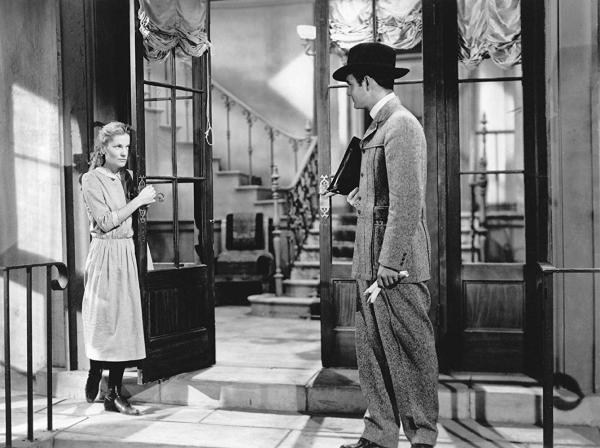
In 1948, A Letter from an Unknown Woman was first put on the big screen. This American version is directed by Howard Koch and starring Joan Fontaine and louis jourdan.
I’ll take the fifth candle and put it on this table. I’ll write to you on this table. How can I stand alone with my dead child and not pour out my heart to others? And at this terrible moment, who am I supposed to tell if I don’t tell you? You were everything to me, and now you are everything to me! Maybe I can’t tell you clearly, and maybe you don’t understand what I mean-my head is completely numb now, my temples are twitching, like someone knocking with a mallet, and my limbs are aching. I think I have a fever, and maybe I have the flu. At the moment, the flu is spreading from house to house. If I had the flu, I could go with my children, so that I wouldn’t have to end my life myself. Sometimes my eyes are dark, maybe I can’t finish writing this letter-but I must try my best to cheer up and talk to you once, just this once. You, my dear, have never known me!
I want to talk to you alone and tell you everything for the first time; I want you to know my whole life. My life has always belonged to you, but you know nothing about my life. But only when I die, you don’t have to answer me anymore. The illness that makes my limbs hot and cold at the moment really means that my life is coming to an end, so I will let you know my secret. If I have to live any longer, I will tear up this letter, and I will remain silent, just as I have been silent in the past. But if you hold this letter in your hand, you will know that a dead woman is here to tell you her life story and her life. From the moment she is conscious to the last moment of her life, her life always belongs to you. Don’t be afraid to see my words; A dead person wants nothing more than love, sympathy and comfort. I only ask you one thing, that is, please believe everything that my painful heart tells you. Please believe everything I say, this is my only request to you: a person will not lie when his only son dies.
I want to tell you my whole life. My whole life really started from the day I met you. Before that, my life was just a miserable and messy mess, and I will never think of it again. It is like a cellar full of dusty people and things with cobwebs on it, and my heart has long been very indifferent to these. When you appeared in my life, I was thirteen years old and lived in the house where you live now. Now you are in this house, holding this letter in your hand, the last breath of my life. I live on the same floor as you, just opposite the door. You must never remember us again, the widow of the shabby accountant (who always wears mourning clothes) and her thin daughter who has not yet grown up-we live in seclusion and quietly, as if immersed in the poor atmosphere of our petty bourgeoisie-and you may never have heard our names, because there is no sign on our door, no one comes to visit us and no one asks about us. Besides, it’s been a long time, fifteen or sixteen years. You must know nothing, my dear. But me, ah, I recall every detail warmly. I clearly remember the first time I heard about you, the first day I saw you, no, that hour, like it happened today. How can I not remember it? Because that’s when the world started for me. Be patient, dear, when I start from the beginning, I beg you, listen to me for a quarter of an hour, and don’t get tired of it.I have loved you all my life and I am not tired of it!
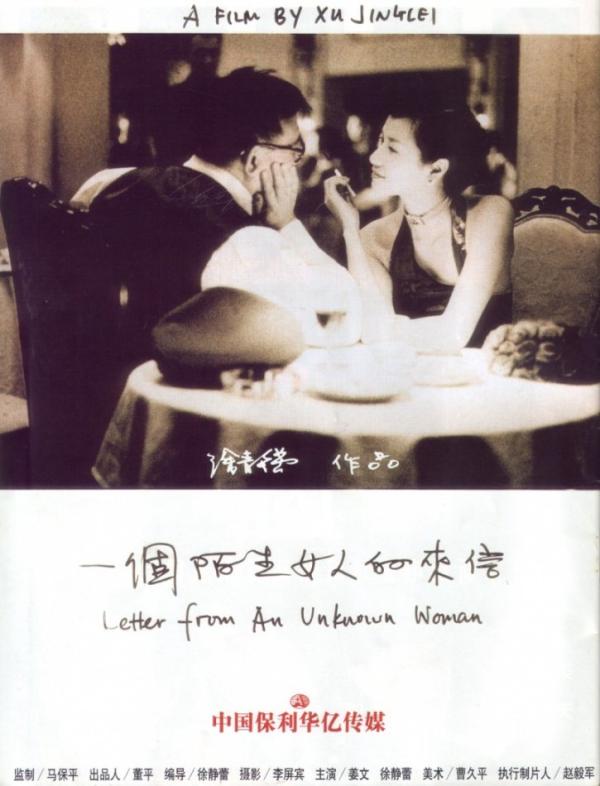
In 2004, Xu Jinglei directed and acted in the China version of the film Letter from an Unknown Woman.
Before you moved in, the people living in your house were ugly and quarrelsome. They are desperately poor themselves, but they especially hate the poverty of their neighbors. They hate us because we don’t want to be infected with the rudeness of their broken proletarians. The husband of this family is an alcoholic and always beats his wife; We often sleep until midnight and are awakened by the sound of chairs falling to the ground and plates breaking. Once, the wife was beaten to death and fled to the top of the stairs in a disheveled way. The drunkard shouted loudly behind her. Finally, everyone opened the door and threatened him to call the police, and the storm was settled. My mother avoided any contact with this family from the beginning and forbade me to play with the children of this family, so they took it out on me every chance they got. If they meet me in the street, they shout some dirty words behind me. Once they threw a hard snowball at me, which made my forehead bleed. People in the whole building hated this family with a common instinct. Suddenly, something happened one day. I remember that the man was arrested for stealing, and the wife had to move out with her little possessions. We all breathed a sigh of relief. The note for rent was posted on the gate for a few days, and then it was removed. It was quickly spread from the concierge that a writer and a single quiet gentleman rented this house. I first heard your name at that time.
A few days later, painters, painters, cleaners and paperhangers came to clean up the house and live in it for the original family. The house was extremely dirty. So there was only a tinkling knock, mopping the floor and scraping the wall in the building, but my mother was very satisfied. She said that the annoying family across the street would never be our neighbors again. As for yourself, I haven’t seen your face even when I moved; All the work of relocation is taken care of by your servant. This little footman, with a serious expression and gray hair, always directs all the work quietly and calmly with a condescending air. He left a deep impression on all of us, because first of all, in our house located in the suburbs, the first-class footman is a very novel thing, and secondly, because he is extremely polite to all people, but he does not degrade himself because of this, confusing himself with ordinary servants and chatting with them intimately. He greeted my mother respectfully from the first day, treating her as a respectable wife. Even for a little girl like me, he is always kind and serious. When he mentions your name, he always has an air of respect and a special respect-others will immediately see that his relationship with you is far beyond the relationship between the general master and servant. How much I like him for this! This kind old John, although I secretly envy him, can always stay by your side and always wait on you.
I’ll tell you all this, my dear. I’ll tell you all these trivial and ridiculous things endlessly. In order to make you understand, you have such great power over me, a shy and timid girl, from the beginning. Before you come into my life, there is an aperture around you, a rich, strange and mysterious atmosphere-people who live in this suburban house have been very curious and anxious to wait for you to move in (people living in a small world are always very curious about all the new things happening at the door). One afternoon, when I came home from school and saw the van parked in front of the building, my curiosity about you greatly increased. Most of the furniture, heavy and bulky, has already been carried upstairs by the porter; There are still some odds and ends that are being taken up. I stood at the door and looked at everything in surprise, because all your things were so strange and unique that I had never seen them before. There are Indian Buddha statues, Italian sculptures, huge oil paintings with bright colors and harsh eyes. Finally, many books have been moved, which are very beautiful. I never thought that books would be so beautiful. These books are stacked at the door. Your servant picks them up and carefully dusts off each book with a ladder. Curious, I walked around the pile of books that grew taller and taller. Your servant neither drove me away nor encouraged me to come near. So I dare not touch any books, although I really want to touch the soft cover of some books.I just timidly read the title of the book from the side: there are French documents, English books, and some books are written in what language, and I don’t know. I thought, I would really watch it for hours on end, but my mother called me back.
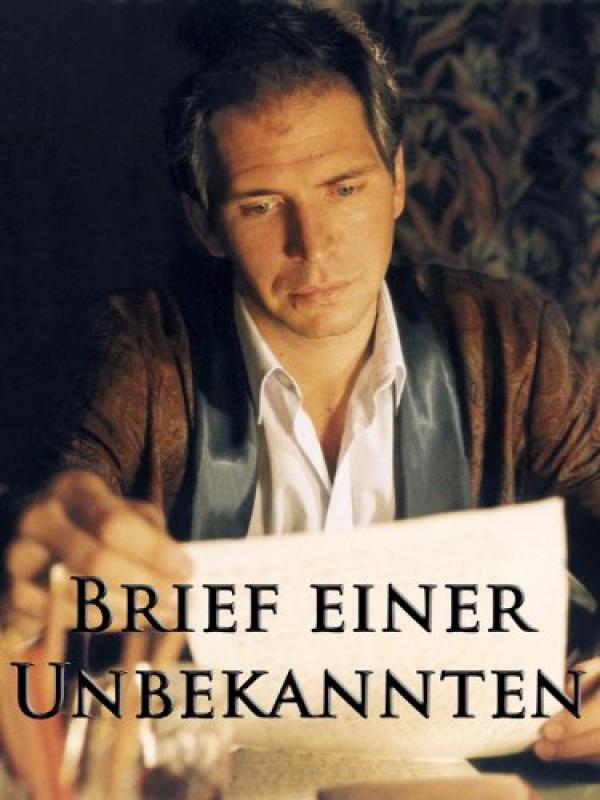
Stills of the 2001 French TV film A Letter from an Unknown Woman. In addition, movies of the same name adapted from Zweig’s novels include the 1957 Mexican version and the 2011 Mongolian version.
I couldn’t help thinking about you all night, but I didn’t know you then. I only have a dozen books myself, and the prices are very cheap. They are all covered with tattered hard paper. I love these books so much that I have read and reread them. At this moment, I thought, this man has so many beautiful books, he has read all these books, he also knows so many words, he is so rich, and he is so learned. What should this man look like? When I think of so many books, I can’t help but feel an extraordinary awe. I tried to imagine you: you are an old gentleman with glasses and a long white beard, just like our geography teacher. The only difference is that you are kinder, more beautiful and more Wen Ya-I don’t know why I thought you must be beautiful at that time, because I imagined you were still an old man. That night, before I knew you, I dreamed of you for the first time.
You moved in the next day, but I couldn’t meet you despite my hard reconnaissance-this only made me more curious. Finally, I didn’t see you until the third day.
Your appearance is completely different from my imagination, and it has nothing to do with the image of my childish imaginary grandfather. I am very surprised and deeply shocked. I dreamed of an amiable old man with glasses, but when you appeared, you looked exactly like you today, and you never changed, even though the years passed slowly on you! You are wearing a charming light brown sportswear. When you go upstairs, you are always two steps at a time. Your steps are light, lively and sensitive, and you look very chic. You held your hat in your hand, so I saw your radiant, expressive face and shiny young hair at a glance. My surprise is beyond description: indeed, you are so young, beautiful, tall, agile and handsome, and I was really shocked. Isn’t it strange that you said this? At this first moment, I clearly felt the uniqueness of you. Not only me, but everyone you know has repeatedly felt in you with an unexpected mood: you are a person with dual personality, not only a frivolous, playful and adventurous enthusiastic teenager, but also an extremely serious, serious and responsible, extremely knowledgeable and learned elder in the art you are engaged in. I unconsciously felt the impression that everyone got from you later: you live a double life, with a bright side open to the outside world and a very dark side, which only you know-this deepest two sides is the secret of your life.I, a 13-year-old girl, felt this duality in you at first sight, and I was fascinated by you like a demon.
You see now, dear, what an incredible miracle and an attractive mystery you were to me as a child! This is a respected figure, because he has written many books, because he is famous in another big world, but now he suddenly finds that this person is young and handsome, and he is a cheerful 25-year-old! Do I have to tell you that from this day on, in our house, in my whole poor children’s world, nothing interests me except you; I am only interested in your life and your existence, based on all the stupidity of a 13-year-old girl and all the stubbornness to get to the bottom of it! I carefully observe you, observe your daily life, and observe those who come to see you. All these things, instead of weakening, have enhanced my curiosity about you, because the people who come to see you are all kinds and different, which shows the duality of your character. Sometimes, a group of young people, your classmates and a group of untidy college students, come along with them, laughing loudly and fooling around wildly. Sometimes, some ladies come in cars. Once the manager of the opera house came, the great conductor, I only saw him standing in front of the music stand from a distance with great respect, and then some girls who were still in business school. They sneaked in with embarrassment, and there were many women coming. I don’t think it’s strange. One morning when I went to school, I saw a lady coming out of your room with a thick veil on her face.I don’t think it’s anything special-I was only thirteen years old at that time, and I was spying on your whereabouts and peeking at your actions with a warm curiosity. I was still a child, and I didn’t know this curiosity was already love. But I still remember clearly, dear, the day and moment when I fell in love with you completely and fell in love with you forever. That day, I went for a walk with a female classmate, and we stood at the gate chatting. At this moment, a car came, and as soon as it stopped, you jumped off the car in your impatient, agile way, which still appeals to me. When you got off the bus and wanted to walk in, I couldn’t help opening the door for you, so I stood in your way. We almost bumped into each other. You gave me a look, which was warm, soft and affectionate, like caressing me. You smiled at me, which I can’t describe, so I had to say: Smile at me affectionately and say to me in a very soft, almost intimate voice:
That’s the whole story, dear, but from the moment I touched your tender eyes, I belonged to you completely. I learned later, not long after, that your eyes seemed to hug each other and attract you, which was both affectionate and fascinating. This is a natural seductive eye. You cast such eyes on every woman who passed by you, on every salesgirl who sold things to you, and on every maid who opened the door for you. This kind of eyes doesn’t consciously show affection and admiration for you, but the tenderness you have for women makes your eyes become tender unconsciously when you see them. But I, a thirteen-year-old child, knew nothing about it: my heart was on fire. I thought your tenderness was only for me, but for me alone. At this moment, I, an underage girl, suddenly grew into a woman, and this woman will always belong to you.
"Who is this man?" My female classmate asked. I can’t answer it at once. I can’t say your name: in this second, in this only second, your name has become extremely sacred in my mind and a secret in my heart. "Oh, a gentleman who lives in our building!" I stammered clumsily. "Then he looks at you, why are you blushing!" My female classmate said sarcastically with the sinister air of a nosy girl. But just because I felt that her sarcasm had just poked the secret in my heart, blood poured on my cheeks. I get angry when I’m embarrassed. I gave her a bad name: "stupid girl!" " I really wanted to strangle her alive. However, she smiled even more joyfully, and her sarcasm was even more severe. At last, I found that I was so angry that my eyes were full of tears. I ignored her and ran upstairs in one breath.
From this second, I fell in love with you. I know, women often say this to a spoiled person like you. But please believe me, no woman has loved you so dead-set, so selflessly, and I have never changed my mind about you. It was like this in the past, and it has always been like this, because there is nothing in the world that can compare with a child’s hidden love, because this kind of love is hopeless, humble, ingratiating, committed, and passionate, which is as intense as an adult woman’s desire. Only lonely children can gather all their enthusiasm. Other people have already abused their feelings in social activities and exhausted their feelings in friendly exchanges with people. They often listen to people talking about love and often read about love in novels. They know that love is people’s common destiny. They play with love, just like playing with a toy. They boast about their love experiences, just like a boy who smokes his first cigarette and is elated. But there is no one else around me, so I can’t tell others what’s on my mind. No one points me out and reminds me that I have no experience and no mental preparation: I plunged into my destiny as if I had fallen into an abyss. There is only one person in my heart, that is, you, and I only see you in my sleep. I regard you as a bosom friend: my father has long since passed away, and my mother is depressed and unhappy all day, living on a pension, and always timid, so she is not intimate with me; Those female classmates who are somewhat bad disgust me.They regard love as a trifle, but in my mind, love is my supreme passion-so I dedicate all my scattered feelings to you, and my whole heart, which is tightened and eager to pour out again and again. What can I tell you? No metaphor is enough. You are everything to me and my whole life. Everything in the world exists because it is related to you, and everything in my life only makes sense if I am connected with you. You have changed my whole life. I used to study in school all the time, neither good nor bad, but now I suddenly jumped to the top of my class. I eagerly read many books and often stayed up late at night, because I know that you like books; I suddenly started practicing the piano with an almost stubborn perseverance, which surprised my mother, because I think you love music. I brushed and brushed my clothes, sewed and sewed them just to look clean and pleasing in front of you. I have a square patch on the left side of my old school uniform skirt (which was changed from a casual dress worn by my mother), and I find it extremely annoying. I’m afraid you will see this patch, so you look down on me. So when I run up the stairs, I always cover that place with my schoolbag. I’m so scared that I’m afraid you will see the patch. But how silly it is! You never, almost never looked at me after that.
As for me, I can say that I have been doing nothing all day, just waiting for you and spying on your every move. There is a small brass peephole above the door of our house, through which you can always see your door. This peephole is my eyes that reach out to the world-oh, dear, don’t laugh. In those months and years, I sat in front of the small window hole all afternoon, waiting for you in the cold doorway, afraid of my mother’s suspicion. My heart was as nervous as a string. When you appeared, it kept trembling. Until today, I am not ashamed to think about these times. My heart is always nervous and trembling for you; But you don’t feel anything about it, just like you have a pocket watch in your pocket and you don’t feel anything about its tight clockwork. This clockwork patiently counts your hours in the dark, calculates your time, accompanies you everywhere with its inaudible heartbeat, and you only glanced at it once during its millions of seconds of non-stop ticking. I know everything about you, I know every living habit, I know every tie and suit, I know every friend of yours, and I will soon be able to distinguish them into two categories: I like them and I hate them: I spent every hour on you from thirteen to sixteen. Ah, how many stupid things I have done! I kissed the doorknob that your hand touched, and I stole a cigar end that you threw away before you came in. This cigarette end is sacred to me because your lips touched it.At night, I used an excuse to run downstairs hundreds of times and went to the alley to see which room of yours was still lit. In this way, I felt your invisible existence and got close to you in my imagination. During the weeks when you were traveling-my heart stopped beating when I saw the kind John carrying your yellow travel bag downstairs-I was still alive during those weeks, and it was meaningless to live. I am in a bad mood, bored and at a loss. I have to be very careful not to let my mother see my desperate mood from my swollen eyes.
I know that what I’m telling you now is ridiculous and childish. I should be ashamed of these things, but I’m not, because my love for you has never been more pure and warm than in this innocent outpouring of feelings. If you ask me, I can tell you for hours, days and nights, how I lived with you at that time, and you almost never met me, because every time I met you on the stairs, I couldn’t escape, so I bowed my head and ran upstairs from you, just like a person who was afraid of burning and jumped into the river for fear of seeing your burning eyes. If you ask me, I can talk to you for hours, days and nights, and I can spread out a calendar of your whole life for you. But I don’t want to bore you or make you uncomfortable. I just want to tell you the best experience of my childhood. I beg you not to laugh at me, because it is just a trivial matter, but it is a great event for me as a child. About last Sunday, you went on a trip, and your servant dragged his heavy carpet from the open door into the house. This kind-hearted man had a hard time doing this job. I didn’t know where I got the courage, so I went over and asked him if he wanted me to help him. He was surprised, but he still let me give him a hand, so I saw the inside of your apartment-I really can’t tell you how awed and even pious I was!I saw your world, your desk, where you often sit. There was a blue crystal vase with some flowers in it. I saw your cupboard, your paintings and your books. I just sneaked a quick look at your life, because your loyal servant John would never let me watch it carefully, but at this glance, I absorbed the whole atmosphere in your room, so that I could have enough nutrition for me to think about my dreams whether I was awake or asleep.
This fleeting minute is the happiest moment of my childhood. I want to tell you this moment, so that you, who have never known me before, finally begin to feel that there is a life attached to you and haggard for you. I want to tell you the happiest moment and the most terrible moment, but it’s a pity that the two are so close! I have just told you that I forgot everything for your sake. I didn’t pay attention to my mother and I didn’t care about anyone. I didn’t find that an elderly man, a businessman from Innsbruck, was a distant relative of my mother. At this time, he often came to visit and stayed for a long time. Yes, it only makes me happy, because he sometimes takes my mother to the theatre, so that I can stay at home alone, miss you and watch you come back. This is my only supreme happiness! As a result, one day my mother called me to her room and talked a lot about it, saying that she wanted to talk to me seriously. My face turned white when I brushed it, and my heart suddenly pounded: Did she anticipate something and guess something? My first thought is about you and my secret, which is the link between me and the outside world. But my mother looked very coy herself. She kissed me gently once or twice (she never kisses me at ordinary times), pulled me to the sofa and sat beside her, and then began to say coyly that her relative was a bachelor with a dead wife and now proposed to her.And she decided to accept his request mainly for my sake. A stream of blood rushed into my heart, and there was only one thought in my heart, I thought of you. "So we still live here?" I can only stammer out such a sentence. "No, we moved to Innsbruck, where Ferdinand has a beautiful villa." I didn’t hear anything else she said. I suddenly went black at the moment, and then I heard that I passed out. I heard my mother whisper to my stepfather who was waiting behind the door. I suddenly stretched out my hands and leaned back, falling to the ground like lead. I can’t describe to you what happened in the next few days, and how I, a child who has no right to be independent, resisted their overwhelming will: until now, my hand holding the pen shook when I thought about it. I can’t reveal my real secret, and as a result, my opposition is purely a manifestation of stubbornness, stubbornness and cruelty in their eyes. No one answers me anymore, and everything goes behind my back. They used my school time to carry things: when I got home from school, there was always a piece of furniture moved or sold. I watched my home empty, and my life was ruined. Once I went home for lunch, the porter was packing the furniture and moving everything away. There are packed boxes and two camp beds for my mother and me in the empty room: we have to stay here for one night, and the last night, we will take a bus to Innsbruck tomorrow.
On this last day, I suddenly and decisively felt that I couldn’t live without you. I don’t know any other savior except you. I can’t tell you clearly all my life, what I was thinking at that time, and whether I could really think clearly in this desperate moment, but suddenly-my mother was not at home-I stood up, dressed in school uniform, and went to the opposite side to find you. No, I didn’t walk there: an inner force, like a magnet, attracted me to your door with stiff hands and trembling limbs. I have already told you, and I don’t understand myself. What am I going to do? I want to kneel at your feet. Please take me in as your girl and be your slave. I’m afraid you’ll make fun of a 15-year-old girl’s pure and innocent enthusiasm, but if you know, my dear, how I stood in the cold corridor outside the door, scared and stiff, but driven by an elusive force, I moved forward, how I made great efforts, moved my shaking arm and reached out-this struggle took a terrible few seconds, and it really seemed like eternity. The harsh bell is still ringing in my ears, and then there is silence. My heart stops beating and my blood is frozen. I listen attentively to see if you come to open the door. But you didn’t come. No one came. You were obviously not at home that afternoon. John probably went out on business.So I had to stagger back to our dilapidated apartment, which was empty of furniture. The sound of the doorbell still lingered in my ears. I was exhausted and fell on a travel blanket. I walked four steps from your door to my house, and I was exhausted, as if I had trudged in the deep snow for several hours. But despite my exhaustion, I want to take a look at you before they drag me away, and my determination to talk to you is still there. I swear to you, there is no lust in it. I was an innocent girl at that time, and I really didn’t want anything but you: I just wanted to see you, see you again and snuggle up to you. So the whole night, this terrible long night, my dear, I have been waiting for you. As soon as my mother lay down and fell asleep, I sneaked into the doorway and listened carefully. When will you go home? I’ve been waiting for you all night. It’s a freezing January night. I was tired and sleepy, my limbs ached, and there was no chair to sit in the doorway, so I lay on the ground and there was a gust of cold wind from under the door. I was lying on the cold and painful hard floor in my thin clothes. I didn’t take a blanket. I didn’t want to keep myself warm, for fear that I would fall asleep and couldn’t hear your footsteps when I was warm. Lying there hurt all over, my feet cramped and curled up, and my arms were shaking: I had to stand up again and again, and it was really cold in this terrible dark winter doorway. But I’m waiting, waiting, waiting for you, just like waiting for my fate.
Finally-about two or three o’clock in the morning-I heard someone downstairs open the door with a key, and then footsteps came up the stairs. Peeling that room made me feel chilly and warm. I gently opened the door and wanted to rush to your front and jump at your feet. ….. Oh, I really don’t know, I this silly girl will do anything at that time. Footsteps are getting closer and closer, and the candle light is swaying from the stairs. I hold the doorknob, shaking all over. Is it really you who came upstairs?
Yes, it was you, dear-but you didn’t come back alone. I heard a charming chuckle, the rustling of silk clothes and your low voice-you came back with a woman.
I don’t know how I got through the night. They dragged me to Innsbruck at eight o’clock the next morning; I have no strength to resist.
My son died last night-if I really have to go on living now, I will live alone again. Tomorrow they will come. Those dark and clumsy strange men will bring a coffin. I will put my poor only child in the coffin. Maybe friends will come and bring some wreaths, but what’s the use of putting flowers on the coffin? They will come to comfort me and say something to me; But what can they do for me? I know, and then I have to live alone. Nothing in the world is more terrible than being in a crowd and living alone. I realized this at that time during the endless two years I spent in Innsbruck. During the two years from the age of 16 to the age of 18, I lived among my family like a prisoner and an abandoned person. My stepfather is a quiet and taciturn man. He is very kind to me. My mother seems to be obedient to me in order to atone for an unintentional mistake. Young people surround me and please me; But I stubbornly refused them away. Without you, I don’t want to live happily and contentedly. I indulge in my gloomy Xiaotian land, torture myself and live lonely. I don’t wear the colorful new clothes they bought me; I refused to go to the concert, to the theatre, and to go hiking with others. I hardly stay indoors and seldom go out on the street: Dear, can you believe that I have lived in this small city for two years and know less than ten streets?I am sad all day, and I just want to be sad; I can’t see you, so I don’t want anything, just want to get some intoxication from it. Besides, I just want to be alone with you in my heart, and I don’t want to distract me. I sat alone at home for hours and all day, doing nothing but thinking about you, turning over hundreds of small past events, recalling every time I met you and waited for you. I thought and thought about these small episodes, just like watching a movie. Because I have repeated every second of the past countless times, I remember it clearly throughout my childhood. Every minute of the past years has been so vivid and concrete to me, as if it happened yesterday.
I was totally focused on you. I bought all the books you wrote; As soon as your name is published in the newspaper, this day will become my holiday. Can you believe that I have read your book again and again, and I don’t know how many times I have read it, and I can recite every line in your book? If someone wakes me up in the middle of the night and reads me a line from your book alone, I can recite it today, after thirteen years, just like dreaming: everything you write is a gospel and a prayer to me. The whole world exists only because it is related to you: when I look up the advertisements for concerts and the premiere of plays in Vienna newspapers, I have only one thought in my mind, that is, what performances will interest you. At night, I will accompany you from afar: now he has entered the theater hall, and now he has sat down. I have dreamed of such a thing more than a thousand times, because I once saw you at a concert with my own eyes.
But why do you say these things? Why do you tell a lonely child’s crazy, tortured, miserable and desperate enthusiasm to a person who has no feeling or knowledge about it? But was I still a child? I’m seventeen, and soon I’ll be eighteen-young people are turning around to see me in the street, but they just make me angry. Because I have to think about falling in love with others instead of loving you in my mind, even if it is just for fun, I find this idea difficult to understand and unimaginable strange. It seems to me that it is a crime to be tempted a little. My passion for you is still the same as before, but it is different from the past with the development of my body and the awakening of my lust. It has become more intense, more physical and more feminine. The vague desire that lurked in that unconscious girl’s subconscious and drove her to ring your doorbell has now become my only thought: dedicate me to you and commit myself to you completely. People around me think I’m iodine-shy, saying I’m shy and tender-faced. I grit my teeth and don’t tell anyone my secret. But in my heart, I have an iron will. I have only one thing on my mind: to return to Vienna and to your side. Through hard work, my will got what I wanted, no matter how absurd and incomprehensible it was to others. My stepfather is very rich. He regards me as his own daughter. But I kept insisting,To earn money to support myself, I finally achieved my goal. I went to Vienna to go to a relative and worked as a clerk in a large clothing store. Do I have to tell you that on a foggy autumn evening, I finally! Finally! When I arrived in Vienna, where did I go first? I put my box in the railway station, jumped on a tram, and-I think how slow the tram is, and I get angry at every stop-ran to the house. Your window is still lit, and my whole heart is pounding. At this time, this city, which is so strange to me and so noisy and noisy around me for no reason, came to life. At this time, I was revived, because I felt your existence, you, my eternal dream. I didn’t think that I was as far away from your mind as the countless mountains and valleys, or the glass only separated from your window between you and my eyes looking up. I looked up and looked: there was a light, there was a house, there was you, and there was my world. I have been thinking about this moment for two years, and now I finally look forward to it. This long night, the weather is mild and the night fog is pervasive. I have been standing under your window until the lights go out. Then I went to find my place.
I will stand in front of your house like this every night from now on. I worked in the shop until six o’clock. It was very heavy and tiring, but I liked it very much, because when I was busy with my work, I wouldn’t feel so painful about my inner turmoil. When the iron rolling shutters fell behind me, I went straight to my beloved destination. The only wish in my heart is that I just want to look at you, meet you once, and hug your face with my eyes from a distance! About a week later, I finally met you, and it happened at the moment I didn’t expect: I was looking up at your window and you suddenly came across the road. I suddenly became that thirteen-year-old girl again, and I felt blood rushing to my face value; I violated my strong desire to see your eyes. I bowed my head involuntarily and ran past you as if there was a pursuer behind me. Afterwards, I was ashamed of this shy and timid escape behavior like a schoolgirl, because now I have made up my mind: I just want to meet you, and I am looking for you. After these hard years, I hope you can recognize who I am, pay attention to me and be loved by you.
But you haven’t noticed me for a long time, even though I stand in your alley every night, even if it’s snowing and the bitter cold wind in Vienna keeps blowing. Sometimes I waited for hours in vain, sometimes I waited for half a day, and you finally came out of the house with your friends. On two occasions, I saw you with a woman. I saw a strange woman walking out with you arm in arm, and my heart suddenly shrank and tore my soul apart. At this moment, I suddenly felt that I had grown up and felt a new and strange feeling in my heart. I’m not surprised. I’ve known since childhood that there are always women visiting you, but now I suddenly feel a burst of physical pain. My heart is full of ups and downs. I hate that you and another woman show such obvious physical intimacy, but at the same time I am eager to get this intimacy. Out of a childish self-esteem, I didn’t go to the front of your house all day. I used to have this childish self-esteem, and maybe I still do today. But this stubborn and angry night became very empty. What a terrible night! The next night, I stood in front of your house again, waiting and waiting. It was fate that I stood in front of your closed life all my life.
One night, you finally noticed me. I have already seen you coming from afar, so I quickly cheer up and don’t avoid you again. As it happens, a truck just stopped in the street to unload goods, which made the road very narrow, so you had to brush past me. Your casual eyes swept past me involuntarily, and as soon as they came into contact with my focused eyes, they immediately turned into those eyes dedicated to dealing with women-reminding me of the past, which surprised me! -It has become the kind of eyes full of tenderness and sweetness, which is affectionate and fascinating at the same time, and it has become the kind of eye that hugs each other tightly. This kind of eye woke me up for the first time before, which made me suddenly change from a child to a woman and a lover. Your eyes and mine have been in contact for a second or two, and my eyes can’t be separated from yours, and I don’t want to be separated from it-then you passed me. My heart kept beating: I had to slow down involuntarily, and an insurmountable curiosity drove me to turn my head and saw you stop and look back at me. You looked at me with great curiosity and interest, and I immediately saw from your air that you didn’t recognize me.
You didn’t recognize me, you didn’t recognize me at that time, and you never recognized me. Dear, how can I describe my momentary disappointment to you? At that time, it was the first time that I suffered this fate, this fate that you didn’t recognize. I endured this fate all my life and died with it; Not recognized by you, never recognized by you. How can I describe this disappointment to you! Because you see, during these two years in Innsbruck, I missed you all the time. I did nothing but imagine what our reunion would be like in Vienna. I imagined the happiest and worst possibilities according to my own mood. If you can say so, I lived it all in my dream; When I was in a gloomy mood, I imagined that you would shut me out and look down on me because I was too low, too ugly and too annoying. I’ve experienced all the forms of your hatred, coldness and indifference in my lively imaginary dreamland-but I dare not consider this, even if my mood is gloomy and my inferiority complex is serious. This is the most terrible thing: you didn’t notice me at all. Today I understand-alas, you taught me to understand! -For a man, the face of a girl or a woman must be a changeable thing, because it is just a mirror in most cases, sometimes it is a mirror of passion, sometimes it is a mirror of innocence, and sometimes it is a mirror of fatigue and drowsiness.Just as the figure in the mirror is fleeting, it is easier for a man to forget a woman’s appearance, because age will cast light on her face or be full of shadows, and clothing will set it off from time to time. Only a sad and frustrated woman can really understand the mystery of this story. But I was still a girl, and I still couldn’t understand your forgetfulness. I thought about you endlessly without restraint, and as a result, I had the illusion that you must be thinking about me and waiting for me often. If I know for sure that I am nothing in your mind, and you have never thought of me at all, how can I live! Your eyes tell me that you don’t recognize me at all, and you don’t remember that your life is as fine as a spider’s silk: your eyes wake me up from a dream, make me fall into reality for the first time, and anticipate my fate for the first time.
You didn’t recognize who I was. Two days later, we met again, and your eyes embraced me with some intimacy. At this time, you didn’t recognize that I was the girl who loved you and was awakened by you. You only recognized that I was the beautiful girl of eighteen who met you in the same place two days ago. You look at me kindly, and you are surprised, and there is a faint smile on your mouth. You passed me again, and immediately slowed down: I trembled all over, I cheered in my heart, I prayed secretly that you would come and say hello to me. I feel that I am alive and kicking for you for the first time: I have slowed down, and I am not avoiding you. Suddenly I didn’t look back, and I felt that you were behind me. I knew that I would hear you talking to me in my favorite voice for the first time. My anticipation made my limbs numb, and I was worried that I had to stop and my heart was racing like a deer-then you came to me. You talked to me with a cheerful air, as if we were old friends-alas, you had no premonition about me, and you never had any premonition about my life! You are so natural and charming when you talk to me that I can even answer your words. We walked the whole hutong together. Then you asked me if I would like to have dinner with you. I said okay. How dare I refuse to accept your invitation?
We had dinner together in a small restaurant-do you remember where this restaurant is? I can’t remember, there must be plenty of such dinner for you, and you can’t tell it apart, because what am I to you? Just one of hundreds of women, just one of a series of affairs. What will remind you of me? I said very little, because listening to you around me has made me extremely happy. I don’t want to waste a second by asking a question and saying something stupid. You gave me this hour, and I am very grateful to you. I will never forget this time. Your behavior makes me feel that the kind of warm respect I have for you should be completely deserved. Your attitude is so gentle, appropriate and decent, and there is no urgency and urgency. I don’t want to express tenderness and lingering in a hurry. From the beginning, it was that kind and steady, and I felt at home. I decided to devote my whole will and life to you long ago. Even if I didn’t have this idea, your attitude at that time would win my heart. Alas, you don’t know, I have been waiting for you for five years! How be in heaven I am that you didn’t disappoint me!
It was getting late, so we left the restaurant. Until the door of the restaurant, you asked me if I was in a hurry to go home and if I still had a little time. I’m actually prepared, how can I hide it from you! I told you, I still have time. You hesitated for a moment, and then asked me if I would like to come to your house for a while and talk casually. I thought it was self-evident, so I blurted out, "All right!" I immediately found that you felt sad or happy when I promised so quickly. Anyway, you were obviously surprised. Today I understand why you are amazed; Now I know that women usually pretend to be unprepared, frightened, or angry. Even if they are actually eager to commit themselves to others, they must wait until the man pleads repeatedly, lies, swears and makes all kinds of promises, and this will turn into joy. I know, maybe only women who make jokes as their profession, only prostitutes will accept such an invitation without reservation, otherwise only naive girls will do so. And in my heart-how do you expect this-it’s just the will to turn into words, and after thousands of days and nights of gathering, it’s acacia that is bursting out now. Anyway, the situation at that time was like this: you were taken aback and I began to interest you in me. I found that when we walked forward together, you were talking to me while secretly looking at me with a little surprise. Your feelings are always as sure as magic when you perceive people’s feelings.You immediately feel that there is something unusual and a secret in this beautiful girl like innocent girl. So you suddenly became curious, and you asked many questions tentatively around the circle, from which I noticed that you were bent on asking the secret. But I avoided it: I’d rather look silly in front of you than reveal my secret to you. Let’s go upstairs to your apartment together. Forgive me, dear, if I tell you that you can’t understand what this corridor and this staircase mean to me, what kind of intoxication, what kind of confusion, what kind of crazy, painful and almost fatal happiness I feel. Until now, I can’t help crying when I think about all this, but my tears have dried up. I feel that everything there permeates my passion, which is a symbol of my childhood lovesickness: I waited for you a thousand times at this gate, and I always eavesdropped on your footsteps on this staircase, where I saw you for the first time, and I almost saw my soul out of my body through this peephole. I once knelt on the rug in front of your door and heard the key to your door creak, so I hid from me. My whole childhood, all my passions lived in this space a few meters long. I have been here all my life, and now everything has come true. I walk with you, with you, in your building, in our building, and my past life is like a torrent rushing down to me. Think about it,-I may sound tacky, but I don’t know what else to say-until your door, everything is a realistic, boring and ordinary world. At your door, the magical world of children began, the kingdom of Aladdin (1); Think about it, I’ve been staring at your door for thousands of times, and now I’m walking in with ecstasy, which you can’t imagine-at best, I can only feel vaguely, and I’ll never fully know, my dear! -What did this rapidly passing minute take away from my life?
That night, I stayed by your side all night. You didn’t think that before this, no man had ever been close to me, and no man had ever touched or seen my body. But how did you think of this, my dear? Because I don’t resist you at all. I resisted any hesitation caused by shyness, just to prevent you from guessing the secret of my love for you. This secret will definitely surprise you-because you only like to be relaxed, happy, dance academy and carefree. You are deeply afraid of interfering in other people’s fate. You are willing to abuse your feelings and use them on everyone, but you are not willing to make any sacrifices. I’m telling you now that I was a virgin when I committed myself to you. I beg you, don’t misunderstand me! I’m not blaming you! You didn’t seduce me or cheat me. Seduce me-I pushed myself to you. Jump into your arms and plunge into my destiny. I will never blame you, no, I will only thank you forever. Because this night is really incomparable joy and extreme happiness for me! As soon as I opened my eyes in the dark, I felt that you were by my side. I didn’t feel surprised that the stars were not shining on my head, because I felt that my body had gone to heaven. No, my dear, I have never regretted it, and I have never regretted it because of this moment. I still remember that you were asleep, I heard your breathing, touched your body, felt myself so close to you, and I was so happy that I cried in the dark.
I was in a hurry to leave the next morning. I have to go to work in the shop, and I want to leave before your servant comes in. Don’t let him see me. I stood in front of you when I was dressed, and you held me in your arms and stared at me for a long time; Is it a vague and distant memory rolling in your mind, or do you just think I was radiant and beautiful? Then you kissed me on the lips. I gently broke free and wanted to go. Then you asked me, "Don’t you want to take some flowers with you?" I said okay. You took out four white roses from the blue crystal vase provided on the desk (alas, I stole a look at your room when I was a child and recognized this vase from then on) and gave them to me. Then I kissed the flowers for several days.
Before that, we made an appointment to meet one evening. I went there, and that night was so fascinating and sweet. You spent the third night with me again. Then you said to me, you’re going out-ah, I’ve hated traveling with you since childhood! Promise me that you will let me know as soon as you come back. I gave you an address to be picked up-I don’t want to tell you my name. I locked my secret in my heart. You gave me some roses as a parting souvenir.
I’ve been asking every day for the past two months … Stop it, why describe this hellish torture caused by expectation and despair with you. I don’t blame you. I love you just the way you are. I am passionate and forgetful, and I love you passionately but not exclusively. I just love you for being such a person, and I only love you for being such a person. You used to be like this, and you still are. I can see from your brightly lit window that you have already gone home, but you haven’t written to me. I didn’t receive your handwriting at the last moment of my life. I dedicated my life to you, but I haven’t received a letter from you. I wait, wait, wait like a desperate woman. But you didn’t call me, you didn’t write me a letter … not a word …
My son died yesterday-this is your son, too, dear. This is the crystallization of those three nights of ecstasy and tenderness. I swear to you that people will not lie under the shadow of death. He is our child, I swear to you, because since I committed myself to you, until the child left my body, no man touched my body. After being touched by you, I feel that my body is sacred. How can I give my body to you and other men at the same time? You are everything to me, and other men are just passers-by in my life. He is our child, my dear, the crystallization of my willing love and your carefree, profligate and almost unconscious tenderness. He is our child, our son and our only child. So you have to ask-maybe surprised, maybe just a little surprised-you have to ask, my dear, why have I kept this child’s story from you until today? Now he is lying here, sleeping in the dark, sleeping forever, ready to leave, never coming back, never coming back! But how can I tell you? A woman like me, who willingly spent three nights with you without resistance, can be said to be eager to open my arms to you. An unknown woman like me who met in a hurry, you will never, ever believe that she will be faithful to you and a disloyal man like you.You will never admit frankly that this child is your own son! Even if my words make you feel that it is true or not, you can’t completely eliminate this hidden suspicion: I saw that you have money and tried to pass on another romantic account to you, insisting that he is your son. You will be suspicious of me, and there will be a shadow between you and me, a faint shadow of doubt. I don’t want this. Besides, I know you; I know you very well, and you don’t know yourself to this extent. I know that people only like relaxing, carefree and entertaining games in love, and suddenly they become fathers and suddenly have to be responsible for the fate of another person. You must feel bad. You, who can only breathe and live freely, must feel connected with me in some way. You will hate me for this involvement-I know, you will hate me, and you will hate me against your own sober will. Maybe it’s only a few hours, maybe just a few minutes, you will find me annoying and hateful-and I have self-esteem, and I want you to think of me all your life without sorrow. I would rather bear all the consequences alone than become a burden to you. I hope you think of me, always with love and gratitude: at this point, I would like to be unique among all the women you have made. But of course, you’ve never thought about me. You’ve forgotten all about me.
I don’t blame you, my dear. I don’t blame you. If sometimes there is a trace of resentment from my pen, please forgive me! My child, our child is dead, lying there in the flickering candlelight; I made a fist at God and called God a murderer. I felt sad and confused. Forgive my complaint, forgive me! I also know that you are kind-hearted and ready to help others. You help everyone, even strangers come to ask you for help, but your kindness is so strange, it is open to everyone, everyone can take as much as they want, and your kindness is boundless, but please forgive me, it is unpleasant and fast. It needs to be reminded and taken by others themselves. You only help others when they ask you for help and beg you. You help others out of shyness and weakness, not out of desire. Let me tell you frankly, in your eyes, people in distress are not necessarily more lovely than your happy brothers. It is difficult for people like you, even the kindest of them, to ask them for help. Once, when I was a child, I saw a beggar knocking at your doorbell through the peephole, and you gave him some money. You gave him the money quickly before he spoke, but when you gave him the money, you were afraid and in a hurry, eager for him to leave at once, as if you were afraid to look him in the eye.I’ll never forget the way you were nervous, shy and grateful when you helped others. That’s why I never come to you. Yes, I know, you would have helped me, even if you were not sure it was your child. You will comfort me, give me money, give me a lot of money, but you will always try to push this troublesome thing away with that kind of secret impatience. Yes, I believe that you will even persuade me to abort the child in time. Nothing scares me more than this-because I won’t do anything as long as you ask! How can I refuse any of your requests! And this child is my lifeblood, because he is your flesh and blood, he is you, and it is no longer you. You are a happy and carefree person, and I can’t keep you. I think you will be given to me forever, imprisoned in my body and connected with my life. Now I finally caught you. I can feel you growing in my veins, and your life is growing. I can feed you, caress you and kiss you, as long as my heart has such a desire. You see, honey, that’s why I felt so happy as soon as I knew I was pregnant with your child. That’s why I kept this from you: now you will never slip away from me again.
Of course, my dear, these days are not full of happy times, as I expected in my mind. There are also months full of terror and suffering, full of despicable hatred of people. My life is very difficult. I can’t go to work in the store for a few months before I go into labor, or I will attract the attention of my relatives and tell my family about it. I don’t want to ask my mother for money-so I sold what little jewelry I had to maintain my life until I was in labor. A week before delivery, my last few gold coins were stolen from the cupboard by a washerwoman, so I had to go to a maternity hospital to give birth. Only poor women, abandoned and forgotten women had to go there, and among these poor social scum, children and your children fell to the ground. It’s really unbearable to live there: strange, strange, all strange. The people we lie there are strangers, lonely and bitter, and hate each other. They are only driven by poverty and the same pain into this depressed and dreary ward, full of the smell of Colophon and blood, full of shouts and groans. I suffered the bullying, mental and physical humiliation that the poor had to suffer there. I endure the pain of getting along with patients like prostitutes, who mean to bully patients with the same fate; I endured the cynical attitude of young doctors, who hung sarcastic smiles on their faces, lifted the sheets covering these defenseless women and touched them with a false scientific attitude;I endured the unscrupulous greed of female administrators-ah, there, a person’s shame was nailed to the cross by people’s eyes and whipped by their vicious words. Only the brand with the patient’s name written on it is still her, because what lies on the bed is just a twitching meat, which makes curious people feel around, and it is just an object to watch and study-ah, those women who give birth to their husbands who are waiting for them gently in their own homes will not know that they are helpless and unable to defend themselves, as if giving birth at the experimental table! If I read the word "hell" in any book, I will suddenly and involuntarily think of the crowded, steamy ward full of groans, laughter and screams. I have suffered enough there, and I will think of this slaughterhouse that makes my sense of shame suffer.
Forgive me, please forgive me for saying these things. But it was this time that I talked about these things, and I will never say them again. I have been silent for eleven years, and soon I will be silent until the end of time: once in a while, let me shout and tell you how much it cost me to get this child. This child is all my happiness, and now he is lying there, and he has stopped breathing. I saw the child’s smile and heard his voice. I had already forgotten those painful moments in happiness. But now, the child is dead, and these pains are vividly in front of me. This time, this time, I have to shout them out from my heart. But I don’t complain about you, I only blame God, who makes this pain so meaningless. I don’t blame you. I swear to you, I have never been angry or angry with you. Even when my body was twisted into a ball because of the pain, even when the pain tore my soul apart, I never accused you before God. I have never regretted those nights and never condemned my love for you. I always love you and praise the moment when you and I met. If I have to go to this hell again and know in advance what kind of torture I will suffer, I will not hesitate to suffer it again, my dear, again and again for thousands of times!
My child died yesterday-you never met him. You never glanced at this handsome little man and your child when you passed by, and you didn’t even have a chance to meet him in a hurry by accident. After I gave birth to this child, I lived in seclusion and didn’t meet you for a long time; My love for you is not as painful as it used to be. I feel that my love for you is not as hot as it used to be. Since God gave it to me, I have suffered at least not as much for my love. I don’t want to split myself into two parts, half for you and half for him, so I will take care of the children with all my strength, and leave you alone. You can live comfortably without me, but the children need me, and I have to raise him. I can kiss him and hug him in my arms. I seem to have got rid of my anxiety about missing you so much, my bad luck, and I seem to have been saved by your other you, actually my other you-only under rare and very rare circumstances will I have the idea of going to your room. I only do one thing: I always send you a bunch of white roses on your birthday, just like those you gave me after the first night of our love. During these ten years and eleven years, have you ever asked who sent the flowers? Perhaps you have recalled the woman who gave this kind of rose to you before? I don’t know, and I won’t know your answer. I just hand you the flowers in secret, once a year, to wake up your memories of that moment-that’s enough for me.
You’ve never seen him, you’ve never seen our poor child-I blame myself today, and I shouldn’t have kept you from seeing him, because if you did, you would love him. You have never seen this poor boy, never seen him smile, never seen him gently raise his eyelids and then use his clever black eyes-your eyes! -cast a bright and cheerful light on me and the whole world. Ah, how cheerful and lovely he is: all the frivolous elements of your personality are naively repeated in him, and your quick and active imagination is reproduced in him: he can play with toys for hours, just like you dance academy, and then raise your eyebrows and sit solemnly reading. He becomes more and more like you; In him, your unique duality of being serious and joking has also begun to develop obviously. The more he looks like you, the more I love him. He studies very well. When it comes to French, he talks like a little magpie. His exercise book is the neatest in the class. How beautiful he looks and how handsome he looks in his black velvet clothes or white sailor suit. Wherever he goes, he is always the most fashionable; Every time I take him for a walk on the beach in Gladow (2), the women stop and touch his long blond hair. He plays sledding in Thermolin, and people turn their heads to admire him. He is so beautiful, so delicate and so delightful: last year, he entered the boarding school of Dreiser Middle School, put on his uniform and dagger, and looked like a court boy in the 18th century!But now he has nothing but a small shirt. Poor boy, he is lying there, his lips pale and his hands together.
You may ask me, how can I educate my child in a rich environment, and how can I make him live a bright and happy life in the upper class? My beloved, I am talking to you in the dark; I’m not ashamed. I’m going to tell you about it, but don’t be afraid, dear-I sold myself. I didn’t become the kind of person people call street pheasant, and I didn’t become a prostitute, but I sold myself. I have some rich boyfriends and lavish lovers: I went to them at first, and then they came to me because of me-have you ever noticed that? -looks very beautiful. Every man I am committed to likes me. They all thank me, are attached to me and love me. Only you, only you are not like this, my dear!
I tell you, I sold myself, will you despise me for it? No, I know, you won’t despise me. I know that you understand everything, and you will understand that I am only doing this for you, for your other self, and for your children. I was exposed to the horror of poverty in that ward of maternity hospital. I know that in this world, the poor are always trampled, humiliated and always sacrificed. I don’t want to, I don’t want your children, your smart and beautiful children to grow up in this deep bottom, in the garbage dump in the mean lane, in the moldy and humble environment, in the dirty air in a back room. Don’t let his delicate lips speak those rude words, and don’t let his white body wear the moldy and shriveled clothes of the poor family-your child should have everything, enjoy all the wealth in the world, be relaxed and happy, and he should also rise to your height and enter your life circle.
So, just for this reason, my love, I sold myself. This is not a sacrifice for me, because what people generally call fame and shame is purely an empty concept for me: my body belongs to you alone. Since you don’t love me, I don’t care what happens to my body. I am indifferent to men’s caresses, even their deepest passions, although I have to pay deep respect to some of them, and I feel sorry for their unrequited love, which also reminds me of my own destiny, so I am often deeply shocked. These men I know are very considerate to me. They all spoil me, spoil me and respect me. Especially the Earl of the Empire, an older widower, who ran around and interceded for this fatherless child and your son to go to Dreiser Middle School-he loved me as much as his daughter. He asked me to marry him three or four times-if I said yes, I might have become a countess today and become the hostess of a wonderful mansion in Tyrol, so I can live carefree, because the child will have a gentle and amiable father who regards him as the apple of my eye, and there will be a husband with a calm, noble and kind heart by my side-no matter how he urges me again and again. Maybe it’s foolish of me to refuse him, because otherwise I would live quietly and be protected somewhere at the moment.And this person’s beloved child will be with me, but-why don’t I admit this to you-I don’t want to tie my hands and feet, and I want to be free for you at any time. Deep in my heart, in my subconscious, my old child’s dream is still alive: maybe you will call me to your side again, even if it’s only for an hour. For this possible one-hour meeting, I turned down all the marriage proposals, so that I could leave as soon as I heard your call. Since I woke up from childhood, my whole life is nothing more than waiting for your will!
And this moment has indeed come. But you don’t know, you don’t feel it, my dear! Even at this moment, you didn’t recognize me-you never, never, never recognized me! I have met you many times before, in the theater, in the concert, in Platel, and on the street-every time my heart thumped, but your eyes slipped past me: from the appearance, I have completely changed, and I have changed from a shy little girl to a woman, just like they say, charming and beautiful, dressed beautifully and surrounded by a group of admirers. Sometimes, one of the gentlemen I walk with says hello to you. You answered his greetings and looked up at me: but your eyes were polite and strange, showing an air of appreciation, but never showing that you recognized me, strange and terrible. I am almost used to it that you always don’t recognize who I am, but I still remember that once it made me miserable: I was sitting in a box in the opera house with a friend, and you were sitting in the next box. When the overture was played, the lights went out. I couldn’t see your face, but I felt your breath beside me, just as close as that night. Your hand rested on the velvet railing of our box, your delicate and slender hand. I can’t help but have a strong desire.I want to bend down and humbly kiss this strange hand that I love so much. I have been gently embraced by this hand before. The music in my ear is decadent and exciting, and my desire is becoming more and more fierce. I have to struggle hard and stand up hard, because there is a force that attracts my lips to your dear hand so strongly. After the first act, I begged my friend to leave the theater with me. You are so strange to me in the dark, but I can’t stand being so close to me.
But this moment has come, once again, for the last time in my wasted life. It was almost exactly a year ago, the day after your birthday. It’s strange: I miss you all the time, because I always celebrate your birthday like a holiday. I went out early in the morning to buy some white roses, and sent them to you as usual every year to commemorate the moment you have forgotten. In the afternoon, I went out by bus with my children. I took him to Daimer’s snack shop (5) and took him to the theater at night. I hope that the child can feel that this day is a mysterious anniversary since he was a child, although he doesn’t know its meaning. The next day I stayed with my lover at that time. He was a young and rich factory owner in Bryn, and I had lived with him for two years. He pampers me and is considerate to me. Like others, he wants to marry me, and like others, I seem to refuse his request for no reason, even though he has sent many gifts to me and my children, and I am also very kind and lovely. He has a wonderful heart, although he is a little dull, I am a little humble. We went to a concert together, met some friends who were having fun there, and then had dinner in a restaurant on the ring road. During the dinner, amid laughter and small talk, I suggested going to a ballroom again. I’ve always hated this kind of colorful ballroom. If someone suggests going there at ordinary times, I’ll definitely object.But this time-it’s almost as if an elusive magical force in my heart drove me to make such a suggestion suddenly and unconsciously, and all the people present were very excited and immediately agreed happily-but this time I suddenly felt an inexplicable strong desire, as if there was something special waiting for me there. They were all used to being obedient to me, so they stood up quickly. When we went to the ballroom and drank champagne, I suddenly felt a kind of crazy, almost painful joy that I had never seen before. I drank one cup after another, and sang some provocative songs with them. In my heart, I had an irresistible desire to dance and cheer. But suddenly-I felt as if something cold or hot suddenly fell on my heart-I stood up: you were sitting at the next table with some friends, and you looked at me with admiring and eager eyes, just with your eyes that always stirred my heart. For the first time in ten years, you are staring at me with all your unconscious fierce power. I trembled. The lifted cup almost fell by mistake. Fortunately, people at the same table didn’t notice my confusion: it disappeared in the noise of laughter and music.
Your eyes are getting hotter and hotter, making me feverish and restless. I don’t know, did you finally recognize me, or did you treat me as a new lover, another woman, and a strange woman? Blood rushed to my cheeks, and I absently answered what my deskmate told me. You must have noticed how uneasy I am by your eyes. Don’t let others know, just shake your head slightly and signal to me to go to the front hall for a while. Then you deliberately paid the bill with obvious actions, said goodbye to your partners, and went out, hinting to me again before you left that you would wait for me outside. I’m shivering all over, as if I were cold and feverish. I can’t answer other people’s questions, and I can’t control my boiling blood. Just then, a pair of black dancers stomped on their heels and screamed and danced a strange new dance: everyone was watching them, and I took advantage of this moment. I stood up and said to my boyfriend, I’ll be right back, and I followed you out.
You just stand outside in the front hall, next to the cloakroom, waiting for me. Your eyes lit up as soon as I came out. You greeted me quickly with a smile; I immediately saw that you didn’t recognize me, didn’t recognize the little girl in those days, and didn’t recognize the girl later. I once again regarded me as a new woman and pursued me as a stranger. "Can you also give me an hour?" You ask me in a friendly tone-I feel from your sure way that you treat me as a woman who laughs at night. "All right," I said. More than ten years ago, that girl answered you with the same "okay" voice that trembled but naturally agreed. "When can we meet?" You asked. "You can see me whenever you want," I replied-I have no shame in front of you. You stared at me with a little surprise, which contained suspicion and curiosity, just like when you saw me accept your request quickly. "Is it all right now?" You asked, in a hesitant tone. "OK," I said, "let’s go." I want to get my coat from the cloakroom.
It suddenly occurred to me that my boyfriend has the coat ticket and our coats are stored together. When I go back to ask him for a ticket, I have to explain it endlessly. On the other hand, staying with you has been my dream for many years, and I don’t want to give it up. So I didn’t hesitate for a second: I just took a scarf and put it on my evening dress, and went into the foggy, wet and cold night, regardless of my coat and the gentle and affectionate kind-hearted man, who had supported me for years, but I humiliated him in front of his friends, making him a ridiculous fool: my mistress who had been supporting me for several years would run away when she waved to a strange man. Ah, I am deeply aware of how despicable, ungrateful and shameless I have done to an honest friend. I feel that my behavior is ridiculous. Because of my madness, a kind person has been fatally injured forever. I feel that I have completely ruined my life-but I can’t wait to kiss your lips again and listen to you again. That’s how I love you. Now that everything is gone, everything has passed, I can tell you this. I believe that as long as you call me, even if I am already lying on the corpse bed, I will suddenly have a force to make me stand up and follow you.
There is a car parked at the door, and we will drive to your apartment. I hear your voice again, and I feel that you stay by my side tenderly. I am as intoxicated as before, and I feel as innocent and happy as before. After more than ten years, I climbed your stairs for the first time. My mood-stop talking, stop talking, I can’t describe to you how I had a double feeling about everything in those few seconds, feeling both the lost years and the present time, and in everything and everything, I only felt you. Your room hasn’t changed much. There are more pictures, more books and some new furniture in some places, but everything seems so kind to me. There is a vase on the desk with roses in it-my roses were sent to you on your birthday the day before, so as to fantasize about a woman you can’t remember. Even at this moment, she is near your eyes, holding hands and her lips are close to hers, and you can’t recognize her. However, I am still very happy that you provided these flowers: after all, there is still a little breath of me and a breath of my love around you.
You held me in your arms. I spent another night at your place. But even if I took off my clothes and was naked, you didn’t recognize me. I happily accept your skilled tenderness and caress, and I find that your passion treats a lover and a prostitute alike, without distinction. You indulge your lust, squander your feelings without restraint and without thinking. You are so gentle, so noble, so kind and full of respect for me and a woman brought from a nightclub, and at the same time you are so passionate about enjoying women; I am intoxicated with the happiness of the past, and once again I feel the unique duality of your essence, which contains the passion of wisdom and spirit in the passion of sensuality, which made my little girl become your slave in that year. I have never seen a man so eager to enjoy a moment’s pleasure when he is tender and caressing, so indulging his feelings and revealing his innermost feelings-and then it disappeared, all of which were forgotten, which was simply inhuman. But I got carried away myself: who am I lying beside you in the dark? Is it the impatient little girl, the mother of your child, or a strange woman? Ah, on this passionate night, everything is so kind and familiar, but everything is so unusual and fresh. I pray to God that this night will last forever.
But the dawn has come. We got up very late. Please invite me to have breakfast with you. A servant who didn’t show up carefully set breakfast in the dining room, and we had tea and chatted together. You talk to me with your frank and sincere intimacy, never ask any inappropriate questions, and never show any curiosity about me. You don’t ask my name or where I live: to you, I was just an affair, a nameless woman, a passionate time, and finally disappeared without a trace in the forgotten smoke. You told me that you are going to travel to North Africa for two or three months. I shudder again in happiness, because in my ear, there is such a sound: it’s over, it’s over, forget it! I can’t wait to throw myself at your feet and shout, "Take me so that you can finally recognize me. After all these years, you can finally recognize who I am!" " But I am so shy, timid, servile and weak in front of you. I can only say: "What a pity!" You looked at me with a smile and said, "Do you really feel sorry?"
At this time, a sudden wild energy caught me. I stood up and stared at you for a long time. Then I said, "The man I love is always out of town." I stare at you and look directly at the pupil of your eye. "Now, now he will recognize me!" Every nerve in my body trembled. But you smiled at me and comforted me: "He will come back." -"Yes," I replied, "I will come back, but I will forget everything when I come back."
There must be something special and intense in the tone I say this. Because you stood up and stared at me, and your attitude was amazing and very kind. You grabbed my shoulders and said, "Good things can’t be forgotten, and I won’t forget you." As you said, your eyes kept shooting into my heart, as if trying to remember my image firmly. I feel your eyes have been entering my body, exploring, feeling and sucking my whole life. At this moment, I believe that the blind finally see the light again. He’s going to recognize me! He’s going to recognize me! The thought made my whole soul tremble.
But you didn’t recognize me. No, you didn’t recognize who I am. I have never been so strange to you as this moment, because otherwise-you would never do what you did in a few minutes. You kissed me, and you kissed me madly again. My hair was messed up, so I had to comb it again. I was standing in front of the mirror. From the mirror, I saw-I was ashamed and surprised, and I was about to fall to the ground-I saw you very carefully stuffing some big bills into my hand warmer. How could I not scream at this moment and slap you in the mouth? I have loved you since I was a child, and I am the mother of your son, but you paid me for this night! I’m nothing more than a prostitute in a nightclub to you. I cann’t believe you paid me! It’s not enough to be forgotten by you. I have to be insulted like this.
I packed my things in a hurry. I’m leaving. Get out of here. My heart is too painful. I grabbed my hat and put it on the desk, near the vase with white roses and my roses. I have another strong desire in my heart, an irresistible desire: I want to try again to remind you: "Would you like to give me one of your white roses?" -"Of course," you said and took one at once. "But maybe these flowers were given to you by a woman, a woman who loves you?" I said. "Maybe," you said, "I don’t know, someone gave it to me, and I don’t know who sent it; That’s why I like them so much. " I stared at you. "Maybe it’s from a woman you forgot!" You have an air of amazement on your face. I am staring at you: "recognize me, recognize me!" " My eyes cried. But your eyes are smiling, kind but ignorant. You kissed me again. But you didn’t recognize me.
I walked quickly to the door, because I felt that my tears were coming out of my eyes, but I couldn’t let you see me cry. I almost bumped into your servant John in the front room. I left in a hurry when I went out. He timidly jumped aside, opened the door leading to the corridor and let me out. Just for a second, did you hear? -At the moment when I was looking at him with tears in my eyes, his eyes suddenly lit up. At this second, did you hear? The old man recognized me at that moment, but he hasn’t seen me since my childhood. In order for him to recognize me, I want to kneel in front of him and kiss his hands. I just took the money you used to whip me out of the hand warmer and stuffed it into his hand. He shivered and looked up at me in panic-he knew more about me in this second than you did in your whole life. Everyone pampers me and dotes on me, and everyone is kind to me-only you, only you have forgotten me cleanly, only you, only you have never recognized me!
My child died yesterday, our child-now I have no one else to love in this world except you. But who are you? You have never recognized who I am. You walked past me like a river. When you touched me, it was like hitting a stone. You always walked, walked and kept moving forward, but you told me to wait forever. There was a time when I thought I had caught you, caught you on the child, you erratic person. But like father, like son: he left me cruelly overnight and never came back. I am a lonely person again, more lonely than ever before. I have nothing, and I have nothing on you-no more children, not a word, not a word, not a trace of memory. If someone mentions my name in front of you, you will turn a deaf ear like a stranger. Since I am still alive to you, why should I not be happy to die? Since you have left me, why should I not go far away? No, honey, I’m not blaming you. I don’t want to throw my sorrow into your happy life. Don’t worry that I will continue to push you-please forgive me. At this moment, my child is dead and lying there, and no one cares. I have to spit out what is in my heart. Just this once, I have to talk to you, and then I will go back to my darkness silently, just like I have been staying by your side silently all these years. But as long as I live, you will never hear my cry-only when I die,You will receive this will from me, the will of a woman who loves you more than anyone else, and you never recognize her. She is always waiting for you, and you never call her. Maybe you’ll call me later, and I’ll be unfaithful to you for the first time. I’m dead and I’ll never hear your call again: I didn’t leave you a photo or a mark, just like you left me nothing; You will never recognize me from now on, never recognize me. This is my fate in life, and it will remain the same after I die. I don’t want you to come to see me at my last moment. I’m gone. You don’t know my name or my appearance. I died easily because you didn’t feel my death in the distance. If my death will cause you pain, then I can’t swallow my last breath.
I can’t write any more … My dizziness is terrible … My limbs ache and I have a fever … I think I have to lie down at once. Maybe this momentum will pass in a moment, maybe fate will open it to me once. Well, I don’t have to see how they carry the child away. ….. I really can’t write anymore. Farewell, dear, farewell, I thank you … In the past, it was good. Anyway, it was good … I will thank you for it until the last breath of my life. I feel very comfortable in my heart: I have told you everything I want to say, and now you know, no, you just feel how much I love you, and you will not be tied down by this love. I won’t let you lose something-it’s a great comfort to me. There won’t be the slightest change in your beautiful and bright life … My death doesn’t add pain to you, … which makes me very comforted, you, my dear.
But who … who will always send you white roses on your birthday? Ah, the vase will be empty for there, and the faint breath that blows around you every year and my slight breath will dissipate! Dear, listen to me, I beg you … This is my first and last request to you … In order to make me happy, every year on your birthday, everyone always thinks of himself … to buy some roses and put them in a vase. Do as I say, dear, just like others do a mass for a dear dead person once a year. But I don’t believe in God and don’t want people to give me mass. I only believe in you, I only love you, and I only want to live on you … Alas, I only live for one day a year, just silently, just like I used to live by your side … I beg you, do as I say, dear … This is my first time for you.
His hands trembled and he put the letter down. Then he meditated for a long time. He vaguely recalled a little girl next door, a teenage girl and a woman in a nightclub, but these memories were hazy and chaotic, like a stone under a rushing river, flickering and unpredictable. Shadows come in from time to time, and then suddenly disperse, and finally a figure is not formed. He felt some emotional clues, but he couldn’t remember them. It seems to him that he has dreamed of all these images, often seen in deep dreams, but only dreamed of them.
His eyes suddenly fell on the blue vase on the desk in front of him. The vase was empty. For the first time in years, on his birthday, the vase was empty and there was no flower arrangement. He was shocked: it seemed that an invisible door was suddenly opened, and cold through flow was blown into his silent room from another world. He felt death and immortal love: all kinds of worries came to his mind for a moment, and he vaguely remembered the invisible woman, who was floating, but passionate, like a burst of music from a distance.
[Notes]
(1) Aladdin, the characters in the Arabian Nights.
(2) Gladow, a city in the Italian province of Geerds, located on the Adriatic coast, is a famous bathing beach.
(3) Dreiser Middle School is an aristocratic children’s school in Vienna, affiliated to Hudeley School, which was founded by Austrian Queen Maria Dreiser in 1746.
④ Parks in Vienna.
⑤ "Daimer’s Dimmer’s Dimmer", an advanced dim sum shop in Vienna.
(End of the book)