Rec Room, a VR social platform: with a valuation of $3.5 billion, the future social interaction is interaction with algorithms | Case

whatRec Room, a VR social platform startup founded in 2016, raised $145 million at the end of this month, and the company’s valuation reached $3.5 billion.
The new round of financing was led by Coatue Management, and the old shareholders Sequoia Capital, Index Ventures and Madrona Venture Group followed suit. This round of valuation has been higher than the nearly $3 billion paid by Facebook when it acquired VR startup Oculus in 2014.
The company was founded by Nick Fajt, a former project manager in Microsoft HoloLens team. Its eponymous product Rec Room was first launched as a free social platform for VR users, and Rec Room has developed into a global platform with millions of community experiences. According to a report in January 2021, Rec Room has more than 1 million VR users.
Due to the slow development of VR market, it turned to multi-platform support such as mobile PC. In recent years, it has gradually increased its support for mobile, host and PC, and is committed to becoming "Roblox in VR field" to meet the needs of young users. Players can use the creative tool suite provided by the platform to create virtual space and virtual goods, and the platform will provide players with the subscription function of game coins and sell virtual goods in the game to earn income.
In February of this year, Rec Room launched the "Creator Subsidy Scheme" to encourage users to produce content. Rec Room plans to pay $1 million to the creators before the end of 2021, and will continue to invest in the creator community in the future.
Rec Room said that it plans to expand the number of rooms in the future and hold large-scale music festivals or sports events. On the technical level, the company believes that artificial intelligence or deep machine learning is indispensable for future development.
Talking about the future socialization, Fajt, CEO of Rec Room, believes that "all social applications today are actually not very social, and users are not interacting with people, but with algorithms. The algorithm happens to know you very well, but this is different from human interaction. And this is what we can see in Rec Room. "
The original HoloLens team started a business.
Multi-platform extended VR social platform
Rec Room is a free VR social platform established in 2016, which provides players with cross-platform face-to-face social interaction, as well as a series of mini-games such as cooperative tasks and escape-style shooting games. In addition to the official content, players can also create their own virtual goods such as games to play, and these created virtual goods can also be sold among players.
Nick Fajt, co-founder and CEO of Rec Room, worked as a project manager in the HoloLens (then called Gravity) team of Microsoft MR in 2012.
At that time, AR technology had a good development momentum. However, due to the huge head-mounted display equipment, high price and inability to play its role, HoloLens finally turned to selling its hardware for military applications, and Fajt and his team faced restructuring. So in 2016, he decided to form a team composed of former Microsoft colleagues to build products where games and communities intersect. Other co-founders include Cameron Brown, Dan Kroyman, Bilal Orhan, John Bevis and Josh Wehrly, also from HoloLens Project.
Up to now, Rec Room has gone through six rounds of financing, and the last round of financing was $100 million at the beginning of 2021, which made Rec Room among the unicorns and became one of the earliest startups focusing on virtual reality. With Rec Room’s financing of $145 million at the end of this month, the company’s valuation reached $3.5 billion. The scale of the company has also increased from about 60 employees last year to nearly 200 employees now.
Matt Mazzeo, general partner of Coatue Management, said in a statement: "From mobile phones to VR, there are millions of players participating in Rec Room, which makes the digital world more interesting and immersive."
Rec Room’s eponymous product was launched on Steam in June 2016, initially focusing on the VR head-mounted display. Although the VR head-mounted display market was hot, its development was slower than expected. Therefore, Rec Room turned to other platforms and was launched on PlayStation and Xbox in 2019. At that time, the data showed that the number of viewers on the platform doubled overnight after the launch of xbox, ranking first in the "free game" in Xbox store.
In August this year, Rec Room was launched on Android, and in September Rec Room launched its first game Rec Rally, which is a multi-player racing experience with cartoon style for the global community, allowing players to compete with up to six friends.
At present, Rec Room’s platform has included mobile devices, game consoles, PC and VR headsets including iOS, Android, Xbox, PlayStation, Oculus and Steam.

Since its launch, Rec Room has accumulated 37 million users, mainly teenagers aged 13 to 16, and the number of rooms built is about 12 million.
Although it is not clear how many active users are among the 37 million active users, Rec Room said that the number of monthly users increased by nearly 450% last year (since November 2020), and mobile users are driving this growth, which increased tenfold during that period.
According to the internal data of Rec Room, the largest active user group of Rec Room comes from the mobile platform. At the same time, Rec Room has also set a "record high" on VR devices, and it is currently the largest social VR application.
Although Rec Room can be implemented across multiple platforms, it has not given up the VR market. Fajt believes that VR can’t be compared with the universality and convenience of mobile phones, and VR also has an immersion that mobile phones can’t achieve, and VR will play an important role in the future.
As a VR social product that is ahead of the industry, Rec Room has its own product advantages. First of all, it entered the VR social track very early and developed its own social platform without relying on other platforms such as Facebook. In Rec Room, players can hold family gatherings, company meetings and even weddings.
In addition, Rec Room provides various experiences suitable for novice and experienced users, which lowers the threshold for its players to promote the concept of "Rec Life".
Creator economy under UGC mode
Rec Room is more inclined to a social game company than a game company. When Rec Room was launched, Fajt’s vision was to build a place where people from all over the world (or next door) could go out and have fun together.
"Why do we use social applications to feel that social time is spent very little, but when we really socialize, it is the opposite. Can we combine the two? Can we bring this excellent real-time social interaction into the digital space? Many games are trying to provide this experience, and Rec Room is one of them. " Fajt said.
Unlike other UGC platforms that rely on games to attract players, Rec Room can provide virtual social space for players. Players can customize avatar, create rooms to socialize with other players outside the game, or wander into different rooms or explore more experiences. In addition to experiencing official games and other content, players can create their own content. Rec Room said that it has been used for virtual weddings, business meetings and leisure parties. In addition, Rec room also launched works exhibitions, tiktok dance activities, Tiktok production video competitions, sports fashion shows and other social activities.
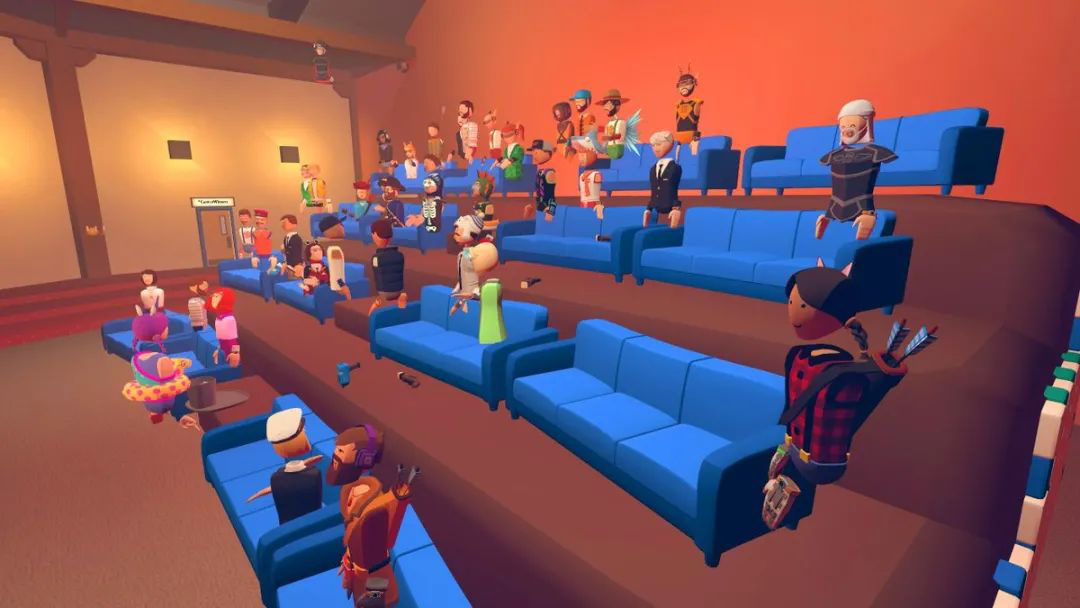
Since 2017, Rec Room has added the function of player-generated content. According to the needs of players, 75%-80% of Rec Room applications are spent in user-generated rooms, and players provide most of the creative content, including new clothes, activities and decorations for users’ private game areas.
In Rec Room platform, players can use the creative tool suite provided by the platform to design a virtual space for friends to meet and interact. Players can also create virtual products needed for various social activities, including games, and sell them to make money.
"Whether it is YouTube, Twitch or Instagram, there is a clear mechanism for creators to make money by making high-quality content. I’m sure Rec Room will be the same. The platform needs to make important decisions to help creators make money and make the community an interesting and popular place. We are still learning about this. " Fajt explained.
In order to motivate content creators, in September last year, Rec Room announced plans to let users earn cash by selling his game content. After more than two months, Rec Room launched a senior member. As an optional membership program, Premium members allow players to get exclusive content, expanded equipment slots, free tokens, discounts from official Rec Room stores and various other benefits by paying a monthly fee of $7.99.
Advanced users use Maker Pen in Rec Room to make in-game items and landscapes, and can sell their items at a cost of 100 to 10,000 game coins (about 15 US dollars in cash). Advanced users can sell keys to unlock the room, and items including avatar clothes and decorations can be picked up in the room. But at that time, players could only earn game money and could not convert it into money.
In February this year, Rec Room further launched the "Creator Subsidy Scheme", which aims to help creators make money by converting virtual currency into cash. Because other players are willing to pay for it, some players have earned game coins from their creations and converted them into cash. Rec Room hopes to extend it to the theory that some people can make a living by virtual activities.althoughThe company has not disclosed any revenue data so far, but as early as March, it said it would pay about $1 million to game creators on its platform.
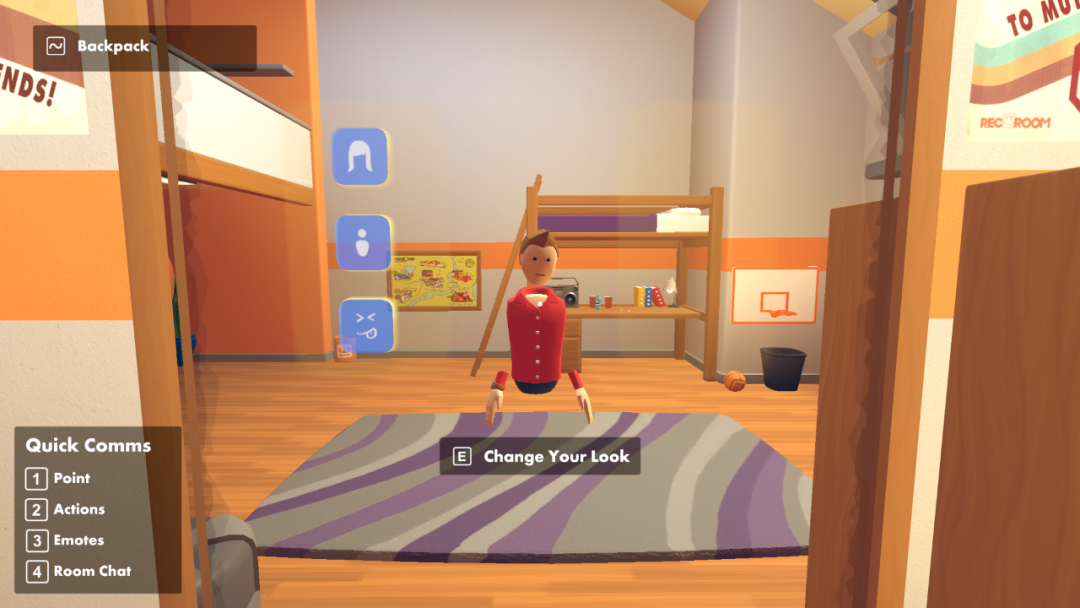
Then in July, Rec Room will create animated virtual clothes and sell them as a way for players to make a profit. It is understood that this will allow players to create and sell full-body animated clothing, whether it is original clothing or clothing recognizable from popular media.
"The platform that really expands its scale has found a way to help creators make money. Whether it is YouTube, Twitch or Instagram, there are clear mechanisms for creators to make money by making high-quality content. When users build excellent content or make important contributions to the ecosystem, it is important for the ecosystem to reward them. " Fajt said this.
future
Metauniverse is the next opportunity for Internet scale.
Regarding the future, Nick Fajt, co-founder and CEO of Rec Room, said in a statement, "We still have a lot to do. As we enter 2022, we are very happy to build more experiences, expand to new platforms, invest in first-class trust and security systems, and continue to expand our creator tools."
In a recent interview, Fajt mentioned that the number of people in Rec Room is limited to 40 at present, and it is planned to expand the room to accommodate 10,000 people in the future.
"We really want to hold a Bumbershoot Music Festival with thousands of people. And we hope to hold a large-scale sports event, so that 100,000 people can watch the event and cheer together. It doesn’t seem impossible to do so. These large platforms have begun to touch the surface of this problem, and I think this will be a problem that will be solved in the next few years. "

Users are more involved. In view of the community environment, Rec Room has formulated strict guidelines and provided tutorials to tell players how to use their tools to mute or even vote out troublemakers. Rec Room also began testing automatic voice auditing, using a mixture of community reports, manual auditing and automatic tools to identify violators.
in additionMike Schmid, vice president of business development of Rec Room, also mentioned that the company may make some acquisitions. "Now that we have a reserve, we can develop the company and expand our capabilities at the same time."
As a company that tried to build the proposed meta-universe experience a long time ago, Rec Room didn’t get widespread attention at that time. Now the frequent appearance of mataverse makes the Fajt team realize that investors and consumers’ cognition of the meta-universe and the industry trend have turned to a turning point.
"When I was asked about our vision of the metauniverse," Fajt said, "my answer was based on people and what they want and need to do every day, because people in the virtual world are the reason why the metauniverse works. Some consumer behaviors began to be built around encryption, metauniverse, virtual reality and augmented reality. "
For the current progress, Fajt believes that the team is in the initial stage of building a meta-universe, and the future "meta-universe" is the evolution of the Internet, but it is more physical, 3D and real-time than the Internet. Its core is to design a virtual experience that allows people to feel the same room with others. "
He believes that the Metauniverse is the next opportunity for Internet scale, and there are many opportunities in this field for Rec Room and other companies.
It is believed that the UGC track where Rec Room is located has strong competitors including Roblox and Overwolf, among which Roblox is the only real competitor in its market segment, both of which are popular among players under the age of 16. In this regard, the company believes that these competitions have not affected Rec Room. "In terms of the number of players or the time spent, we all have relative successes or failures. I am more concerned about how to get data about user preferences from the community and ensure that these data are applied to the application as soon as possible. "
Roblox’s user statistics show that more than half of users are under the age of 13. Compared with this platform, most users of Rec Room are between 13 and 16 years old, slightly older than the users of Reblox. Roblox went public on March 10th this year, and Rec Room is also preparing for the IPO in the next few years.
The epidemic has promoted the development of many network virtual platforms, and with the lifting of the blockade caused by the epidemic, the number of users will be affected accordingly, and Rec Room is no exception. Fajt said that once teenagers can meet face to face, the number of users of the platform may decrease.
But he added that Rec Room is not only a substitute for real-life socialization, "it helps people who are thousands of miles away to keep in touch. These are friends separated by physical distance, not just social distance. So if Rec Room has become a part of users’ daily life, I think it will play this role even after the epidemic. "
For the development in the next five years, Rec Room thinks that the way the platform interacts with users and software will change fundamentally. The platform will spend more time interacting with these spatial and digital objects.

EW-Entertainment
Recent Topics and Related Contents