"Promote the concept of green development into all elements, whole process and whole life cycle of engineering construction"
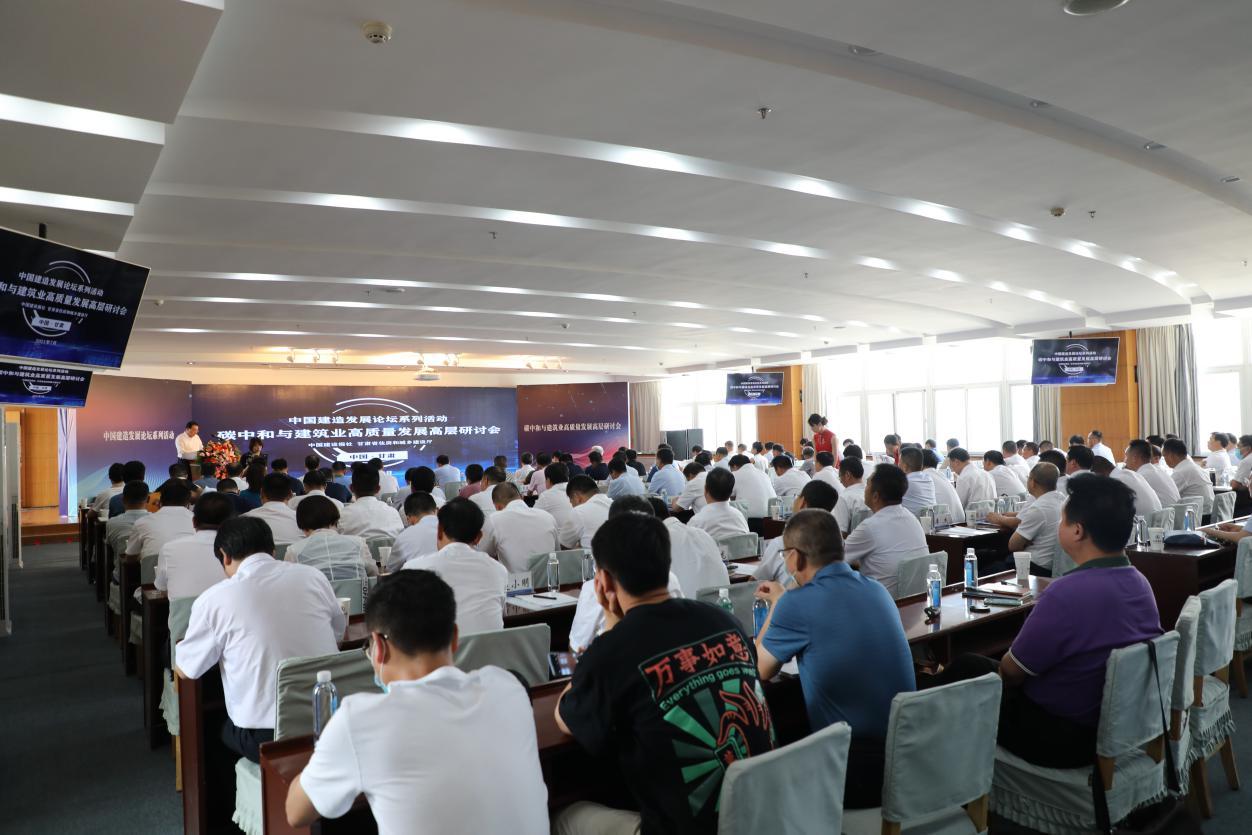
Recently, the "China Construction Development Forum, High-level Seminar on Carbon Neutralization and High-quality Development of Construction Industry" co-sponsored by china construction news Society and Gansu Provincial Department of Housing and Urban-Rural Development was held in Lanzhou, Gansu Province, to implement the national policy, explore the development path of "peak carbon dioxide emissions" and "carbon neutrality", discuss the strategy of green transformation and high-quality development of construction industry, and help achieve the goal of "double carbon".
Wang Guangzhao, the second-level inspector and chief engineer of the Gansu Provincial Department of Housing and Urban-Rural Development, said in his speech that the goal of "double carbon" is closely related to the overall development level of the construction industry. The construction industry is a traditional industry with obvious labor-intensive characteristics, low degree of industrialization, the application level of informatization and digitalization needs to be improved, and the extensive construction method needs to be changed. In August last year, the Ministry of Housing and Urban-Rural Development and other nine departments jointly issued "Several Opinions on Accelerating the Industrialization Development of New Buildings", proposing that the project construction should be driven by a new generation of information technology to achieve high efficiency, high quality, low consumption and low emissions; At the beginning of this year, the Ministry of Housing and Urban-Rural Development pointed out that one of the key tasks this year is to "accelerate the development of green buildings, vigorously promote building energy conservation, and make contributions to achieving the goals of peak carbon dioxide emissions and carbon neutrality". This plans the implementation path of the "double carbon" goal from the top-level design, and makes it clear that developing new building industrialization will be an important measure for green development and low-carbon circular development in the field of urban and rural construction in China.
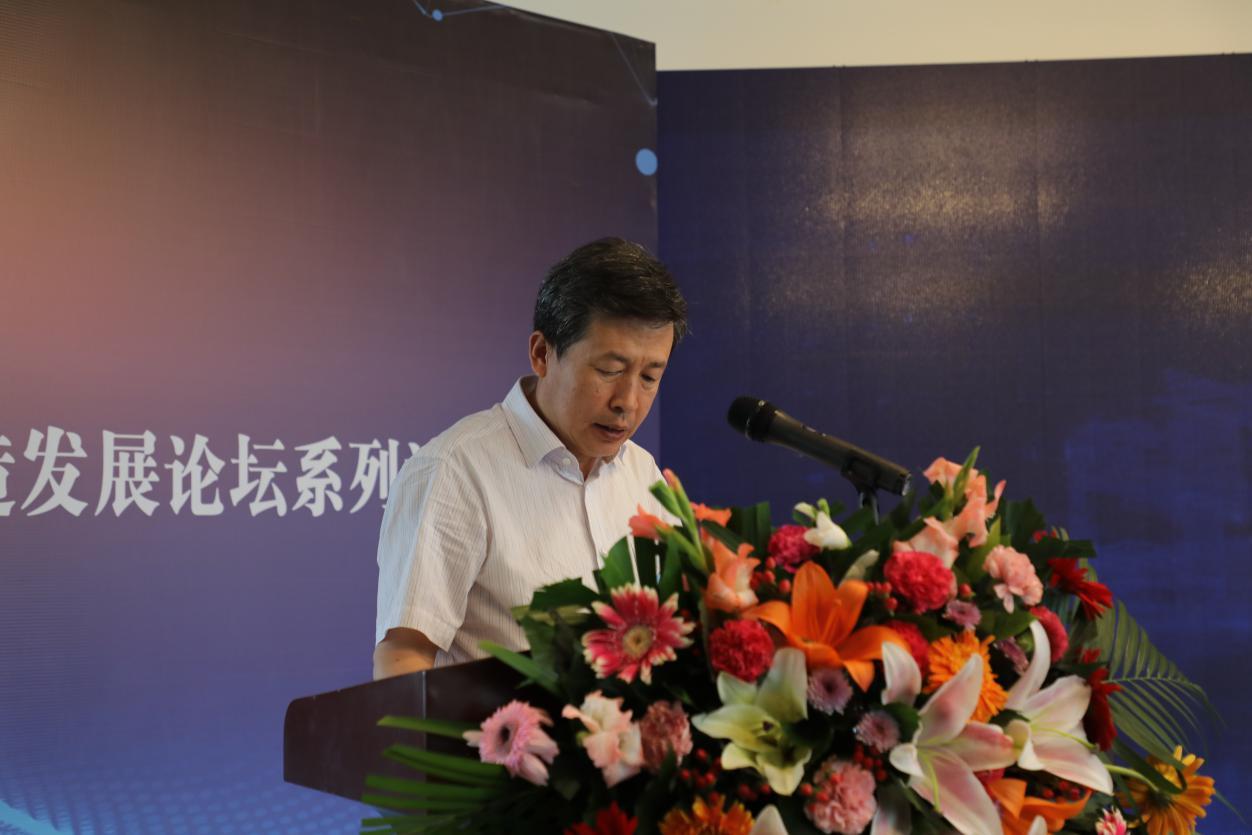
He believes that in order to realize transformation and upgrading, improve quality and increase efficiency, the construction industry must change from "path dependence" to "path innovation", from "traditional mode" to "high quality development" and from "construction worker" to "construction craftsman". He emphasized that the construction industry should seize the huge development opportunity brought by the green transformation, promote the deep integration of building industrialization, informationization and intelligence, vigorously develop prefabricated buildings, green buildings and ultra-low-energy buildings, and improve the production efficiency of the industry through informationization and digitalization, and promote the low-carbon development of the construction field with dual control of energy consumption and carbon emissions.
According to Tiehong Wang, former chief engineer of the Ministry of Housing and Urban-Rural Development and president of the 6th Council of China Construction Industry Association, one of the key points of the green transformation and upgrading of the construction industry is to "vigorously promote prefabricated buildings". Tiehong Wang said that the future has come, and the double superposition of transformation and upgrading and technological leapfrogging has come simultaneously, which is highlighted in the "three perfect matches": First, assembly +BIM (building information model). Qingdao International Conference Center project adopts all-steel structure and full assembly, and the structure-electromechanical-decoration full assembly will be completed in just six months, which is good, economical and fast. They sincerely feel that it can’t be achieved without BIM. When to place an order, when to go to the production line, when to pack and transport, when to arrive at the site, who will install it, who will accept it, etc., all depend on BIM big data. The second is assembly +EPC (general contracting). To truly promote the development of assembly, it is difficult to achieve better, more economical and faster without EPC, so we must highlight EPC. In this respect, China Construction Technology Group Co., Ltd. has accumulated a good experience of assembly +EPC. The third is assembly+ultra-low energy consumption. In the future, passive buildings with ultra-low energy consumption will have broad development space in China. Especially in Leng Xia hot area in winter, it is very suitable for popularizing passive buildings with ultra-low energy consumption. Ultra-low-energy passive building is based on energy-saving building and green building, which makes the effect of heat preservation, heat insulation and fresh air better.
On this basis, the next step, assembled +AI smart construction will be a new and broad field. Every year, more than 270,000 new construction projects and industrial scenes with a total output value of more than 26 trillion yuan are fully intelligent (including factory intelligence and on-site intelligence). What a huge blue ocean, it will greatly enhance the scientific and technological level of the construction industry. As the Supreme Leader General Secretary has painted, "Made in China, created in China and built in China work together to continue to change the face of China".
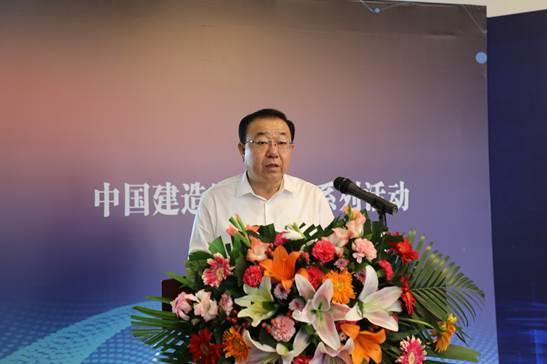
Su Yuehua, Party Secretary and Chairman of Gansu Construction Investment (Holding) Group Co., Ltd. (hereinafter referred to as "Gansu Jiantou"), shared the practice of Gansu Jiantou in promoting the green transformation and upgrading of enterprises in recent years. He said that in recent years, Gansu Jiantou jumped out of the single building construction in the past, transforming from an engineering contractor to an investor and operator, from a "construction engineering group" to a "construction investment group" and then to an "investment group". Gansu Jiantou has shown its potential as a "singles champion" in the regional market by giving full play to its industrial cultivation function, cultivating emerging industries, optimizing the industrial structure, promoting the transformation and upgrading of traditional construction industries, and cultivating and expanding emerging industries such as eco-environmental, green building materials, wind power and photovoltaic, prefabricated buildings and new energy, and has formed an industrial layout that combines light and heavy assets in sub-sectors and gives consideration to the present and the future. In particular, efforts have been made to develop green prefabricated buildings, and three prefabricated building industrial parks have been invested and built in Lanzhou New District, Yuzhong and Tianshui, forming a whole industrial chain of prefabricated buildings integrating investment and financing, scientific research, design, reinforced concrete components, steel structure processing, new wallboard development, construction and installation.
At present, Gansu Jiantou is studying and formulating an implementation plan to implement the "double carbon" strategy and making positive contributions to helping achieve the national "double carbon" goal. At the same time, we are seizing the opportunity of policy superposition, grasping the green and low-carbon development trend of the industry, increasing investment and construction in the fields of traditional construction industry transformation and upgrading, green construction, ecological environment protection, new energy wind power, static transportation, etc., promoting the integration of green development concept into the whole factor, whole process and whole life cycle of engineering construction, and effectively promoting the high-quality development of enterprises.
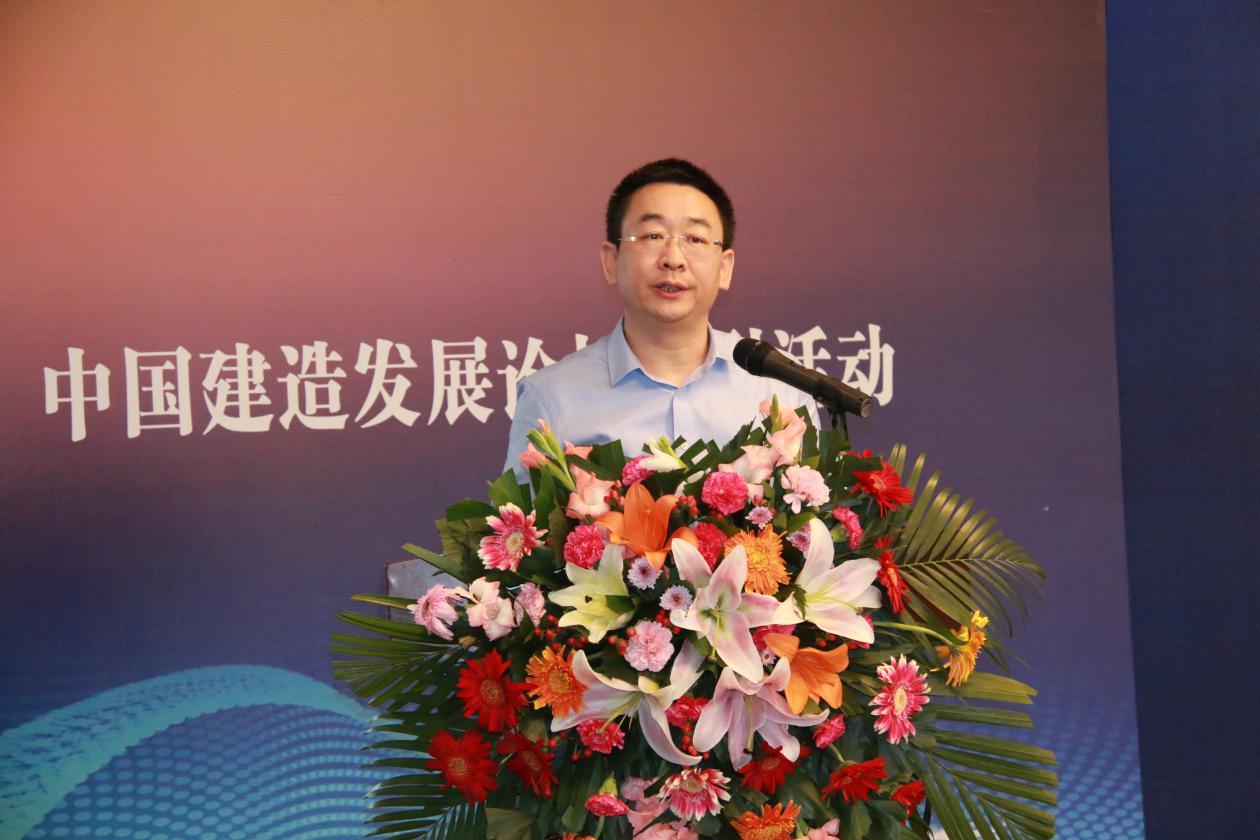
Han Aisheng, president of Hangzhou Xinzhongda Science and Technology Co., Ltd. said that during the "14th Five-Year Plan" period, the development of the construction industry faced a new situation, which was embodied in the fact that the "double carbon" goal outlined a new path of low-carbon development, the industrialization of construction entered a new stage of development, the fiscal and taxation reform entered a "deep water zone", the industry supervision was continuously strengthened, and the new infrastructure brought huge opportunities for upgrading the track. At the same time, new technologies such as cloud computing, big data, Internet of Things, mobile Internet and artificial intelligence are deeply integrated with the transformation and upgrading of traditional industries. The superposition of new situation and new technology trends determines the new pattern of construction industry transformation.
The transformation of the construction industry will certainly promote the upgrading of enterprise management and project management, and "digitalization" will become the most powerful support for construction enterprises to build new capabilities such as efficient decision-making ability, cost management ability, contract management and control ability, fund risk control ability, industrial tax and financial integration ability, digital construction ability, industrial synergy ability, and technical middle-platform ability. At the same time, enterprise standardization, informatization, refined management upgrading, project management, fiscal and taxation management and digital site management upgrading will become the "hard demand" for the transformation and upgrading of construction enterprises. In this situation, the demand for professional digital technology and products and services that can solve the management pain points and transformation difficulties will gradually increase.
"China Construction Development Forum, High-level Seminar on Carbon Neutralization and High-quality Development of Construction Industry" is a series of meetings, which have been held successively in Beijing and Lanzhou, Gansu. In the later period, the conference will go to other regions, so that more colleagues in the construction industry can make clear the goals of peak carbon dioxide emissions and carbon neutrality through exchanges, recognize the transformation path, and help the high-quality development of industry enterprises.