Understanding the feelings of "pursuing Excellence and serving the country" from the ancient "college entrance examination"

Ten years of trees and a hundred years of people. Selecting and employing people is a kind of achievement inspection of educating and nurturing people in China society from ancient times to the present. The ancient "college entrance examination" made "learning to be an excellent official" a concept engraved in the bones of scholars, while the modern college entrance examination gave contemporary young people the opportunity to study further and better become the pillars of the country in the future. Then, the ancient "college entrance examination", which was formed in Sui and Tang Dynasties and abolished in the late Qing Dynasty, has a history of more than 1,300 years — — What exactly is the imperial examination system like?
A 9-day exam
Before the imperial examination system, the recommendation system was widely used in ancient China, but it was unfair and random. The imperial examination system, which is equivalent to the modern "college entrance examination", is a system of selecting officials through examinations in ancient times, and this system has also affected Japan, North Korea, Vietnam and other countries. The imperial examination has experienced more than 1300 years from its inception to the last Jinshi examination in the thirty-first year of Guangxu in Qing Dynasty (1905).
The Ming Dynasty was the heyday of the imperial examination, which was divided into four levels. The first level was the children’s test, and the winner was called a scholar. The second level is the provincial examination, and the winner is called a juren; The third level is the examination, and the winner is called Gong Shi; The fourth level is palace examination, and the pilot was given the background of Jinshi. There are three people in one armor, who are given to Jinshi and there are three names that are particularly popular, namely "No.1", "No.2" and "Exploring Flowers"; Second, the top three, given Jinshi origin, with Jinshi origin.
The exam is held once every three years, and there are three exams for each class, each for three days. In the first game, I wrote seven eight-part essays, in the second game, I wrote one political essay, five judgments and one official document, and in the third game, I wrote five current political comments.
After the township test held in Nanjing Jiangnan Gongyuan, candidates brought their own dry food and were not allowed to go home. Jiangnan Gongyuan is the largest and most influential imperial examination room in history. At most, there are 20,644 rooms (dormitories), each of which is about 2 square meters, with two wooden boards above and below, which are used as tables and chairs respectively. When the examinee sleeps, two wooden boards must be spliced together as a bed, and it is difficult for a tall person to stretch his legs.
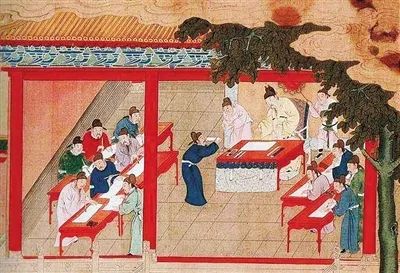
▲ Scenes of palace examination depicted in Ming Dynasty paintings.
In ancient books, "going to Beijing to catch the exam" refers to taking the exam. The examination will be presided over by the Ministry of Rites, and the examination room will be located in Beijing Gongyuan.
In ancient times, the competition for "College Entrance Examination" was much fiercer than now. During the Ming and Qing Dynasties, the largest number of students enrolled was in the eighth year of Yongzheng, with a total of 406 students, and the least was in the fifty-fourth year of Qianlong, with only 96 students. In the ninth year of Guangxu in the Qing Dynasty, there were more than 16,000 candidates who took part in the examination, only more than 300 candidates won, and the admission rate was only 1.9%, which was really one in a hundred.
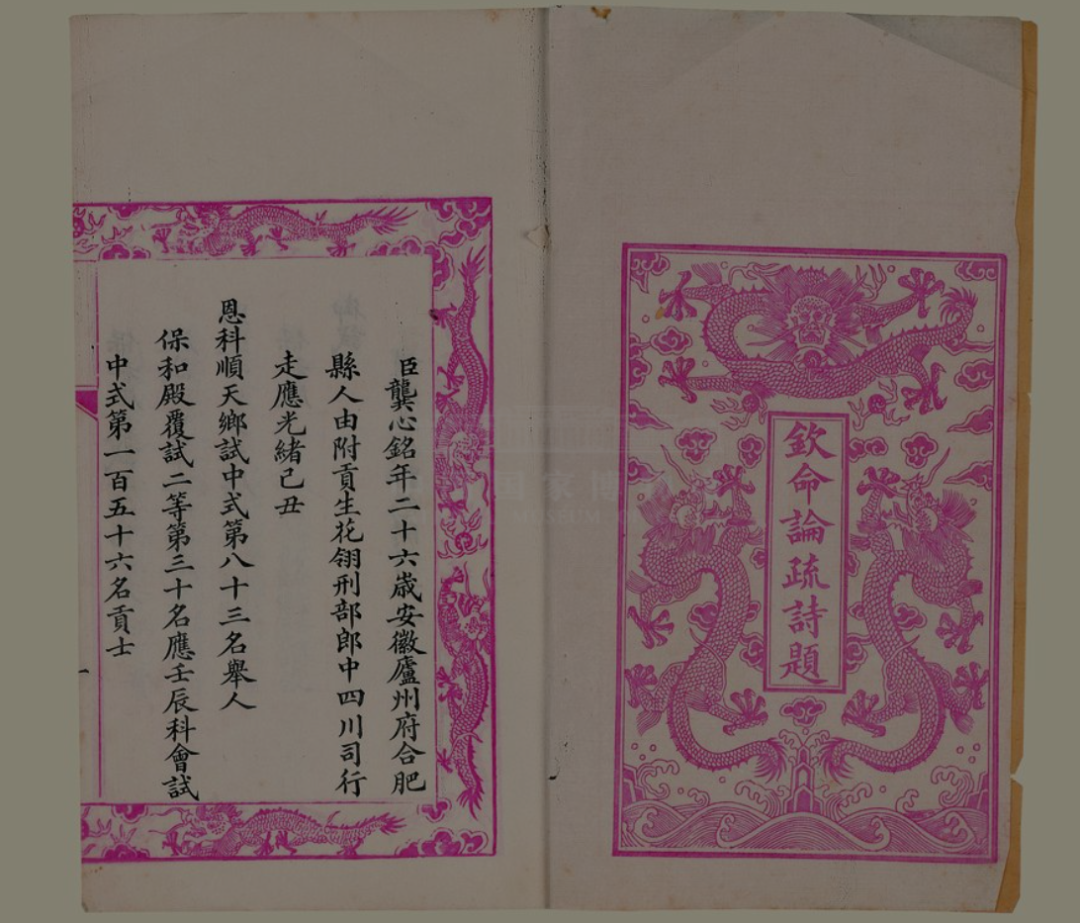
▲ Gong Xinming’s examination papers in the 18th year of Guangxu Dynasty in Qing Dynasty were collected in China National Museum. Gong Xinming was born in Hefei County (now Hefei, Anhui Province). This is his own engraved examination paper for giving away, etc.
The most important "palace examination" was hosted by the emperor himself and held in front of the Hall of Supreme Harmony. In addition to asking questions on the spot, it is also necessary to conduct a comprehensive inspection of candidates through questioning and observation. Among them, the most grand ceremony is the "transmission ceremony", that is, the ceremony in which the emperor announces the candidates’ exam rankings.
Candidates must bring "floating tickets" and "uniforms"
Ancient examinees had a hard time, so they had to travel a long way to catch the exam, and they had to bring all the necessary things. Mo Dou pen, ink storage box, inkstone, and laundry for exams.
Among all the test supplies, the floating ticket, that is, the admission ticket, is undoubtedly the most important. Once lost, it will be irreparable. There were no photos in ancient times, and the admission ticket could only be described in words. For example: Li Mingsi, age 20, medium build, beard, test number and rule number 31, etc.
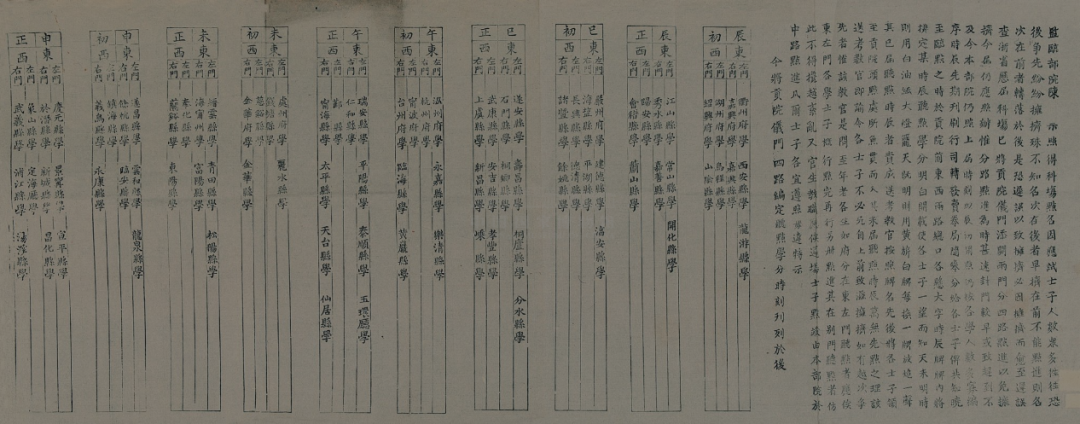
▲ The timetable for the roll call after having obtained the provincial examinations in Zhejiang in Qing Dynasty is kept in China National Museum.
Qing system, after having obtained the township exam is divided into three games. Each game is called the examination paper one day in advance and handed in the examination paper the next day. Due to the large number of candidates, it is necessary to take a separate route and call the roll every time.
Preventing candidates from cheating is as strict as ever. "Song History Election" records that during the Chunhua period in Song Taizong, in order to "reform the examiner’s privacy", Chen Jing, the supervisor, was suggested to implement the method of "pasting the name and place of origin of the candidates", that is, the name and place of origin of the candidates were pasted on the test paper, and it was decided to open the test paper before sealing it.
"Seal" means that after the examination paper is handed in, the seal officer first folds the surface of the paper, seals the candidates’ names, numbers them in red, and then the transcriber transcribes the examination paper with calligraphy, which is called "Zhu Juan", and finally sends it to the examiner for review. When the list is released, the "black roll" (original) is unpacked according to the red number of "Zhu Juan", and finally the list is written by roll call.
In order to prevent cheating, the examination room is closed in all directions, and candidates are separated by a row of numbered houses. Later, candidates were taken to close the lock after entering the building, take a bath before the exam and provide standard clothing to prevent cheating.
Only those who recite ten verses can take the exam.
The ancient "college entrance examination" did not limit the age of candidates, but it required that besides reciting the original works such as The Analects of Confucius, Mencius, The Book of Songs, The Book of Rites and Zuo Zhuan, you should also be familiar with several times the number of annotations in the original text and learn other books.
In the Tang Dynasty, there was a boy’s subject, and children under the age of 10 could learn it once they passed it, and those who could recite ten verses in each volume, such as The Book of Filial Piety and The Analects of Confucius, could enter the subject. In the first year of Song Chunxi, Lin Huanyu, a girl, went to take the exam and answered questions about 43 poems in the syllabus, which was made a Confucian by Emperor Xiaozong. In the Yuan Dynasty, the experimenters in the Boy Scouts Department were all able to enter the Imperial Academy, the highest institution in the imperial court.
In the thirty-eighth year of Emperor Kangxi of Qing Dynasty, Huang Zhang and Well Lee, the scholars, were 99-year-old candidates.
In addition, the family phenomenon of the first time in the past often appeared at that time. In the Ming Dynasty, Jiangxi was the province with the largest number of candidates in palace examination, the most famous of which was Jishui County, which was famous for its Hanlin. In the Qing Dynasty, Jiangsu and Zhejiang provinces produced the most candidates.
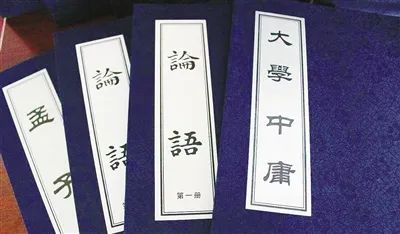
▲ The ancient "college entrance examination" must recite textbooks.
(This paper is long, so it is recommended to watch it horizontally ↓ )
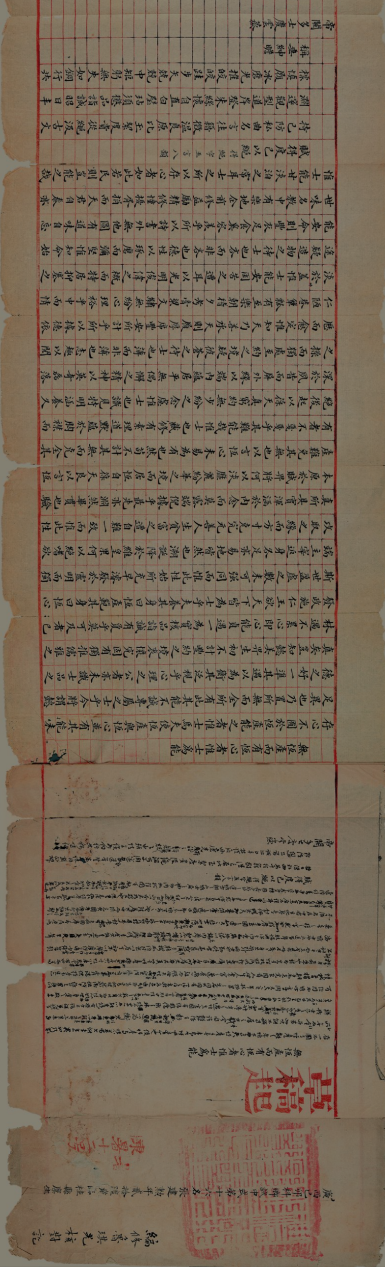
▲ In the 15th year of Guangxu reign of Qing Dynasty, Zhang Jianxun will try to answer the examination paper, which is collected in China National Museum. Zhang Jianxun was born in Lingui, Guangxi (now Guilin, Guangxi). This is Zhang Jianxun’s re-examination ink roll, and we will try to re-examine the non-ink roll.
Of course, regardless of age, the ultimate goal of candidates is to win the top prize. After having obtained the provincial examination, it was called Xieyuan first, Huiyuan first, and palace examination first. There have been more than 500 top scholars in the history. The first scholar was Sun Fujia in Wude, Tang Gaozu, and the last scholar was Liu Chunlin in Guangxu, Qing Dynasty. The only female champion is Fu Shanxiang of the Taiping Heavenly Kingdom, which can be described as a heroine among women. She won three yuan in a row, not only as a champion, but also as a champion and a champion. It is not only the first place in palace examination, but also the first place in the examination and after having obtained the provincial examination, as well as the first place in the whole province and the first place in the whole country. Of the more than 500 champions, only 19 have ever won three yuan in a row, 16 in literature and 3 in martial arts. Among them, Huang Guan, the most outstanding one, was in the Hongwu period of the Ming Dynasty. He won the first prize in six yuan (county examination, government examination, college examination, provincial examination, general examination and palace examination), and was only 27 years old. Later, he was edited by the Hanlin Academy and became an important official of Jianwen Emperor.
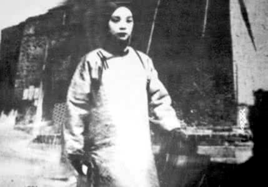
▲ Fu Shanxiang, the only female champion in the history of China. Born in Nanjing in 1833, he was brilliant since childhood and liked to read the history of classics. In 1853 (the third year of Xianfeng in Qing Dynasty), the Taiping Heavenly Kingdom initiated the imperial examination for women, and Fu Shanxiang won the first place in Dingjia.
There are many factors for candidates to get the top prize, among which the calligraphy on the examination paper can directly affect their grades. In palace examination in the 30th year of Kangxi, Emperor Kangxi directly named Dai Youqi as the first place because of his great appreciation of the second place’s calligraphy. The examination paper of Zhao Bingzhong, the champion in the 26th year of Wanli in Ming Dynasty, is the only original paper of the champion in palace examination that has been preserved at present. Its handwriting is beautiful, neat and rigorous.
However, there are also other candidates, such as Jin Shengtan, a literary genius in the late Ming and early Qing Dynasties, who is really proud of the literary world and frustrated in the examination room. He took part in three exams and got a zero on his composition. The examiner who won the exam criticized the exam paper: "The scholar is gone!" Don’t come to the exam next time!
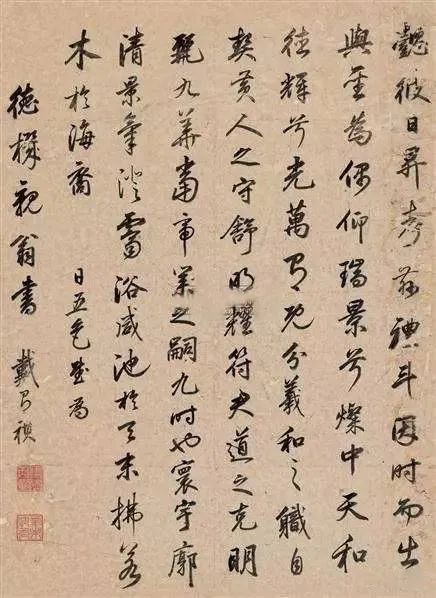
▲ Dai Youqi’s calligraphy.
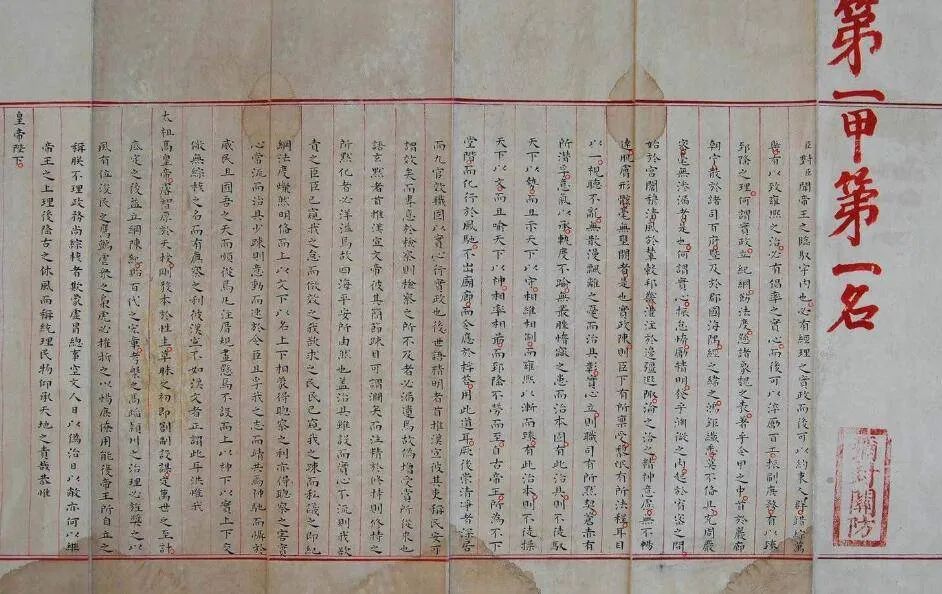
▲ Zhao Bingzhong’s examination papers for the imperial examinations were collected in Qingzhou Museum, Shandong Province.
Repeated reading will eventually lead to Jinshi.
Candidates who have to be no.1 will fall into Sun Shan. In ancient times, there were many successful examples of re-reading, and they were all famous people. For example, Tang Xianzu, a dramatist and writer of the Ming Dynasty, was born as a scholar in the 211th place of palace examination’s top three in the fifth examination. Lin Zexu, a national hero, took the exam three times, and was finally given a Jinshi origin with the fourth place in palace examination and the fifth place in the Korean exam. Zeng Guofan, one of the four famous ministers in the late Qing Dynasty, passed the examination for the third time. palace examination was ranked 42nd in the top three, and was given a background as a scholar. Later, he was elected as Jishi Shu of the Imperial Academy.
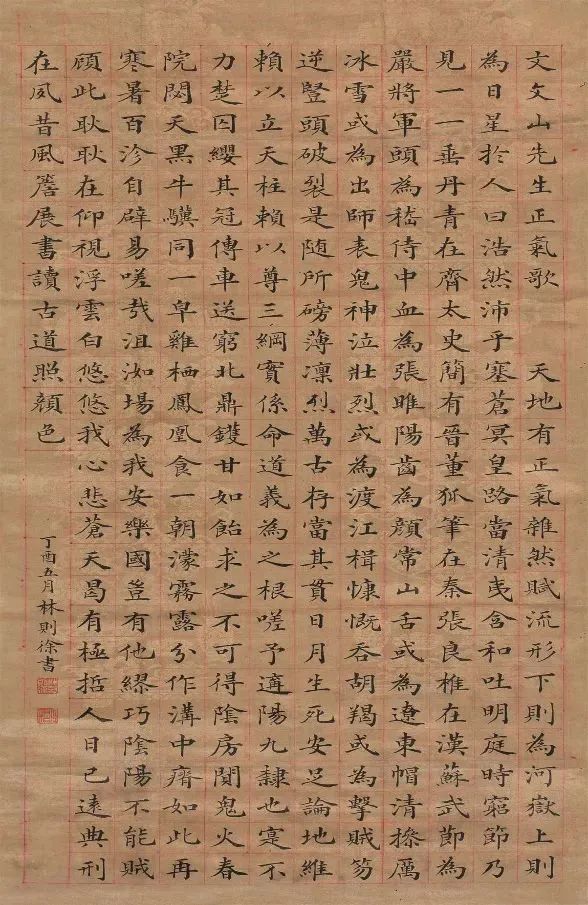
▲ Lin Zexu’s calligraphy of Zhengqi Song. (Source: China Guardian)
For the repeat students in ancient times, the family must have considerable economic strength to persist. Because the exam fee includes the expenses of transportation, hotel and food, plus the exam papers and exam equipment such as fat candles, tableware and clothes seats, it is not a small expense.
The academy, which began in the Tang Dynasty and abandoned in the Qing Dynasty, was the most famous "cram school" for the college entrance examination at that time, which was divided into private and government-run schools. The best cram school teacher in history is Lv Zuqian, a Southern Song Dynasty philosopher and writer. He tailored a simulated review outline and examination questions, and the effect is comparable to today’s "5-year college entrance examination simulation for 3 years". If candidates can answer correctly, most of them can pass the exam smoothly.
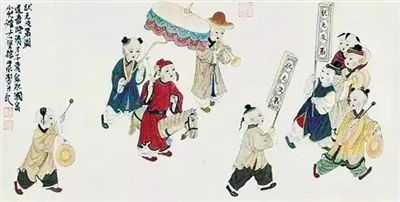
▲ Send a good news map in the Ming Dynasty.
It is a great happy event for candidates whether they pass the exam or repeat the exam successfully at one time. "In the past, it was not enough to boast, but today’s debauchery is endless. The spring breeze is proud of horseshoe disease, and you can see all the Chang’ an flowers in one day. " This famous "After Graduating" was written in 796 AD (the 12th year of Tang Zhenyuan). At the age of 46, Meng Jiao went to Beijing for the third time to take the exam, and was finally able to get on the imperial examination. He was extremely happy when he published the list.
In ancient times, the admission notice of "College Entrance Examination" was called "Good News", and special officials took people to report good news with gongs and drums. The style of the good news is basically the same, with the dragon flying above and the foggy sea in Yunshan below. In the center, it is written with the number of high school after having obtained the exam or palace examination. After receiving it, the candidates will solemnly post it in the most conspicuous position in the hall at home, honoring their ancestors.
The modern college entrance examination is obviously incomparable with the ancient "college entrance examination", but its essence contains the idea of pursuing Excellence and serving the country in Chinese cultural tradition. The college entrance examination is not the only answer in life, but it is an important node in life and a valuable experience in life. In this passionate summer, I wish all candidates a smooth college entrance examination and to be no.1.
(This article is compiled by the author from Xinhuanet, People’s Daily and Daily News, and the pictures are provided by the Library and Information Department of China National Museum. )
Producer | Yang Xinhua Xiao Jingfang
Co-ordination | Kang Kun Quan Liu Jia
Editor | Liu Xian
Audit | Liang Li
Editor | Yu Ling
Production | Hu Qi