On national mobilization from the perspective of anti-epidemic

Since the outbreak of the epidemic, under the personal command and deployment of the CPC Central Committee and President Xi, the people of the whole country have been united in the same boat and launched a people’s war, a general war and a blocking war to prevent and control the epidemic. In this struggle, the provincial military region system moved at the command, took the initiative to take the lead and participated in the whole process, and deeply explored the characteristics and laws of national mobilization in actual combat, which provided a useful reference for doing a good job in wartime national mobilization.

Enhance the infiltration of ideological mobilization and lay a good ideological foundation for comprehensive mobilization

The people of the whole country know the general situation, take care of the overall situation, listen to greetings, obey the rules, advance and retreat together, and take responsibility together. This high degree of collective consciousness stems from deep and solid ideological mobilization. In the fight against the epidemic, all localities have made full use of TV broadcasts, newspapers and magazines, mobile phone networks, electronic screens, banners and newspapers and other channels to carry out high-intensity, multi-frequency and full-time launch, continuously convey the concern and care of the CPC Central Committee, timely push forward the anti-epidemic process and decision-making arrangements, and regularly publicize the epidemic prevention professional knowledge and related requirements, and through strong penetration, realize door-to-door and brain-to-heart. On the basis of doing a good job of general mobilization for the public, government agencies, industry associations, university enterprises, and street communities have implemented several waves of directional mobilization in their respective industries. The Hubei Military Region vigorously carried out the activities of "the chief officer leading the battle, the main battle in party member, the militia participating in the war and the civilian fighting", and the military and civilians realized the ideological transformation from peacetime to wartime in a short time. This fight against the epidemic has highlighted the importance of ideological mobilization and demonstrated our strong national mobilization ability. Compared with the anti-epidemic, people faced threats more directly in wartime, suffered more casualties, and the battlefield management was more difficult. It was difficult to quickly form the conscious collective will of the whole people only by relying on short-term mobilization.

From the perspective of anti-epidemic practice, to improve the efficiency of national mobilization in wartime, we must rely on national defense education in peacetime, prepare in advance and infiltrate for a long time, and lay a good ideological foundation for the implementation of national mobilization. It is necessary to broaden the scope, adhere to the "five in one" of party committees, governments, schools, the army and society, build a national defense education system covering the whole people, and extend the audience of national defense education to all social strata and groups; To increase the depth, in addition to popularizing general national defense knowledge, we should also strengthen urban crisis education and risk training, and guide the public to firmly establish the awareness of preparing for famine and disaster; It is necessary to increase the intensity, use various media to moderately increase the content and frequency of national defense education, and form a long-term effect in a subtle way.

Give full play to the organizational strength of the backbone team and make good use of key groups at critical moments.

In this anti-epidemic campaign, cadres, militia, volunteers and other key groups in party member took on heavy responsibilities and became the main force of mass prevention, mass control and joint prevention and control. For example, more than 44,500 party member employees in Wuhan party and government organs, enterprises and institutions have sunk to more than 3,000 communities; About 120,000 volunteers and more than 13,800 grid workers participated in community prevention and control; The Hubei Military Region has mobilized more than 839,000 militiamen, and about 31,000 militiamen are active in the front line every day during the peak period. These key groups assume various responsibilities such as organizers, propagandists, administrators, waiters, rescuers, deliverymen, etc., and play the role of "backbone" and "ballast stone". In the future, the mobilization of the whole people in wartime will be larger in scale and more complicated in organization, and it is even more necessary for these key groups to play a key role in going deep into the masses.

From the practice of anti-epidemic, the implementation of national mobilization needs to combine the different characteristics of different groups and focus on construction in peacetime. For party member cadres, the key point is to strengthen grassroots practice, encourage and guide party member cadres to be grounded, learn skills and grow talents among the masses. Once something can quickly sink into the front line and enter the role, they can better play a leading role in organizing and mobilizing the masses; For militia groups, the key point is to strengthen the professional training of support and emergency response, and truly have the ability to fight in wartime and respond in an emergency; For volunteer groups, the key point is to build a management system centered on management institutions and service platforms, enhance information sharing, financial support and incentive publicity, and enhance their enthusiasm and professional ability to participate in national mobilization.

Enhance the leading role of public opinion propaganda and constantly condense the positive energy of anti-epidemic

During the anti-epidemic period, the public opinion field was quite active. Especially in the early days of the epidemic, the flood of information was overwhelming, and it was difficult to distinguish between true and false. The hostile forces fanned the flames and made malicious speculation, and the people were highly concerned and highly sensitive. Only one Yangtze River Yunrong media platform increased its users by more than 196,000 in a few days, with an average daily page view of more than 27 million, which was six times that before the epidemic. Although governments at all levels, various media and authoritative experts have strengthened the dissemination of positive energy information, some negative information has also produced amplification and acceleration effects in a short time. For example, rumors such as "Wuhan is about to be fully taken over by the People’s Liberation Army" have a very bad influence. With the improvement of the epidemic situation, the information of positive energy has gradually gained the upper hand, and people’s psychology has also changed from tension and anxiety to calm and self-confidence. In wartime, the public opinion field will inevitably present similar characteristics and laws.

Judging from the practice of anti-epidemic, to win the people’s war in the future, the people’s will to fight will be the key target of the enemy, and we must firmly grasp the initiative of public opinion from the beginning. Make full use of various media channels, especially the authoritative platform, to release the dynamic information of war in time and accurately, so that the masses can understand the real situation at the first time; Collect people’s demands, respond to people’s concerns, identify the focus of people’s attention with empathy, and answer people’s questions in people’s language; It is necessary to decisively and effectively control, strengthen the application of information means such as big data and public opinion monitoring software, and block the spread channels of various rumors and false information.

Strengthen the control power at the grass-roots level and give full play to the role of the party organization as a fighting fortress

During the epidemic prevention and control period, closed management was implemented throughout the country, and every community, community and village team was an independent position and a battle fortress. The grass-roots community (village) was responsible for the living security, material procurement, medical treatment, inspection and quarantine management of all residents in this position. According to statistics, more than 9 million people stayed in Wuhan during the "city closure" period, distributed in more than 7,000 communities, more than 1,400 communities and more than 1,900 villages (brigades). Each community worker faces about 350 people, and the task is extremely arduous. Community is the last link between policy provisions and real individuals, and it is also the key link to improve the national governance system and enhance governance capacity. Effective community work can ensure the smooth implementation of government decrees and promote all the people to work and live in an orderly way in wartime. This anti-epidemic campaign highlights the importance of community building, which is the key to the mobilization of the whole people.

Judging from the practice of anti-epidemic, in the future people’s war, to mobilize the whole people to participate in the war, it is especially necessary to strengthen the party’s leadership over the overall work at the grassroots level and give full play to the role of grassroots party organizations as fighting fortresses; Strengthen personnel training, incorporate community team building into national and local talent development plans, and build a team of professional community workers with excellent quality; Increase investment in community platform construction, give urban and rural communities more human, financial and administrative rights with appropriate responsibilities, and build community mobilization publicity and education platforms, material support platforms, and information and communication platforms to ensure that communities provide public services to the end of society, but also have the conditions for legal control and strong control.

Strengthen the support of material supply, focus on ensuring people’s livelihood and promote stability.

Judging from the means of epidemic prevention and control, the fight against the epidemic is a science and technology war, a public opinion war and a logistics war. To implement closed management, we must first solve the basic needs of the people. Under the strong leadership of the CPC Central Committee, the whole country played a game of chess, coordinated as a whole, coordinated materials across provinces and regions, and took many measures to ensure supply, transportation capacity and people’s livelihood, which better solved the basic living problems of the people. Take Wuhan as an example, the vegetable stock can continuously supply about 8,000 tons per day, and the stock of basic daily necessities of rice, flour, oil and meat in the city can meet the consumer demand for more than 30 days. The Hubei Military Region coordinated six garrison units to deploy 260 people and 130 transport vehicles to set up a transport support team, transporting 15,019 tons of various materials, and investing them in the frontline and grassroots communities to raise more than 270 tons of materials to alleviate the urgent need for support. Through the joint efforts of the military and the land and comprehensive policies, it has provided peace of mind for the people to stay at home and created a solid rear for the victory of the anti-epidemic.

Judging from the practice of anti-epidemic, to do a good job in mobilizing the whole people in future wartime, we must focus on ensuring people’s livelihood, so that the fighting can last. We must do a good job in strategic material reserves in different fields and specialties, not only in high-tech equipment and information resources, but also in basic people’s livelihood, so as to lay a solid foundation for resource mobilization in wartime. According to the module of jurisdiction, we should conscientiously do a good job in the investigation and statistics of war potential, and make all kinds of potential data, regional distribution and specific positioning accurate to provide support for wartime resource mobilization; It is necessary to establish a wartime control and interest adjustment mechanism, crack down on speculation such as hoarding and raising prices, take incentive measures, fully mobilize the enthusiasm of mass organizations to produce and supply combat materials in short supply, and provide a steady stream of stamina for material supply.

Improve the mobilization of intelligent information and provide intellectual support for wartime mobilization

In this anti-epidemic campaign, big data, cloud computing and other information technologies have shown their talents. All localities rely on government affairs network and mobile APP to accurately convey epidemic prevention policies, and use the medical material demand information platform to organize hospitals to meet the needs of production enterprises and open electronic "health codes" to provide data support for sketching regional epidemic maps, tracing patient trajectories, and assisting the government in making precise policies. Epidemic prevention and control has expanded the application of Internet, big data and communication technology as never before, and also examined the problem of insufficient support for smart cities to fight the epidemic. For example, it is difficult for national defense mobilization data to support epidemic prevention and control, and it is difficult to realize real-time network collection of national defense mobilization potential data, and military and land information is not shared. In the future war, information is an important operational factor, and information mobilization is the main position of war mobilization. We must rely on the construction of smart cities and do a good job in information mobilization.

From the perspective of anti-epidemic practice, to do a good job in information mobilization, we must incorporate smart emergency and smart mobilization into the construction of smart cities, build national defense mobilization command centers at all levels vertically, and cross the command information network of the professional office and industry system of the National Movement Committee; It is necessary to build a big data system platform, improve the management system of data collection, storage and distribution of mobilization potential and demand, and rely on cloud computing technology to achieve dynamic docking and scientific deployment; It is necessary to rely on universities, scientific research institutes and high-tech enterprises to compile and build national defense mobilization professional teams and militia reserve detachments, train information mobilization professionals, and provide intellectual support for accomplishing mobilization tasks in wartime.

(The author is the commander of Hubei Military Region)

Implied in both form and spirit-on the transcendence of Chinese characters over language functions

  [Chinese Characters and Folklore]

  Author: Li Jing (Associate Professor, Center for Inheritance, Dissemination and Education of Chinese Character Civilization of the State Language Committee, Center for Inheritance and Innovation of Ancient Chinese Characters and Chinese Civilization of Henan Province)

  The structure of Chinese character forms contains the wisdom and ingenuity of the Chinese nation, and the changes of Chinese character forms often have profound meanings beyond the sound and meaning of characters. For example, the folk custom of seeking happiness is often realized through the change of the shape of the word "blessing": Kangxi’s imperial pen is "the best blessing in the world", which implies the word "longevity" in writing, indicating "both happiness and longevity", and the "blessing" below is not sealed, which means "boundless prosperity"; The word "Fu" is posted on the gate, which means "Open the door to welcome the blessing", and the word "Fu" is posted upside down on the rice jar. When the rice is poured, the word "Fu" is deformed positively, symbolizing "When things go, they are blessed"; Hundreds of different forms of "fu" form a "hundred-blessing picture" in order to "bless arrival" … This phenomenon of using Chinese characters to express ideas by means of shape variation, orientation movement, stroke increase and decrease, sorting and combination is called the "super-symbolic function" of Chinese characters by scholars, that is, Chinese characters can play an expressive function beyond language without corresponding to the sound and meaning of symbols. This is an important feature that distinguishes Chinese characters from pinyin characters, and it is also a prominent embodiment of the uniqueness of Chinese character civilization and Chinese civilization.

  1. Intuitive simulation of glyph ideographic.

  After the transformation of Chinese characters, the original pictographic and pictographic features were weakened, but the unique attribute of "pictographic according to class" in the origin stage has long been deeply engraved in the national cultural psychology, which has influenced the Chinese people’s cognitive psychology and usage habits of Chinese characters. People often describe shapes and examples based on the similarity between glyphs and the shape of things, and activate the original pictographic function of Chinese characters. For example, the Book of Songs Bo Xi: "It rains and it rains, and the sun comes out." Among them, the "pestle" indicates brightness, and the glyph of "sun" on "wood" is used to describe the scene of hanging branches in Chu Qing after the rain, which is vivid. Another example is the Ming poem "Night to Xixi": "The cool moon rises and disappears, and the peaks are bumpy." The word "concave-convex" in the sentence is integrated with the semantic meaning, showing the staggered and uneven shape of Gu Feng and the "chaos" of the mountain peaks, as at present.

  If the above-mentioned words such as "Gao", "concave" and "convex" are used to express meaning as well as semantics, then the transcendence of Chinese characters over language functions is more prominent in the use of purely glyph-related objective things. For example, the poem "Jiangnan" written by Han Yuefu: "Lotus can be picked in the south of the Yangtze River, and the lotus leaves are He Tiantian." The "field" here does not record "farmland", but only because the shape is similar to the lotus leaf with lines, it is described as "field" to describe the lotus leaf lush and connected. For another example, in the Song Dynasty, "The frog turns white and grows wide, and the earthworm dies purple", in which the word "Chu" imitates the shape of the frog falling to the sky after death, and the word "Zhi" resembles the shape of the earthworm after death. The meaning of "Chu" and "Zhi" is figurative, but none of them corresponds to the meaning of the language. For another example, there is a bamboo garden in Yangzhou named "Geyuan", named after "Ge", and its shape is like the appearance of bamboo leaves, which is interesting and clear.

  The superlinguistic function of Chinese characters can also be expressed directly by "a certain glyph" by describing the form. For example, in Tang poetry, the word "cross the head" and in Song poetry, the image is particularly clever. Modern contexts include "one-character eyebrow", "eight-character step", "Chinese character face", "I-shaped building", "T-shaped road", "Tian Zige", "Chuanzi pattern" and "well-shaped brick", and so on, all of which are special uses of the whole character as a pictographic symbol to illustrate things.

  2. Components are divided into many meanings.

  As an integral part of Chinese characters, components can sometimes "express meaning by form" and push the information related to words from "implication" to "presentation". For example, "Shen (Shen) sacrifice" was a way of offering sacrifices to God in ancient times. In Zhou Li Da Zong Bo, there is a record of "offering sacrifices to mountains and rivers with raccoons", which means that sacrifices sink into the water to worship mountains and rivers. The word "Shen" only means "sinking things into the water (as a sacrifice)", and the object of sinking is unknown. However, the word "Shen" in Oracle Bone Inscriptions has different glyphs from cattle, sheep and jade, and its components mark different sacrifices. Similarly, there are words like "prison", "grazing" and "trap" written by Oracle Bone Inscriptions. The replacement components are cattle, sheep, deer, tapirs, etc. Different components have different related objects.

  The components of Chinese characters (including non-functional components) can not independently express the language meaning, nor can they be used independently in the language chain. If there is a situation that components or parts express meaning independently and are used independently, it is beyond the function of general symbols. There are two main situations:

  One is that the whole word does not express the meaning, and the component expresses the real meaning. For example, scholar Feng Youlan, Zeng Zeng friend Jin Yuelin Shoulian: "It’s not just rice, it’s tea." The word "rice" consists of eighty-eight, and the word "tea" consists of two tens on the upper part and eighty-eight on the lower part, which adds up to one hundred and eight. "Rice" does not refer to the word "rice", and "tea" has nothing to do with "tea", which means that the real meaning of the old man’s longevity is hidden in the words, which is quite elegant. According to legend, Ji Xiaolan wrote the inscription "Bamboo Bud" for the newly-built pavilion in He Shen’s house. He Shen thought that it was "like a bamboo bud, like a pine tree" in The Book of Songs, and he was very proud. But he didn’t know that his intention was to satirize his "all fools". "Bamboo bud" does not record the word "dense bamboo forest", but expresses the meaning with the split components, which embodies the excellent and rich expressive force of Chinese characters. There are similar usages in the modern network context, such as "Ji (ao) ? (tān), Bi (ao) ? (rén)", which means "as long as he has his heart, don’t have two hearts". "Luo" and "Yi" are originally dialect words, meaning "as long as" and "don’t". The semantics here are consistent with dialects, but they are read separately. "Mi" is the honorific title of the third person "He", which is interpreted as "His Heart" here; "Ba" is the same as "benevolence" in ancient times, and it is interpreted as "two hearts" here. The speaker’s real meaning lies on the component, even if he only knows the meaning of the word and doesn’t know its sound, he can read and use it.

  The other is that the whole word expresses the real meaning, and the component does not express the meaning, but the whole word is disassembled into component words and directly compiled into sentences. For example, The Book of Jin: "Gu Yue’s Last Rebellion in Zhongzhou", in which "Gu Yue" is the argot of "Hu" and refers to the Hu people. In the Song Dynasty, "Sitting and watching eighteen gongs, pitching ashes", "eighteen gongs" is derived from "pine" and refers to pine trees. The component only represents the original word, and has no function of recording language. When a poem is dismantled and combined, it is full of purport and euphemism.

  This kind of glyph disassembly is also often used to create crossword puzzles: either the author leaves, the reader closes, such as "words and deeds, never leaving", and "words, body and inch" combine to get the answer word "Xie"; Or the author’s combination, the reader’s solution, such as "pump", breaks down the mystery word "get to the bottom" Because he talked about it, this is not superfluous.

  3. The body variation is quite ingenious

  The transcendence of Chinese characters over language functions is also reflected in the change of the conventional forms of glyphs to convey special meanings. Chinese characters have strong plasticity, and many different forms can be transformed by scaling, increasing or decreasing components and strokes on the two-dimensional plane, which is particularly widely used in the network context. After the Chinese character component is split, it occupies a plurality of characters, which widens the width of the whole character horizontally visually, which not only symbolizes the widening of the body shape, such as "every festival’ half moon’ weighs three pounds"; It can also be a metaphor for the slowness in the time dimension, such as "experiencing the life of Chengdu". The increase or decrease of components can also show the super-linguistic charm of Chinese characters. For example, netizens spit out: "Shandong enters autumn in one second,’ Candong’ becomes’ Shandong’ overnight … and soon becomes’ Mountain Frozen’." Here, "Candong", "Shandong" and "Mountain Frozen" are physical variations based on the shape of "Shandong", where "Candong" increases "fire", "Shantou" increases "water" and "freezing" increases, which corresponds to the unpredictable weather in the objective world.

Implied in both form and spirit-on the transcendence of Chinese characters over language functions

China Academy of Art

  In art design, the variation of Chinese characters has unique aesthetic value and can also express special meanings. For example, the school logo of China Academy of Fine Arts is not only like the word "country" without left and right, but also like the abstract word "beauty", which means that the country is boundless. The logo design of Anyang Museum is also full of wisdom: the word "Anyang" is arranged vertically, the upper part of "An" is deformed into the shape of a mountain (short in the middle), which looks like the cornice of an ancient building, and the lower part of the word "female" is extended vertically in two strokes, imitating the shape of the museum wall to cover the traditional word "Yang", which means to collect rare treasures and accumulate the yang of the world. The words "Guo" and "An" convey rich humanistic information by non-verbal means of body variation, which is ingenious and profound. For another example, in the theme posters against corruption and promoting honesty, the forms of Chinese characters convey profound connotations through various changes: or "corruption" is inverted to express the meaning of "anti-corruption"; Or "greed" makes "Bei" a "prisoner", which means that greed is a prisoner; Or "honesty" and "corruption" are combined into one word, which contains dialectical philosophy. There is only a thin line between honesty and corruption. It is necessary to keep the bottom line and sound the alarm.

  4. Changing words has another pursuit.

  Chinese characters often use other characters in the process of use, which is related to folk culture and often implies profound meaning. For example, in the Liao Dynasty, the word book "Dragon Cave Hand Mirror" was changed to "mirror" because it avoided Zhao Kuangyin’s grandfather Zhao Jing’s taboo; In the late Ming Dynasty, in order to avoid the name of Zhu Changluo, the homonym "Taste" and "Luo" were used instead of "Chang" and "Luo". The substitution of Chinese characters reflects the cultural custom of "taboo for respect, taboo for relatives and taboo for sages" at that time.

  In Chinese New Year greetings, people often change a word in an idiom into a word with the same sound or similar sound to that of the year’s zodiac, with the aim of getting a good impression, such as showing off the rabbit, prospering the dragon, making the sheep proud, making the chicken happy and making the pig happy. Sometimes, word-changing is for the pursuit of subtlety and elegance. For example, in letters, "Xian Di" is often written as "Lei Lee", which is even more elegant because "Xiao Ya Chang Di" is a poem that sings the love of brothers and sisters, replacing "Di" with "Di". There are also elegant considerations in changing the names of place names. For example, the names of Beijing hutongs were changed in batches to avoid vulgarity, the "sow" hutong was changed to "Meizhu" hutong, the "Yangwei" hutong was changed to "Yangwei" hutong, and the "Wang Widow" diagonal street was changed to "Wang Guangfu" diagonal street. In addition, Macau changed the ancient name "oyster mirror" to "Hao mirror", and Taiwan Province changed the place name "chicken coop" to "Keelung". Seeking elegance by changing customs reflects the cultural orientation of the times and the ideas of local people. However, place names are valuable intangible cultural heritage, bearing the ancient people’s concept of living together and cultural traditions. If it is not to avoid vulgarity and seek elegance, it is best not to change the words of place names at will.

  Chinese characters have the function of super-language, and their glyphs vary. When they are replaced by words, they often mean something beyond words and have another mind. This implied cultural meaning needs our careful understanding.

  Guangming Daily (April 21, 2024, 05 edition)

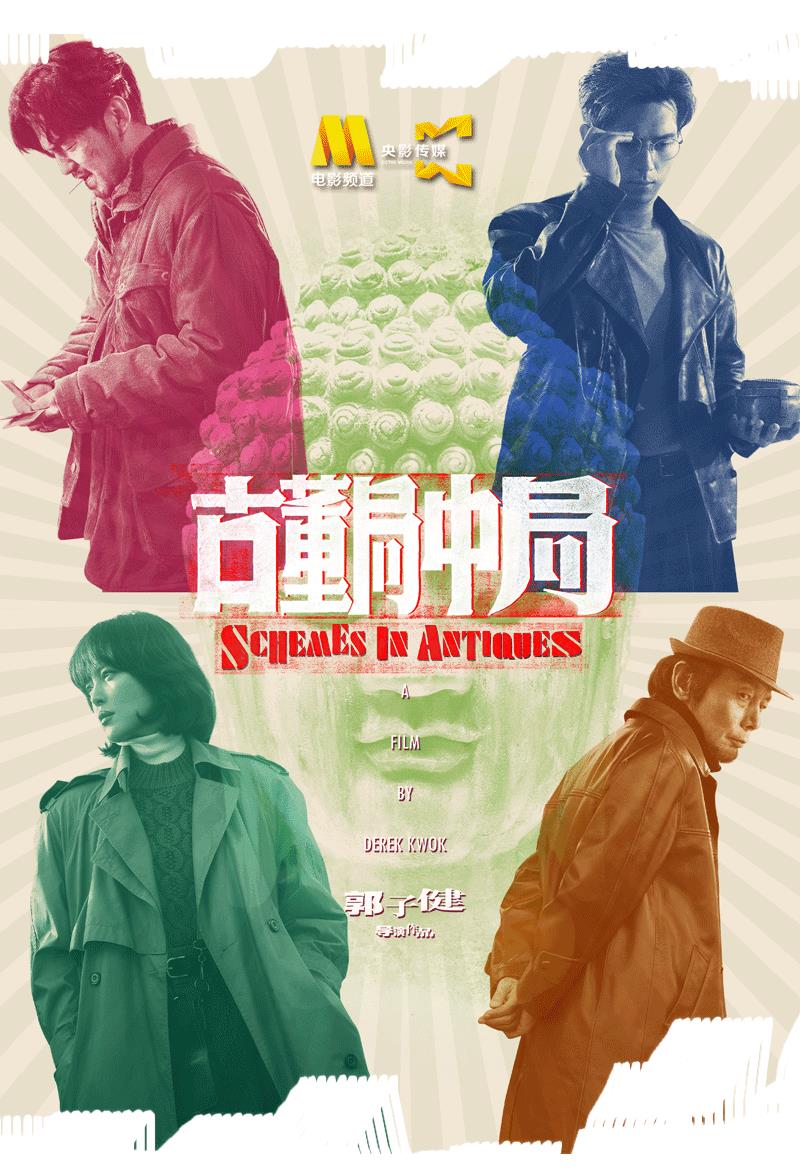
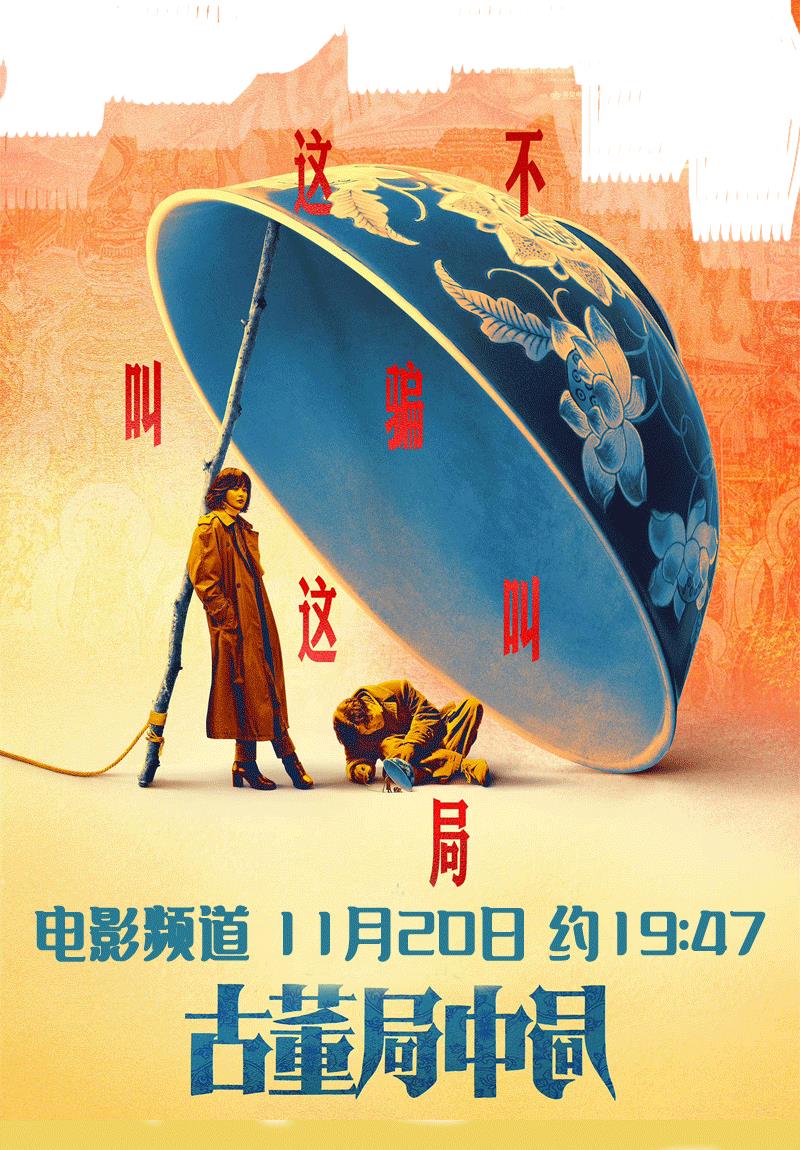
The movie channel aired "Antique close encounter of mahjong" in prime time on the evening of November 20th.

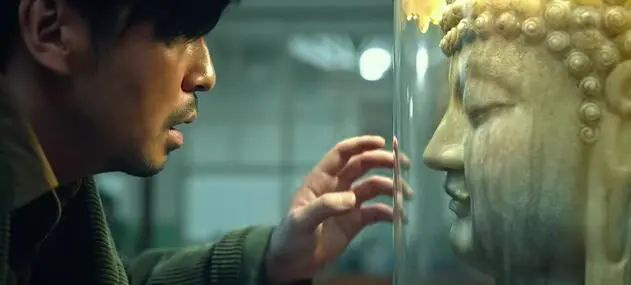
Special feature of 1905 film network In the early 1990s, a Buddhist relic returned from Japan was involved in a shocking scam … …


Through a series of novels, a vast antique river and lake has been created, and elements such as antique identification, collection, forgery and game setting have been fused in one furnace. The film Antique close encounter of mahjong is adapted from the "Buddha’s Head Mystery" in Ma Boyong’s series of novels.


The subtle "close encounter of mahjong" brings people into the immersive puzzle solving scene. Everyone sets up a game, and there are games everywhere. After the clues are stripped off layer by layer, the puzzle finally surfaced, giving you a sense of substitution when you are watching movies.

Treasure the treasure.

 The competition is wonderful.


Most of Ma Boyong’s works have detailed and vivid descriptions of scenes, details and sense of time. Guo Zijian, the director, chose to use the form of "literary drama and martial arts" to make a game of antiques, and visualized the description of a large number of antique knowledge in the original book, such as popular science and treasure collection. Make a wish and take medicine. Otherwise, the verbal confrontation in treasure-hunting and treasure-hunting is handled like a martial arts master’s confrontation. This looks like treasure-hunting bickering, but it takes the rhythm of an action movie, combined with the soundtrack, which is of great ornamental value and visual sense.


In the wonderful treasure competition, the director also showed the exquisite details of various antique treasures through vivid and excellent special effects. The film vividly presents the antique wonders that we can’t usually see, such as flying dragons and glaze rendering, on the screen. An immersive experience makes us seem to see "a piece of cultural relics come alive in front of us".


all linked with one another

Play antique Jianghu.


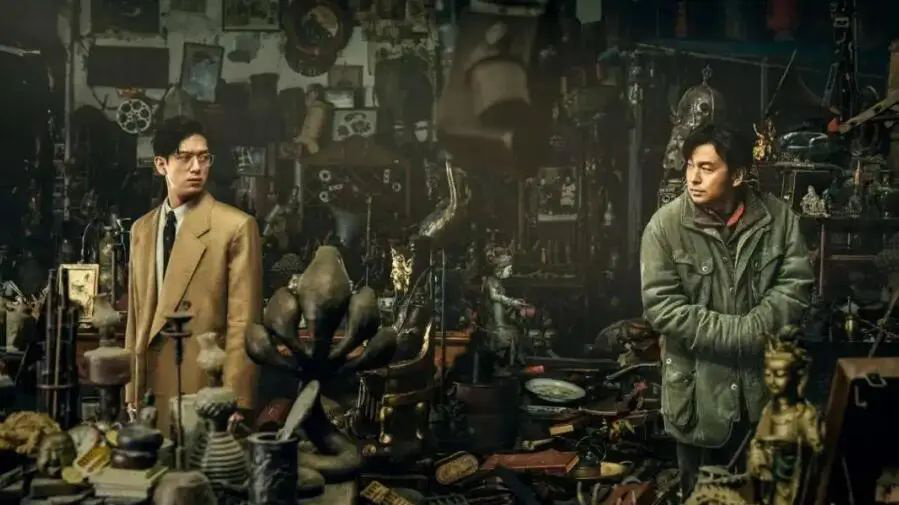
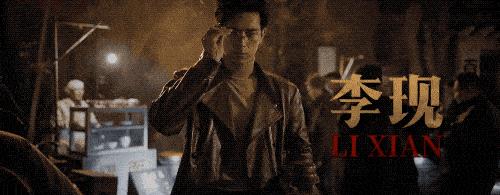
The actor’s wishing is dressed in a cotton-padded jacket coat, which is informal, and the "Northeast chuai" is a school of its own, with a unique sense of joy. He seems cynical on the surface, but he becomes calm, reliable and unexpected when he breaks the treasure hunt;


In order to better play the role of medicine or not, I studied the knowledge and gestures of treasure identification with the antique teacher and mastered a bunch of rare technical terms. Huoling showed a medicine or not that is good at using "science" to identify the authenticity;


Huang Yanyan, who plays the role of "bait" to resolve the crisis, declares to everyone that "this woman is not easy to provoke" with her short hair and sharp eyes;


The transformation without losing humor in one go shows the smoothness of Fu Gui, a "quack".


The "Treasure Squad" is closely linked, and the performances of the four people are very tense, which makes people feel quite substituted. After watching the movie, many viewers praised "Lei Jiayin changed from decadence to firmness in one go", "Li Xian is medicine or not", "Xin Zhilei expressed the bravado of yellow smoke too well" and "Uncle Ge really has his own humorous temperament" … …