Paying attention to the topics concerned by young scholars: an essay report on the theoretical innovation of young people in Exploration and Contention

On August 2nd, 2021, the special issue of China in Academic —— Celebrating the centenary of the founding of the Communist Party of China (CPC) and the fourth (2020) national conference on theoretical innovation of young people were held in Shanghai Social Science Hall. At the same time, the fourth (2020) national youth theoretical innovation essay analysis report of Exploration and Contention was released. The following is the full text of the report.

First, the organization of the essay

(A) "Young Scholars Support Program" overview

Four combination punches of "Exploration and Contention" and "Young Scholars’ Support Program": 1. National essay on theoretical innovation of young people; Second, the outstanding young scholars support program; Third, the outstanding thesis support program for young scholars; Fourth, the annual forum of outstanding young scholars in China.

In the process of the growth of young scholars, it is the unshirkable responsibility of academic journals to "help the horse and help it". With the concept of "academic care for reality", the magazine has played a combination boxing to support young scholars. "National Youth Theory Innovation Essay" is aimed at young teachers and students in colleges and universities all over the country, advocating the idea of actively intervening in China’s practical problems, deeply explaining China’s practical problems, and looking forward to solving China’s practical problems, and discovering outstanding young scholars; The "Outstanding Young Scholars Support Program" aims to find outstanding young scholars for continuous and in-depth support; The "Young Scholars Excellent Thesis Support Program" is intended to search for excellent papers and forge them in advance; The "Annual Forum of National Excellent Young Scholars" is a national essay activity for young people’s theoretical innovation, which is planned and organized by young scholars themselves, and the editorial department provides academic support.

(2) Review of the first three essays

"Youth makes the country prosperous, while youth makes the country strong"! As an academic publication that insists on "growing with young scholars" as its mission since its birth, Exploration and Contention magazine has always attached importance to unity and support for young scholars. Under the leadership of the Party Group of Shanghai Social Federation, with the support of the National Social Science Fund, the Propaganda Department of Shanghai Municipal Committee and the special funds of Shanghai Press and Publication Bureau, since 2014, Exploration and Contention has launched an essay for young scholars and young students under the age of 40, and has been held for four times so far, with a total of more than 3,600 submissions and nearly 100 award-winning papers selected.

In 2014, Exploration and Contention launched the first national essay on theoretical innovation of youth with the theme of "comprehensively deepening reform and the path of China’s modernization". More than 800 contributions were received throughout the year, and 21 winning essays were finally selected. On January 31st, 2015, the Youth Forum of "Reinterpretating China and Comprehensively Deepening Reform" and the First National Youth Theoretical Innovation Essay Awarding Conference of "Exploration and Contention" were held.

In 2016, "Exploration and Contention" launched the second national youth theoretical innovation essay activity, with the theme of "Problems in the Transformation of China". In the whole year, 872 essays were received, and 25 winning papers were finally selected. On March 21st, 2017, the 2nd National Youth Theory Innovation Essay Awarding Conference of Exploration and Contention and the Youth Forum of China’s Transformation were held. At that time, Yan Shuang, deputy director of the Propaganda Department of Shanghai Municipal Committee, party secretary and full-time vice chairman of the Municipal Social Welfare Association, attended the meeting and delivered a speech.

In 2018, in commemoration of the 40th anniversary of reform and opening-up, Exploration and Contention launched the third national youth theoretical innovation essay activity with the theme of "From new era to new era: China’s reform starts again". More than 900 papers were received, and 26 papers won prizes. On March 29th, 2019, the 3rd National Youth Theory Innovation Essay Awarding Conference and the Youth Forum of China Knowledge System Construction and Youth Mission were held. Xu Jiong, deputy director of the Propaganda Department of Shanghai Municipal Committee and director of Shanghai Press and Publication Bureau, attended the meeting and delivered a speech. On the occasion of commemorating the centenary of the May 4th Movement and the 70th anniversary of the founding of People’s Republic of China (PRC), a collection of some outstanding award-winning papers was published in the 5th issue of "May 4th Youth" in 2019.

(III) Overview of the Fourth Essay

From January to December, 2020, Exploration and Contention launched the 4th National Youth Theoretical Innovation Essay Activity with the theme of "Technological Innovation and Civilization Reconstruction: New Problems and Challenges". The object of the essay is young scholars and students born after January 1, 1980 in universities and scientific research institutions all over the country. The requirements for essay writing must be unpublished original papers or in-depth investigation reports; Do in-depth theoretical research on new phenomena, new needs and new problems caused by technological innovation in social, economic, political, cultural, humanities, communication and education fields, especially encourage interdisciplinary research; The research results are original and forward-looking, which can combine academic research with practical care, provide unique ideas for explaining and solving the China issue, and conform to the style of selecting articles in Exploration and Contention, with "academics as the bottom and thoughts as the banner".

The essay-writing activity has been strongly supported and responded by young scholars all over the country. In the whole year, 925 papers were received, and 885 papers were effectively submitted, and 24 winning papers were finally selected. Among them, 1 first prize, with a reward of 10,000 yuan; 3 second prizes, with RMB 5,000 each; 8 third prizes, with RMB 3,000 each; There are 12 nominations, and each 1000 yuan will be awarded.

(4) Review process

From January to April, 2021, based on the principles of fairness, openness and justice, the editorial department selected the contributions according to the procedures of initial review of the editorial department, re-evaluation of anonymous communication by experts and final evaluation of anonymous on-site by experts.

1. The preliminary examination is divided into social science group and humanities group. Each subject group in the editorial department is responsible for the primary election, and each group submits 30 articles to the experts to enter the anonymous communication review session.

2. In the re-evaluation, the evaluation experts give each article a rating (excellent, good and average) from the aspects of topic selection value, argument originality, argument quality, material application and writing level. After summarizing the experts’ evaluation opinions, the editorial department determined that 12 articles entered the final evaluation.

3. After carefully reading and evaluating the candidate articles, the final evaluation experts, through on-site discussion and voting, produce a list of candidates for the first prize, the second prize and the third prize.

4. The editorial department shall, according to the expert review opinions in the early stage, negotiate to produce the nomination award candidate list.

5. After all the candidate lists of awards are produced, they will be reviewed by experts and political experts, and then reported to the party group of Shanghai Social Federation. After approval, the winners will be publicized to the public.

On the whole, this essay on young people’s theoretical innovation has achieved the expected goal of the editorial department. After the essay-writing activity, the editorial department of Exploration and Contention conducted a survey on the topics of contemporary young scholars’ concern, their research methods and paradigms, the distribution of young scholars’ disciplines and schools, and the characteristics of award-winning papers in schools and professional titles reflected in this essay through statistical analysis of the manuscripts, internal discussions in the editorial department, and listening to experts’ opinions, so as to summarize the successful experiences and shortcomings of this year’s young scholars’ theoretical innovation essay, and understand and grasp the young scholars. This report will summarize and show the experience of this essay activity from the following aspects, report the essay results to all parties who care about and support this activity, and provide reference and prospect for the future development and perfection of this activity.

Second, the analysis of contributions

(A) the author’s title/academic analysis

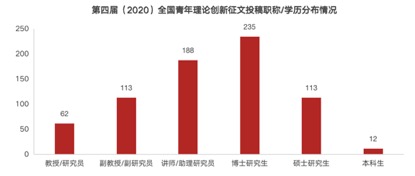
The object of this essay is young scholars under the age of 40, and the authors are mainly young teachers, doctoral students and master students in colleges and universities. The analysis shows that young teachers and doctoral students in colleges and universities are the main force of this young theoretical innovation essay. Among them, young teachers in colleges and universities contributed 363 articles, accounting for 41% of the total number of contributions, and lecturers (assistant researchers) and associate professors (associate researchers) accounted for 34% of the total number of contributions; 235 doctoral students contributed, accounting for 26.5% of the total contributions; Postgraduates contributed 113 articles, accounting for 12.7% of the total contributions. It can be seen that young teachers in colleges and universities, doctoral and master students are enthusiastic about research and have strong research ability and thesis writing ability. This is also closely related to the theme of this essay. At present, young and middle-aged people constitute the main body of research in emerging fields such as technology and artificial intelligence. They have strong ability to accept emerging things and can adjust their research direction to the trend of social development. On the other hand, the distribution of professional titles/academic qualifications in this essay also reflects the scientific research pressure generally faced by young teachers and doctoral and master students in colleges and universities. It is understood that doctoral students in most universities in China basically need to publish 1-2 CSSCI journal papers, and graduate students in some universities also need to publish a CSSCI journal paper. For young teachers in colleges and universities, 2-3 CSSCI journal papers a year have become the "standard" for evaluating professional titles and performance appraisal. Sure,Scholars born in 1980s and 1990s have become a new force in the research of philosophy and social sciences, but we should also see the factors of "being forced to submit papers" and "making papers" due to performance appraisal or graduation requirements. In any case, the strategic guidance and support for the growth of young scholars can not be ignored.
(B) analysis of the contribution area

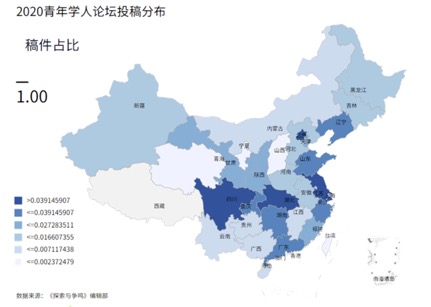
The sources of manuscripts are widely distributed, covering almost all regions in China except Qinghai, Ningxia, Shanxi and Xizang, and some articles from overseas. Beijing, Shanghai, Sichuan, Hubei and Jiangsu are the concentrated sources of manuscripts. On the one hand, the distribution of the contribution enthusiasm of young scholars in China reflects the influence of the journal Exploration and Contention, on the other hand, it also reflects the future development potential of regional academics.
(3) Subject distribution of contributing scholars

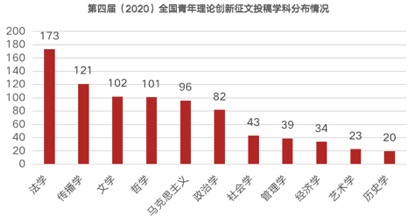
The essay activity involves more than 10 disciplines, including Marxism, law, management, literature, sociology, philosophy, education, politics, economics, history and communication. The distribution of disciplines shows the following characteristics: First, the number and proportion of submissions from law, communication, literature, philosophy and Marxism are significantly higher than those from history, art, education and economics. Among them, the number of contributions from the first five disciplines is 173, 121, 102, 101 and 96 respectively. This is mainly because these disciplines are most sensitive to the changes brought about by technological development, such as personal information and privacy issues in law disciplines, blockchain and artificial intelligence contracts; Topics such as nationalism and national position, technological transformation and people-centered in Marxism; The ethics and man-machine relationship of artificial intelligence advocated in philosophy; Literature focuses on topics such as artificial intelligence writing, algorithms and cultural landscape. These topics are outstanding problems and distinct changes brought about by the development of technology, and also constitute the forefront of current research in these disciplines. However, disciplines such as history and art are relatively "conservative" and have their own development context, and they are less dependent on technology, so scholars in these fields are relatively lagging behind in their involvement in technical issues.
(D) Analysis of young scholars’ research methods

In this essay, young scholars pay more attention to empirical research and quantitative analysis in research methods, which reflects that contemporary young scholars have received good training in social science methods and can demonstrate their arguments solidly and rigorously. What is slightly insufficient is that some articles are slightly lacking in ideological and theoretical aspects because they pay too much attention to the refinement of methods.

(E) Analysis of topics of concern to young scholars
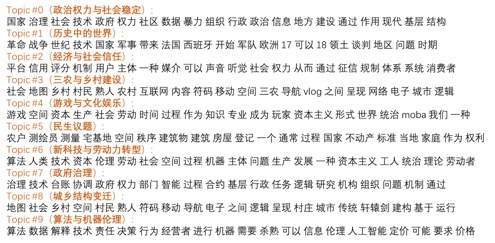
Through the analysis of high-frequency words in the contributions of various disciplines, we can find several interesting phenomena:

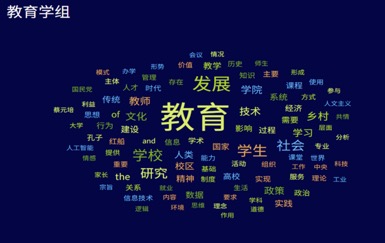
People and society have always been the core of the research on technology and civilization, and the concern about numbers and technology has permeated all disciplines. As far as the theme of technology and civilization is concerned, the involution of pedagogy, art and philosophy is obvious; There is almost no history in the contribution of the history group.

(VI) Thinking and Enlightenment

1. Walk with the times and write the paper on the motherland.

The editorial department of "Exploration and Contention" is writing essays for the whole country with the theme of "Technological Innovation and Civilization Reconstruction: New Problems and New Challenges", aiming at guiding young scholars to further analyze the social development mode and national governance mode brought about by technological development from their own research fields. In academic research, the trinity of "transitivity", academics and concern for the times is very important. Talking about problems and doing research without the reality of China’s development will fall into the trap of nihilism. In this essay, most of the articles can start from a specific research field, study the problems brought by technological development to practical practice, and pay attention to the social transformation in China. With the help of the theme analysis of the award-winning papers, we can find that the policy dominance of the country and the government’s concern affect the vision and problem orientation of academic research.

Taking the winning papers as an example, some discuss the role and influence of drawing technology in the formation of modern world order from the past to the present; Taking root in reality and discussing the spatial order and right order of homestead; There are hot spots to discuss the challenge of the rise of platform power to state power; There are those who discuss technical nationalism and the prospect of artificial intelligence between China and the United States based on the international situation.

In addition, there are many topics such as "virtual acquaintance society", "platform credit mechanism" and "civilized communication in games". These themes have taken care of the process of social reform and development in China since the information age from different angles, and found various obvious or hidden, macro or specific, classic or trendy problems. These young scholars can conduct in-depth and forward-looking research on these problems from their own knowledge structure and put forward unique solutions. These articles make us feel the keen vision and theoretical enthusiasm of contemporary young scholars in China, and also make us believe that contemporary young scholars are deeply concerned about social development, and they are trying to practice the academic mission of "writing papers on the motherland".
2. The interdisciplinary trend is obvious, actively practicing the innovation of China’s academic discourse system.

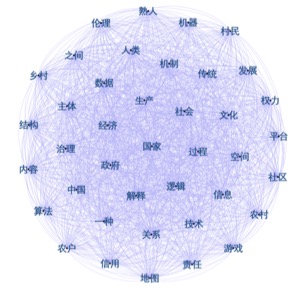
This essay takes the subject words of the article as the analysis variables, and finds that the hot topics concerned by contemporary young scholars have high similarity, such as "governance", "data", "algorithm" and "technology" have become common high-frequency words in all disciplines. Although this has something to do with the theme of the essay in the editorial department, through the analysis of the content of the essay, we can find that the research objects and research methods of this essay have a lot in common, which reflects that under the background of the construction of new liberal arts, interdisciplinary research has become the mainstream trend, which also reflects the future direction of China’s academic discourse system. For contemporary young scholars, interdisciplinary research has become a method, and their research has gradually changed from a small research within the discipline to a grand narrative that cares about social reality.

Through the analysis of word frequency co-occurrence of essays, "country" has become the ultimate concern of young scholars’ academic research, and taking discipline as the method and country as the purpose has become a major feature of this essay activity. Take the winning papers as an example. No matter the concepts such as cartography, power diaspora, virtual acquaintance society, technical nationalism and institutional art, professional analytical methods and research ideas are adopted in the beginning of the article, but at the end of the article, the themes are all guided to the grand narrative level of social development, state governance and civilization dissemination. Many papers do not stick to a specific discipline paradigm. Some pay attention to the development of China at present, especially in the post-epidemic era, from a unique perspective today. By deeply exploring and thinking about the issues of the times, they pay attention to trendy topics, such as games and cultural entertainment, new technology and labor transformation, algorithms and machine ethics, etc., and innovate discourse expressions, which have distinctive youth characteristics and characteristics of the times, and can make in-depth and valuable analysis and discussion. It can be seen that problem-oriented and breaking discipline barriers are becoming an important feature of contemporary academic development.

3. The problem of academic involution needs to be solved urgently, and the academic ecology needs further improvement.

In this essay, we also found a prominent problem, that is, the homogeneity of research is high, and the scope of research is still not wide enough. For example, the protection of personal information in the law discipline, nearly 30 articles in the law discipline contributions selected this topic; Another example is the man-machine relationship in philosophy, which also accounts for a considerable proportion in the contributions. Although these topics are very important, at the moment when the existing research results are already rich, if we don’t open up new academic fields as soon as possible, we will easily fall into the trap of low-level repetition and academic involution. For journals, this trend also reminds them to be "forward-flowing and backward-flowing", set up topics actively by predicting the new trend of social development, and lead the academic circles to carry out innovative research; At the same time, we should also criticize the current "technology fever" and refine the big ideas and true views that meet the needs of society.

Generally speaking, in this essay on theoretical innovation of young people, many young scholars have put forward many original ideas in combination with their own research fields and the development of China society in the digital age. This is highly consistent with the editorial department’s idea of warm academics and academic concern for reality. Although some studies are slightly lacking in theoretical depth and breadth, many experts admire the courage and spirit of daring to face real problems and put forward new ideas and new thinking. I believe that after a period of academic training and practice, these young scholars will become the core strength of various disciplines.

Third, the analysis of awards

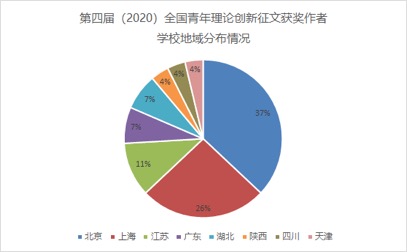
Judging from the distribution of awards, award-winning scholars are mainly distributed in Beijing, Shanghai, Nanjing, Guangzhou, Tianjin, Wuhan, Chengdu and other places. There are 27 winners from 24 papers from more than 20 well-known universities such as Peking University, Tsinghua University, Nanjing University, Fudan University, Shanghai Jiaotong University, Sun Yat-sen University, Central Party School, Sichuan University, East China Normal University, Shanghai University, Guangzhou University and Huazhong Normal University, and the universities with the most winners are also. On the one hand, it reflects that young scholars all over the country have a high enthusiasm for participating in this essay activity, on the other hand, it also reflects that the influence of Exploration and Contention has expanded to all parts of the country, and it also proves the fairness and justice of the award.
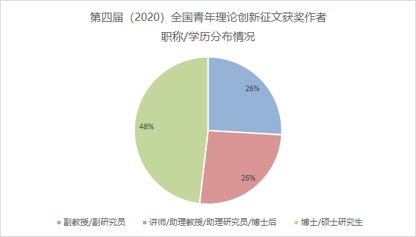
Judging from the winning status, among the young scholars, there are 11 doctoral students, 7 lecturers, assistant researchers and postdoctoral students, 7 associate professors and associate researchers, and 2 master students. This not only shows the improvement of the academic enthusiasm of young students in today’s academic circles, but also echoes the purpose of this essay award: everything is based on the quality of the article, not on academic qualifications and past achievements. The essay activity is not only to find excellent articles, but more importantly, to find some forward-looking academic views and explore outstanding young talents. Judging from the award-winning content, keen awareness of problems, solid analytical methods and exquisite ability to refine concepts are more likely to be favored by experts, which highlights the unanimous pursuit of new theories in the new era.
Fourth, the overall evaluation and improvement of the essay activity

Training young scholars and growing up with young students has always been one of the aims of the journal Exploration and Contention. As an important part of the young scholars’ support program, the 4th National Youth Theory Innovation Essay Activity inherited and carried forward the fine traditions of the previous three activities, cut into China’s social practice with cutting-edge topics, focused on the training of young scholars, and achieved good publishing, academic and social benefits in combination with the country’s reform and exploration of major practical issues in the information age.

(A) through excellent contributions to create a brand of publications, improve academic standards.

During 2019-2020, our magazine published many outstanding contributions of young people’s theoretical innovation essays, and achieved good academic influence and social response. In the future, we will still select outstanding award-winning papers. These high-quality contributions will undoubtedly enhance the attraction of Exploration and Contention to young scholars and play an important role in promoting the cutting-edge viewpoints and academic standards of Exploration and Contention.

(B) found a large number of outstanding young authors, expanding the ranks of magazine authors.

Our magazine has always attached importance to supporting the growth of young scholars. Many young scholars are still the core authors of our magazine after they have grown into the backbone of various schools and disciplines. This essay on theoretical innovation for young people has brought together a large number of outstanding young scholars from universities all over the country, which has made the team of young authors of our journal take a step forward in depth and breadth.

(3) Encourage young people to care about the transformation and reform practice of China in the digital age.

The editorial department takes the topic of "technological innovation and civilization reconstruction" as an important starting point to guide scholars to think deeply about the problems faced during the period of national transformation and social development, which has important practical significance. Generally speaking, this essay activity of the editorial department closely combines the research of academic issues with the major theoretical and practical issues in the development and transformation of China in the new era, which clearly embodies the characteristics of the journal. This essay activity encourages young scholars to think about the major issues of national and social development from their own research fields, which not only guides young scholars to inherit the fine academic tradition of applying what they have learned, but also makes young people more responsible and closely links their academic life with the destiny of the country.

(D) the construction of innovative academic communities

The editorial department insists on organizing four essay-writing activities, which is a useful attempt to innovate the construction of academic community. We hope that by building an academic community composed of major academic journals and young scholars, young scholars with academic potential can have a higher and bigger stage and display their academic talents and ideals.

(V) What needs to be improved

1. The academic innovation of essay writing needs to be strengthened, and the new problems and phenomena brought about by technological innovation need to be further explored. The thesis of this essay activity for young people’s theoretical innovation has some innovative ideas in some fields, but generally speaking, the thinking on the transformation of technological development and social development is still insufficient. On the one hand, there are not enough innovative ideas and viewpoints; On the other hand, young scholars still focus on theoretical thinking and seldom combine theoretical innovation with practical problems.

2. Although the editorial department of "Exploration and Contention" has accumulated a lot of experience in the first three essay-writing activities and made every effort to hold this activity, there are still many places to be improved due to the shortage of manpower. For example, the publicity is still insufficient. After the essay-writing activity, young scholars still contribute to us, which also reflects that our publicity is not in place and young scholars are not aware of the deadline for submission. Moreover, due to too many contributions, there are also many excellent manuscripts, but because of the limited awards, the editorial department and peer review experts have to reluctantly give up what one favours. In the process of evaluation, how to coordinate the relationship between comprehensiveness and discipline, and the specific evaluation procedures and rules need to be further optimized. In addition, the editorial department has not paid enough attention to the follow-up growth of award-winning young scholars and has insufficient information. In the future, it should take various forms to keep in touch with award-winning young scholars and establish a closer academic community.

Finally, the editorial department of Exploration and Contention expresses heartfelt thanks to all the young scholars who participated in this essay-writing activity! I would like to express my high respect to all the judging experts and people from all walks of life who care about this essay activity!
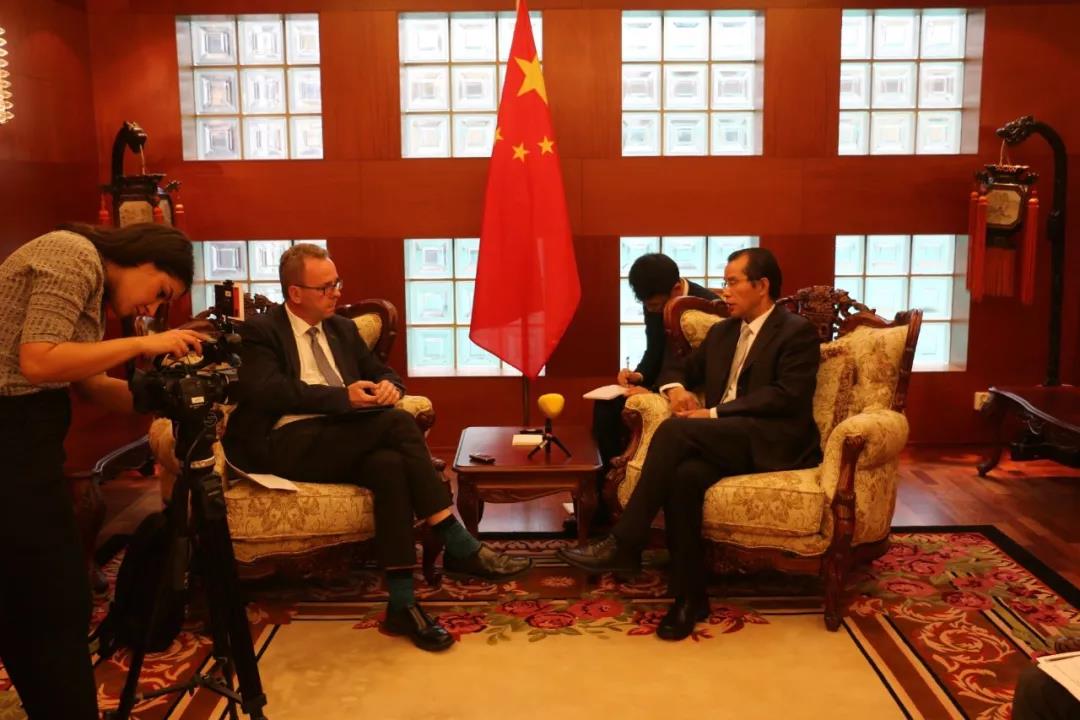
My ambassador once again voiced: Do Swedish laws and governments not respect human rights?

  CCTV News:according toAccording to the website of the Embassy of China in Sweden,On September 17th, China’s ambassador to Sweden, Gui Congyou, accepted an exclusive interview with Larcon, a reporter from Swedish Express, at the embassy about the Swedish police’s rough treatment of China tourists. The full text is as follows:

  Ambassador Gui said, I accepted an interview with your colleagues in Evening News yesterday, and I have said all I need to say. Since you also offered to interview me, I can only agree. First of all, I want to reveal a new situation to you. At noon today, the head of the police station where three China tourists were rudely treated by the Swedish police met my colleague. He confirmed to my colleagues that the three China tourists did not violate Swedish laws. At the same time, he also said that the Swedish police did not violate Swedish law. We are very puzzled by this statement by the Swedish police. First, the three China tourists were rudely treated by the Swedish police, and their life safety and dignity were threatened and hurt. Don’t Swedish laws respect human rights and human dignity? The police are law enforcers and act on behalf of the government. Does the Swedish government also have no respect for human rights and dignity? Second, if foreign police treat Swedish tourists in the same way, what kind of reaction will the Swedish government make? How will you react? Will the Swedish government agree and recognize it? Will the Swedish people agree and recognize it? Thirdly, as far as we know, in November 2011, a similar incident occurred in the southern Swedish city of Bros. At that time, the victim was a Swedish citizen, and the policeman was found to be dereliction of duty. I hope you will announce what I said above to your readers.

  Q: This happened on September 2nd. Why did the China government react strongly two weeks later?

  A: On September 2nd, we received an oral report from the victims. Due to technical reasons, we only received a detailed written report on the morning of the 5th, and asked the hotels involved about the situation. After fully understanding the situation, we informed the Swedish Ministry of Foreign Affairs on the 5th and made solemn representations. The Ministry of Foreign Affairs of China also made solemn representations to the Swedish Ambassador to China in Beijing. We hope that China will respond as soon as possible to the demands of these three citizens, such as investigating the truth thoroughly, apologizing, punishing the police involved and making compensation. But almost two weeks have passed, and the Swiss side has not responded at all. This is not in line with international practice. Three tourists from China were physically and mentally injured, and they expected the Swiss side to respond to their reasonable demands as soon as possible, so they had to resort to the media.

  Q: Have you personally contacted the representatives of the Swedish Ministry of Foreign Affairs and the Swedish police?

  A: As I said just now, I personally met with the relevant person in charge of the Swedish Ministry of Foreign Affairs as soon as we learned about all aspects on September 5. As I emphasized in an interview with Swedish Evening News yesterday, the China government and our embassy cherish the life, safety and dignity of every China citizen. From the perspective of consular protection, this is by no means a trivial matter. We hope that Switzerland can attach great importance to the demands of these three victims in China and give them a proper response as soon as possible.

  The reporter asked about the details of the dispute between three China tourists and the hotel. Ambassador Gui said, I answered your question here yesterday to your Evening News reporter. This is a written record. You can learn more about it.

  Q: Swedish prosecutors have determined that the police have not broken the law.

  A: Then I can’t help but ask, three tourists were forcibly driven away from the hotel by rough means, including two old people, one of whom was sick and took medicine, and the police abandoned them in a graveyard in the middle of the night, when the temperature was below 10℃. Their lives are threatened and their dignity is hurt. Does the Swedish Police Act allow this? Is the Swedish Police Law so inhuman and immoral? Do Swedish laws have such disrespect for people’s basic rights? !

  Q: I have worked in the United States and I know that it is not a good idea to argue with the local police. I have seen the relevant video, and Mr. Zeng shouted "Kill" and was emotional. If someone quarrels with the American police in America, they may be arrested immediately. If the Swedish police arrested China tourists at that time, would this be a better choice?

  A: The Swedish police have confirmed that these three China tourists have not violated the law, and the police have no right to arrest them. Of course, if they break the law, the police should act according to law. As a matter of fact, three tourists from China are strangers. Not far away, Wan Li just arrived in Stockholm late at night and needed help. Who can they call? They could have approached our embassy, but unfortunately they didn’t. If the Swedish police are unwilling to help them, the best way is to contact our embassy, but they have not done so either. Even if the actions of these three China tourists are deficient or flawed, they can’t constitute the reason why the Swedish police treated them so rudely. Aren’t we supposed to respect human rights? ! Aren’t we going to talk about human rights? !

  Q: The police also act according to the routine and have the right to decide to move them to a place far away from the incident, and there is a subway station next to it. This is nothing special, and it is a common situation.

  A: As I said just now, three China tourists are not far from Wan Li. They just arrived in Stockholm late at night and are strangers. Although there was a subway station where the Swedish police forcibly dragged them, the first thing they saw was the cemetery. Can you imagine how they felt when they first saw the cemetery after being treated so rudely? Even if they find the subway station, will your subway still operate late at night? Why didn’t the Swedish police take them to a safe place? As far as I know, in winter in Stockholm, if someone is drunk on the street, the police have the obligation to send them to a warm place to prevent frostbite and freeze to death. Are the Swedish police so heartless and immoral about these three China tourists? Moreover, the three tourists are unarmed and cannot pose any threat to the police. Are Swedish police so cruel?

  Q: We have all watched the live video clip of the incident. Mr. Zeng fell to the ground in front of the police and shouted "Kill someone". Is there something wrong with his performance?

  A: They were forcibly evicted from the hotel. Mr. Zeng’s sick father, who was nearly seventy years old, fell to the ground and was half unconscious. His mother sat down on the ground and asked for help. Their family traveled with interest in Sweden, and when they first arrived in Stockholm, they fell into such helplessness and despair. What kind of reaction can you expect him to make? Yesterday, the reporter of Evening News also showed me that video. But why don’t you pay attention to the video of Mr. Zeng’s father lying on the ground and half unconscious? ! Why don’t you play it?

  Q: Regarding Mr. Zeng’s allegation that he was beaten and abused by the police, the Swedish prosecutor found that the accusation was unfounded and the police were not wrong. What’s your response to this?

  A: I have answered this question from the beginning. Do I need to repeat it?

  Q: No need. Can you tell us something about this family of tourists from China? Where are they from? What were their plans in Sweden? Where did they go after leaving Sweden?

  A: As for their family situation, I have no right to disclose it to you without their permission for privacy protection. After being rudely treated by the police, with the help of a local kind passerby, they took the light rail back to the center of Stockholm, called the police and reported the situation to our embassy, then gave up their travel plan in Sweden and left Sweden with fear and anger to continue their next trip.

  Q: At about 10 am on September 2, someone registered a social media account named "Swedenpoliceturechineseelders" on Twitter and posted photos. Few people knew about it at that time. Is this account opened by the staff of China Embassy?

  A: As I said just now, our embassy received Mr. Zeng’s oral report at 6 am on September 2, and received his detailed written report and photos on the morning of the 5 th.

  Q: So this account has nothing to do with the embassy?

  A: I think I answered clearly.

  Q: Mr. Ambassador, I believe you can see that this incident has aroused strong repercussions in China, especially on social media such as Weibo. Are you surprised by this?

  A: Now is the self-media era, and we all have to adapt to this reality.

  Q: Some people say that this incident is essentially caused by cultural conflict or misunderstanding, or it may be caused by language barrier. This will happen all over the world. Why did the China government make it a big deal?

  A: Do you think this is not a big deal? ! In the middle of the night, when the temperature is below 10℃, China tourists who come not far from Wan Li are not only disillusioned, but also their lives are in danger and their dignity is violated. Isn’t this a great event? ! Yesterday, I stressed to the reporter of Evening News that there are nearly 1.4 billion people in China, and the China Party and government cherish everyone’s life, safety and dignity. It is the duty of our embassies and consulates abroad to safeguard the life, safety and dignity of every China citizen abroad.

  Q: I worked in China. If the China police ask me, I will listen. What advice do you have for China tourists visiting Sweden in the future if they are faced with dialogue with Swedish police?

  A: The China Municipal Government has always reminded China citizens to abide by local laws and regulations, respect local customs and habits, and travel in a civilized manner when traveling abroad. On the other hand, all embassies and consulates in China pay close attention to the local security situation at all times, and issue safety reminders and warnings in time according to changes in the situation. Just look at the website of our embassy. We have issued several safety reminders since this summer. You can see the content of my interview yesterday. Frankly speaking, the relevant departments of China did not pay due attention to protecting the safety of tourists. So far, no case against China tourists has been solved. What do you say?

  Q: In fact, Swedish natives are also facing the same problem of being robbed. Do you think Sweden is more dangerous for tourists than other European countries?

  A: I answered the same question yesterday. You can show it to your interview record. I have also discussed the safety of tourists with the ambassadors of other countries in Sweden, and some ambassadors have also said that their citizens have also been frequently robbed. We hope that the Swedish government and relevant departments will attach great importance to this and take effective measures to avoid the recurrence of robbery against foreign tourists and make Sweden safer than other countries!

  Q: Some people in Sweden and China think that China’s handling of this case has something to do with Gui Minhai’s case, and it is retaliation against Sweden. What’s your comment on this?

  A: I saw this statement in your report in Express on the 16th. I want to stress once again that three China tourists were treated so rudely by Swedish police. Is this a trivial matter? ! Their lives are threatened and their dignity is hurt in the middle of the night. We made solemn representations to the Swiss side in this regard, demanding that the Swiss side respond to the reasonable demands of China tourists as soon as possible. Do we need to find other reasons? ! For those who put forward this statement, it shows that they simply don’t pay attention to or care about the life safety and human dignity of China tourists! For those who put forward this statement, I hope they will talk about basic human rights! We are very shocked and puzzled that China tourists have been treated so rudely and fallen into such a desperate situation and they have not paid attention to it.

  Q: Regarding the Gui Minhai case, China has always believed that Sweden has interfered in China’s internal affairs. So can we say that in this incident, China’s actions interfered in Sweden’s internal affairs?

  A: First of all, I want to add one more point. As mentioned in your report in the Express yesterday, some people said that it is not excluded that the incident of China tourists being rudely treated was deliberately directed by China. I want to say that the person who put forward this statement is too imaginative! They are so fabricated! We all live in reality, not in fictional detective stories!

  As for Gui Minhai’s case, Gui Minhai committed a serious crime in China, and China acted in accordance with the law. The Swiss side unreasonably demanded the Chinese side to release it, which is obviously an interference in China’s judicial sovereignty, with no regard for the rule of law and ignorance of the law. The three China tourists did not violate Swedish laws, but they were treated rudely by Swedish police, and their body, mind and dignity were hurt. Our tourists hope that the Swiss side will respond to their reasonable demands as soon as possible. As an embassy, we shoulder the responsibility of providing consular protection to China citizens abroad, and of course we have the obligation to explain to the Swiss side. This is a diplomatic practice and an international practice.

  Q: The Swedish prosecutor thinks that the police have not broken the law, and the Swedish police have also rejected the demands for apology and compensation from China tourists. So what will happen next?

  A: In a word, we will continue to ask the Swiss side to investigate the case thoroughly, act in accordance with the law and respond to the reasonable demands of China tourists as soon as possible. In doing so, we are defending the basic human rights of China citizens.

  Q: What if the Swedish police refuse?

  A: We urge the Swedish police to respond as soon as possible, but they will not answer the hypothetical questions.

  Q: What do you think of the relationship between Switzerland and China? Sweden was the first western country to establish diplomatic relations with New China, and bilateral relations have always been good.

  A: The people of China have always kept in mind that Sweden took the lead in establishing diplomatic relations with China among western countries, and they have friendly feelings towards the Swedish people. Our task is to work with Switzerland to safeguard, develop and consolidate the friendly feelings between the two peoples and promote the continuous development of Sino-Swiss relations. However, the development of Sino-Swiss relations must have a good foundation and principle, that is, equal treatment and mutual respect. In recent years, some forces, media and people in Sweden have not treated China as an equal. They keep saying that Sweden is a small country, but they always tell China what to do and give orders everywhere. They pretend to be teachers, full of arrogance, prejudice, prejudice and ignorance about China. We hope these forces, media and individuals in Sweden will give up their "high profile" and treat China as an equal. Only on this basis and principle can Sino-Swiss relations further develop.

Notice on printing and distributing the emergency plan for prevention and control of red imported fire ants in Guangdong Province

No.30 [2005] of Guangdong Government Office

Notice on printing and distributing the emergency plan for prevention and control of red imported fire ants in Guangdong Province

People’s governments at the local level and listed, people’s governments of counties (cities, districts), relevant departments and institutions directly under the provincial government:

  The Emergency Plan for the Prevention and Control of Solenopsis invicta in Guangdong Province has been approved by the provincial people’s government and is hereby printed and distributed to you, please follow it.

  Please report the problems encountered in the implementation to the Provincial Department of Agriculture.

General Office of Guangdong Provincial People’s Government

April 4th, 2005

Emergency plan for prevention and control of red imported fire ants in Guangdong Province


  In order to effectively prevent and control the occurrence and spread of Solenopsis invicta, ensure that emergency prevention and control measures can be taken quickly, efficiently and orderly in case of Solenopsis invicta, and ensure the safety of agricultural production, public facilities, ecological environment and people’s health in our province, according to the national Entry-Exit Animal and Plant Quarantine Law, Plant Quarantine Regulations and its implementation rules, Guangdong Plant Quarantine Implementation Measures and the Notice of the Ministry of Agriculture on Printing and Distributing Emergency Plans for the Prevention and Control of Solenopsis invicta.

  First, the confirmation, report and classification of the harm of Solenopsis invicta

  (1) Confirmation

  The competent agricultural department in the place where the fire ant is suspected to occur will send the collected ant specimens to the plant quarantine organ under the provincial agricultural administrative department within 24 hours, and the specialized scientific research institution designated by the provincial plant quarantine organ will identify them. The plant quarantine institution affiliated to the provincial administrative department of agriculture shall confirm according to the expert appraisal report.

  (2) Report

  After confirming the occurrence of Solenopsis invicta in this area, the local administrative department of agriculture should report to the people’s government at the same level and the administrative department of agriculture at a higher level within 24 hours, and quickly organize a general survey of this area to find out the occurrence and distribution in time. The provincial administrative department of agriculture should report the occurrence of Solenopsis invicta to the provincial people’s government and the Ministry of Agriculture within 24 hours, and send a copy to the entry-exit inspection and quarantine department.

  (3) Classification of the hazard degree of Solenopsis invicta

  Third-level hazard: the fire ant hazard occurred in one county (city, district).

  Second-level hazard: the fire ant hazard occurred in two or more counties (cities, districts) under the jurisdiction of a prefecture-level city; Or in a county (city, district) within the scope of the occurrence of red imported fire ants serious harm.

  First-class hazard: Red imported fire ants occur in two or more prefecture-level cities; In two or more counties (cities, districts) under the jurisdiction of a prefecture-level city, the harm of red imported fire ants is serious.

  When the above-mentioned level 1 to 3 hazards occur, start this plan.

  Second, the emergency response

  The people’s governments at all levels shall, according to the principles of hierarchical management, hierarchical response and territorial implementation, and according to the confirmation of the provincial plant quarantine agency and the scope and degree of the harm of Solenopsis invicta, the third-level hazard shall start the third-level response, the second-level hazard shall start the second-level response and the first-level hazard shall start the first-level response.

  (1) Three-level response

  The people’s government at the county level immediately set up a leading group for the prevention and control of plant pests, and quickly organized and coordinated the township governments and county-related departments to carry out the prevention and control of red imported fire ants, and the people’s government at the same level reported to the people’s government at the next higher level; Agricultural administrative departments at the county level should quickly organize a comprehensive investigation and evaluation of the occurrence of Solenopsis invicta, formulate a prevention and control work plan, organize agricultural administrative and technical personnel to take prevention and control measures, and report the occurrence of Solenopsis invicta, the prevention and control work plan and its implementation to the municipal agricultural administrative department in a timely manner; Other relevant departments at the county level closely cooperate to do a good job in the prevention and control of red imported fire ants; Municipal agricultural administrative departments to strengthen supervision and guidance, and organize to find out the occurrence of red imported fire ants in the city; The municipal people’s government shall, according to the severity of the harm of red imported fire ants and the request of the people’s government at the county level, give emergency assistance and support to the areas where red imported fire ants occur in terms of technology, personnel, materials and funds.

  (II) Secondary response

  The municipal people’s governments at the prefecture level immediately set up a leading group for the prevention and control of plant pests, and quickly organized and coordinated the people’s governments of counties (cities, districts) and relevant departments of the city to carry out the prevention and control of red imported fire ants, and the people’s government at the same level reported it to the provincial people’s government; Municipal agricultural administrative departments should quickly organize a comprehensive investigation and evaluation of the occurrence of red imported fire ants in this city, formulate prevention and control work plans, organize agricultural administrative and technical personnel to take prevention and control measures, and timely report the occurrence of red imported fire ants, prevention and control work plans and their implementation to the provincial agricultural administrative departments; Other relevant departments at the municipal level closely cooperate to do a good job in the prevention and control of red imported fire ants; Provincial agricultural administrative departments strengthen supervision and guidance, and organize to find out the occurrence of red imported fire ants in this province; The provincial people’s government shall, according to the severity of the harm of red imported fire ants and the request of the municipal people’s government, give emergency assistance and support to the areas where red imported fire ants occur in terms of technology, personnel, materials and funds.

  (III) First-level response

  The provincial people’s government immediately set up a leading group for the prevention and control of plant pests, quickly organized and coordinated the municipal people’s governments and relevant provincial departments to carry out the prevention and control of red imported fire ants, and the provincial people’s government reported to the State Council; Provincial agricultural administrative departments should quickly organize the investigation and evaluation of the occurrence of Solenopsis invicta in the province, formulate the prevention and control work plan, organize agricultural administrative and technical personnel to take prevention and control measures, and report the occurrence of Solenopsis invicta, the prevention and control work plan and its implementation to the national agricultural administrative department in a timely manner; Other relevant departments in the province closely cooperate to do a good job in the prevention and control of red imported fire ants; The provincial people’s government gave emergency support to the place where the red imported fire ants occurred in terms of technology, personnel, materials and funds according to the severity of the harm of red imported fire ants, and requested the State Council to give corresponding assistance when necessary.

  Third, the department responsibilities

  Leading groups for the prevention and control of plant pests at all levels are responsible for the command and coordination of the prevention and control of red imported fire ants in this area, and are responsible for supervising the implementation of emergency plans. The agricultural department is specifically responsible for organizing the monitoring and investigation, prevention and control, timely reporting and notification of Solenopsis invicta; The health department is responsible for the prevention and control of fire ants; The propaganda department is responsible for guiding the media to correctly publicize and report the situation of red imported fire ants; The financial department timely arranged for the allocation of emergency funds for the prevention and control of red imported fire ants; Science and technology departments organize research on prevention and control technology of red imported fire ants; The economic and trade department organizes the production and supply of prevention and control materials, and the response of Solenopsis invicta to the impact of trade and investment environment; The forestry department is responsible for the investigation and prevention of red imported fire ants in woodland and woody plants; Entry-exit inspection and quarantine departments strengthen entry-exit inspection and quarantine work to prevent the introduction and spread of red imported fire ants; Development and reform, construction, transportation, environmental protection, tourism, water conservancy, civil aviation and other departments closely cooperate to do a good job in related work.

  4. Delineation of occurrence point, occurrence area and monitoring area of Solenopsis invicta.

  Occurrence point: the range within 100 meters around the outer edge of the nest is designated as an occurrence point (the distance between two nests within 400 meters is the same occurrence point); If the designated occurrence point meets rivers and highways, it should be bounded by rivers and highways, and others can be appropriately adjusted according to local specific conditions.

  Occurrence area: the area of the administrative village (residents’ committee) where the occurrence point is located is designated as the occurrence area; If the occurrence point spans multiple administrative villages (residents’ committees), all the administrative villages (residents’ committees) that span will be divided into the same occurrence area.

  Monitoring area: 8000m outside the occurrence area is designated as the monitoring area; When drawing a boundary, if you encounter a lake or reservoir with a water surface width greater than 8000 meters, take the inner edge of the lake or reservoir as the boundary.

  V. Blockade Control and Extinction

  The competent agricultural administrative department in the place where the red imported fire ants occur shall set eye-catching signs and boundaries on the ant nests and the activity areas of red imported fire ants in the occurrence area, and take measures to block, control and extinguish them.

  (1) Blockade control

  The relevant departments should conduct a comprehensive investigation on the airports, docks, stations, parking lots, areas on both sides of major traffic arteries, production units with products shipped abroad, and logistics distribution centers in the area where red imported fire ants occur, and the consignors and freight enterprises should actively cooperate with the relevant departments to do a good job in the prevention and control of red imported fire ants. Plant quarantine institutions can send people to participate in local timber inspection stations. When the harm of Solenopsis invicta is particularly serious, with the approval of the provincial people’s government, temporary plant quarantine inspection stations can be set up in the main traffic arteries around the occurrence area to quarantine the exported plant products and media such as seeds (seedlings), flowers, bonsai and turf, as well as waste materials, and prohibit the soil, garbage, building mud and compost from being transported outside the occurrence area of Solenopsis invicta to prevent the Solenopsis invicta from spreading with the water.

  (2) Prevention and extermination

  Vigorously carry out patriotic health campaign, clean up the garbage and other breeding grounds of red imported fire ants in the area where red imported fire ants occur, and keep the environment clean and tidy.

  Regularly carry out the action of killing red imported fire ants, and use the two-stage control method to eliminate the nest of red imported fire ants, that is, first put bait to kill them, then dig the nest and spray or fill the nest with drugs until the red imported fire ants are extinguished.

  Six, prevention of stinging and wounding treatment

  It is necessary to remind people not to go to places where red imported fire ants occur to prevent red imported fire ants from stinging and hurting people. If it is necessary to work in the area where red imported fire ants occur, protective measures should be taken to prevent contact with red imported fire ants. After being stung by red imported fire ants, the wound should be treated in time.

  VII. Investigation and monitoring

  Agricultural plant quarantine institutions at all levels in the area where the red imported fire ant occurs and the surrounding areas should strengthen the investigation and monitoring of the local area, make records of the monitoring results, keep records and files, and summarize and report them regularly. Other areas should strengthen the quarantine and monitoring of plants and plant products from the occurrence area of red imported fire ants to prevent the introduction of red imported fire ants.

  Eight, publicity and guidance

  Propaganda departments at all levels should actively guide the media to correctly report the occurrence and control of red imported fire ants. Relevant news and information should be obtained through normal channels of government departments to prevent speculation and avoid social unrest caused by inaccurate reports. In the area where red imported fire ants occur, it is necessary to carry out popular science propaganda in an appropriate way, focusing on matters needing attention, preventive knowledge, prevention and control techniques and methods for preventing injuries. When there are false reports in the media or rumors circulating in the society, we should immediately clarify them positively, strengthen the guidance of public opinion, and reduce the negative impact.

  IX. Emergency Support

  (A) Team security

  People’s governments at all levels should set up an emergency prevention and control team of red imported fire ants, which is composed of staff of agricultural administrative departments, plant quarantine personnel and relevant experts, strengthen the training of professional and technical personnel, improve the professional quality and professional level of emergency prevention and control team personnel, provide high-quality emergency team guarantee for the start of emergency plans, and set up a professional team to kill ants; It is necessary to fully mobilize the masses and implement group prevention and control.

  (2) Material guarantee

  People’s governments at the provincial, city and county levels should establish an emergency material reserve system for the prevention and control of red imported fire ants to ensure the supply of materials. In areas where red imported fire ants are seriously endangered, relief materials should be allocated in time to ensure the stability of the lives and production of affected farmers.

  (3) Funding guarantee

  People’s governments at all levels should arrange special funds for emergency prevention and control of red imported fire ants. When the emergency response is started, the local administrative department of agriculture, in consultation with the relevant departments, puts forward a plan for the use of funds, which will be appropriated by the financial department at the same level, and the departments of finance, agriculture and auditing will strictly supervise and inspect the use and management of special funds to ensure earmarking.

  (4) Technical support

  Science and technology departments should vigorously support the research on the prevention and control technology of red imported fire ants, and provide technical support for the continuous and effective control of red imported fire ants. In the place where red imported fire ants occur, the relevant departments should organize the local plant quarantine technical backbone and strengthen the technical guidance for the prevention and control of red imported fire ants.

  X. Emergency lifting

  After comprehensive and effective prevention and control measures are taken to achieve the prevention and control effect, the county and municipal agricultural administrative departments apply to the provincial agricultural administrative departments, and the provincial agricultural administrative departments organize experts to evaluate and demonstrate that if the prevention and control effect reaches the standard, the emergency can be lifted with the approval of the provincial leading group for pest prevention and control.

  After 9 months of continuous monitoring, no red imported fire ants were found. After the provincial agricultural administrative department organized expert argumentation and confirmed the extermination of red imported fire ants, it was reported to the provincial agricultural administrative department step by step by the agricultural administrative department in the area where red imported fire ants occurred. The provincial agricultural administrative department reported to the provincial people’s government for approval to remove the red imported fire ants, and reported to the Ministry of Agriculture for the record. At the same time, the relevant information was notified to the entry-exit inspection and quarantine department.

  XI. Supplementary Provisions

  City and county people’s governments at all levels shall formulate emergency plans for the prevention and control of red imported fire ants in this area according to this plan.

  This plan shall be implemented as of the date of promulgation.

  This plan shall be interpreted by the Provincial Department of Agriculture.

  Attachment: 1. Technical Scheme for Investigation and Monitoring of Solenopsis invicta

     2. Technical scheme for prevention and control of red imported fire ants

     3. List of members of the expert group on prevention and control of red imported fire ants in Guangdong Province

  Attachment 1:

Technical scheme for investigation and monitoring of red imported fire ants

  First, the identification characteristics

  (A) morphological characteristics

  Small worker ants (worker ants) of Solenopsis invicta are 2.5 ~ 4.0 mm long. The head, chest, antennae and feet are all brown, the abdomen is often brown, the color between abdominal segments is slightly pale, and the center of the back of the second and third abdominal segments often has nearly round pale markings.

  The front end of the anterior thoracic backboard is raised, and the joint between the anterior and middle thoracic backboards is not obvious; The joints between the middle and back thoracic backbones are obvious, and there are two nodules at the thoracoabdominal junction. The first nodule is flat and conical, and the second nodule is conical. The abdomen is ovoid, with 4 segments visible, and there are pincers protruding from the end of the abdomen.

  Large worker ants (soldier ants) are 6 ~ 7 mm long. The shape is similar to that of a small worker ant, with orange-red body, slightly darker abdominal backboard, developed upper jaw, dark brown, slightly shiny body surface, short and small body hair, and no exposed claws.

  (2) characteristics of ant nests

  Solenopsis invicta is a completely terrestrial ant nest, and the mature ant nest is an ant mound with a height of 10 ~ 30cm and a diameter of 30 ~ 50cm. The newly formed ant nest appears obvious mound-like ant mound after 4 ~ 9 months. When the nest is disturbed, the red imported fire ants will quickly leave the nest and attack the invaders.

  (3) Hazard characteristics

  Solenopsis invicta mainly harms plants, animals and human bodies by stinging with pincers and biting with mouthparts. After being stung by it, the human body will feel pain like a fire, and then there will be blisters like burns. After 8 ~ 24 hours, the sting will fester and form pustules.

  Investigation and monitoring of occurrence and distribution of red imported fire ants

  (1) Interview and investigation

  Ask local residents about the place, time and harm of red imported fire ants, and analyze the spread and spread of red imported fire ants and their sources. Each community or administrative village asked more than 30 people to investigate. In-depth investigation was conducted on the suspected areas of red imported fire ants found during the inquiry.

  (2) Field investigation

  1. Investigate the region

  Focus on the investigation of overgrown wasteland, farmland ridges, places close to water sources, dams, roadsides, village roads, lawns, green spaces, corner of houses, garbage dumps near courtyards, parks, schools and other places.

  2. Investigation methods

  Each administrative village or community has not less than 10 plots of each type of investigation, and the investigation area of each point is more than 50M2. The investigation points should be representative and cover the whole village or community. Observe whether there are mounds or sand-pile-shaped ant nests, record the occurrence area, occurrence range, occurrence density, diameter and height of the mounds or ant nests, and push aside the surface of the ant nests to observe whether the ants quickly leave the nests and show strong aggressive behavior.

  (3) decoy trapping monitoring

  1. Preparation and dosage of bait

  Bait composition: 95% peanut oil, 5% white sugar or honey. If white sugar is used, boil it into syrup. Add peanut oil and white sugar or honey to dishes according to the ratio of 95: 5, stir and mix evenly, and put them into shallow dishes (disposable paper dishes with a diameter of about 15CM), each dish is about 10G, and make bait.

  2. Bait release

  There shall be no less than 5 bait placement points for various types of plots in each village or community. Put the bait in the shade of the ant’s suitable area, preferably in the place where ants are active. Pay attention to make the edge of the saucer with bait stick to the ground to facilitate ants to climb up. Each point has an area of more than 50M2, and five decoys are placed at random with a distance of more than 5M.

  Step 3 investigate

  Observe once a day, and change the bait for 5 consecutive days (except rainy days). Observe whether the trapped ants are reddish brown. If suspicious ants are found, follow up the surrounding ant nests and ant behavior characteristics. If found, collect samples of ants in the nests.

  Third, sample collection and delivery

  If suspicious ants are found in the investigation, soak them in 70% alcohol or kill them with pesticides, and indicate the collection time, collection place and collection person. Collect the ants collected at each point in a specimen bottle, and collect more than 50 suspicious ant specimens. Send the samples to the provincial plant quarantine station to ensure the safety of the samples during transportation.

  Iv. requirements of investigators

  Investigators are required to be full-time plant inspectors or trained plant protection technicians. The main contents of the training are the morphological and biological characteristics of Solenopsis invicta, combined with behavioral characteristics, ant hill characteristics, harmful symptoms and investigation and monitoring methods and means of Solenopsis invicta.

  V. Handling of survey results

  In the investigation and monitoring, once the red imported fire ants are found, the reporting system must be strictly implemented, and they must be reported step by step within 24 hours, and the investigation and monitoring situation should be reported to the higher government and relevant departments step by step every 15 days.

  Attachment 2:

Technical scheme for prevention and control of red imported fire ants

  I. Blockade and quarantine measures

  (1) Blockade and quarantine

  1. Make a carpet survey in the area within 50M on both sides of the main traffic trunk passing through the fire ant occurrence area, thoroughly remove the ant nest, trap and kill the fire ant, spread a lime belt (1M wide), and whitewash the trunk of the roadside trees with lime water (about 80CM high).

  2. Strictly control the external logistics of the fire ant occurrence area and prevent the fire ant from spreading abroad.

  (1) Conduct a thorough investigation on the logistics of the manufacturers and enterprises in the occurrence area. For the units with bulk goods to be transported abroad, a special person shall be responsible for the quarantine work of the place of origin. At the same time, the means of transportation in the production site and the freight place shall be treated with ant extermination, and inspection shall be carried out before loading to prevent the red imported fire ants from coming out with the goods.

  (2) Strictly inspect the articles, containers, means of transport, gardening and farming machines and equipment transported from the occurrence area, focusing on whether the packaging and contents of the goods contain red imported fire ants, and whether the corners and bottoms of the means of transport, containers, etc. are hiding ants. If red imported fire ants are found, they should be handled in time to prevent them from being transported with the goods.

  (3) Clean up and exterminate ants in the parking lot in the occurrence area, and set up a pesticide toxic soil isolation belt (about 1.0M wide).

  (4) It is forbidden to transport garbage, waste soil, building mud and compost outside the area where it occurs. Only seedlings, flowers, bonsai and turf with soil can be transported outside after strict quarantine.

  (5) Strengthen the inspection of river banks flowing through the occurrence area, thoroughly eradicate the nest of red imported fire ants along the coast, and prevent them from spreading with the water.

  (6) Strengthen the training of quarantine, blockade, investigation, monitoring and control technology, increase the publicity of Solenopsis invicta control, raise the awareness of the masses, and make them take actions to prevent proliferation.

  (two) the quarantine treatment agent and the use method

  If the goods, packages and means of transport transported from the occurrence area are infected with red imported fire ants, they must be treated with drugs.

  Seedlings, flowers, bonsai and turf with soil can be treated with the following chemicals: abamectin, cypermethrin, bifenthrin, sevoflurane, fipronil, chlorpyrifos, etc., by spraying, soaking or watering. Vehicles and containers can be disinfected by spraying the above chemicals or fumigation. The use concentration of the medicine refers to the instructions for the use of goods.

  Second, the fire ants extermination measures

  According to the characteristics of occurrence and damage of Solenopsis invicta, the combination of environmental control and chemical control can be adopted to control and extinguish it.

  (1) Clean up the environment and eradicate the breeding ground of red imported fire ants.

  1. Residential areas

  Do a good job in indoor cleaning and hygiene, often clean up the debris or food piled up on the floor and the foot of the living room, remove garbage and food residues, and minimize the environment suitable for the survival and harm of red imported fire ants. Clean up the sundries near the house, remove weeds and dredge the drainage ditch, and sprinkle lime around the ditch to prevent ants.

  2. Wasteland

  For the wasteland where the density of ant nests is high and the weeds are overgrown and difficult to treat, herbicides can be applied first, and the ant hills are exposed after the weeds dry up, and then chemicals can be used for control. In the barren slope land with low density of ant nests, after the ant nests are found, herbicides are sprayed on the ant hills and the weeds around them, and then chemicals are used to control them.

  3. Farmland and dry land

  Remove weeds, shrubs and soil miscellaneous fertilizers around the cultivated land, and cut off the ant path leading to the field.

  4. Garden green belt

  Remove litter and garbage in time, and brush tree trunks and ground roots with limewater to prevent insects and ants.

  5. Garbage disposal

  Thoroughly clean up the garbage and garbage collection points in the occurrence area, treat the garbage on the spot by pesticide treatment or high temperature composting, and prohibit foreign transportation to prevent spread. Be careful not to abandon and pile up garbage and waste products in the wild and residential areas.

  (2) Chemical control

  The control was carried out by applying pesticides step by step and finally extinguishing. Firstly, bait is put into the active foraging area of Solenopsis invicta near the anthill, and after 2-4 weeks, the ant nest is filled with drugs or directly treated with drugs. After prevention and control, continuous monitoring should be carried out, and the red imported fire ants should be repeatedly treated with bait and medicine according to the actual situation until no red imported fire ants are found within 9 months.

  1. bait poisoning

  The number of individuals in the ant colony is determined by the number of eggs laid by the queen ants, and the queen ants often live in the depths of the ant nest and rely on the workers to feed the pre-digested food to survive. Because of this characteristic, it is generally difficult for insecticides to kill queens, which leads to difficulties in control. The bait is made of slow-acting pesticides and food attractant materials (such as vegetable oil), which will not kill the foraging worker ants quickly. Worker ants are attracted by the oil. After finding the bait, they bring it back to the nest. After being digested by the young ants, they are fed to the queen and the developing young ants. After feeding, the red imported fire ants will eventually be poisoned and die, thus destroying the whole ant colony.

  Insecticides used to make baits are:

  Remarks on Effective Time of Effective Component Content in Pharmaceutical Name

  Fuyihydrazone can be used indoors after 0.73-1% for 2-4 weeks.

  Formicidin 0.5% takes effect in 6-8 weeks.

  Fenoxycarb 1.0% takes effect in 6-8 weeks.

  0.5% nitenpyram takes effect in 8-12 weeks.

  Avermectin 0.011% can be used indoors after 6-8 weeks.

  Fipronil 0.008% takes effect in 2-4 weeks.

  Spinosad 0.015% takes effect from 3 days to 8 weeks.

  Preparation method of bait:

  Peanut bran, biscuits and bread crumbs can be used as carriers, and the drug can be dissolved in vegetable oil such as soybean oil and mixed with the carrier to make bait.

  Application method of bait:

  You can choose a place where the Solenopsis invicta is active and foraging for food, or you can treat it in a single nest. The dosage is 1-1.5g per 10m2, and it is generally put at a distance of 1.0-1.5m from the nest. It should be used as far as possible when the soil temperature is 20-30℃ and the workers come out for food. After the first feeding, it is advisable to feed the bait once every 4-5 weeks.

  Precautions: (1) Don’t destroy the ant mound and disturb the ant nest to prevent the red imported fire ants from moving and spreading; (2) using fresh bait; (3) Do not mix bait with other substances; (4) Do not apply pesticide in rainy days, but apply it to dry ground, and try to avoid direct sunlight; (5) When the daily average temperature is higher than 20℃, the bait has better effect; (6) In the pesticide application area, obvious warning signs (sanitary pest control, etc.) should be inserted to avoid poisoning people and livestock or other accidents.

  2. Treating ant nests with chemicals

  Suggested chemicals: chlorpyrifos (chlorpyrifos), cypermethrin, abamectin, imidacloprid, spinosad (Caixi), fipronil (Regent), carbaryl (carbaryl), deltamethrin (fenvalerate), etc. Prohibit highly toxic and residual pesticides. The concentration of the above drugs is prepared according to the instructions of the commodity. Nest filling: liquid or wettable powder is mixed with water and slowly poured into the nest. The amount of liquid medicine used in each nest is generally 10-15 liters, and the amount of liquid medicine is appropriately increased for larger nests.

  (1) Abamectin, spinosad, cypermethrin, deltamethrin and other chemicals are recommended to kill ants in residential areas, public buildings, schools, factories and enterprises, and the methods of applying pesticides can refer to the methods of health pest control. After applying pesticides in HOS houses, open the windows for ventilation. Drug use in residential areas, public places, schools, factories and enterprises should avoid the peak of people flow.

  (2) Attention should be paid to minimize the impact on pedestrians when killing ants in urban garden green belts; Safer drugs should be used in parks, squares, golf courses and other crowded places, and regent and imidacloprid can also be used in other places with less people. Attention should be paid to the safety of people and animals in the application area.

  (3) Paddy fields, dry land, orchards and wasteland.

  It is suggested to use one of the above drugs, and pay attention to the influence on bees.

  (4) Attention should be paid to the safe use of drugs in areas near rivers, reservoirs and fish ponds, and abamectin, pyrethroids and regent should be banned to prevent water pollution and avoid killing fish and shrimp.

  Three, the prevention and control effect inspection and tracking monitoring

  1. After using poison bait for control, several ant nests should be dug up at random 2-4 weeks after application for inspection. If ants are still active in the nests, they should be filled with drugs, or bait can be spread to continue poisoning and repeated application.

  2. After 2-4 weeks of treatment with chemicals, select multiple monitoring points in the prevention and control area, and pay attention to covering the whole prevention and control area. Choose an area of 50 square meters for each point, and randomly set up 5 traps (peanuts and syrup can be used) for monitoring, trapping continuously for 3 days each time, once a month.