Implied in both form and spirit-on the transcendence of Chinese characters over language functions
[Chinese Characters and Folklore]
Author: Li Jing (Associate Professor, Center for Inheritance, Dissemination and Education of Chinese Character Civilization of the State Language Committee, Center for Inheritance and Innovation of Ancient Chinese Characters and Chinese Civilization of Henan Province)
The structure of Chinese character forms contains the wisdom and ingenuity of the Chinese nation, and the changes of Chinese character forms often have profound meanings beyond the sound and meaning of characters. For example, the folk custom of seeking happiness is often realized through the change of the shape of the word "blessing": Kangxi’s imperial pen is "the best blessing in the world", which implies the word "longevity" in writing, indicating "both happiness and longevity", and the "blessing" below is not sealed, which means "boundless prosperity"; The word "Fu" is posted on the gate, which means "Open the door to welcome the blessing", and the word "Fu" is posted upside down on the rice jar. When the rice is poured, the word "Fu" is deformed positively, symbolizing "When things go, they are blessed"; Hundreds of different forms of "fu" form a "hundred-blessing picture" in order to "bless arrival" … This phenomenon of using Chinese characters to express ideas by means of shape variation, orientation movement, stroke increase and decrease, sorting and combination is called the "super-symbolic function" of Chinese characters by scholars, that is, Chinese characters can play an expressive function beyond language without corresponding to the sound and meaning of symbols. This is an important feature that distinguishes Chinese characters from pinyin characters, and it is also a prominent embodiment of the uniqueness of Chinese character civilization and Chinese civilization.
1. Intuitive simulation of glyph ideographic.
After the transformation of Chinese characters, the original pictographic and pictographic features were weakened, but the unique attribute of "pictographic according to class" in the origin stage has long been deeply engraved in the national cultural psychology, which has influenced the Chinese people’s cognitive psychology and usage habits of Chinese characters. People often describe shapes and examples based on the similarity between glyphs and the shape of things, and activate the original pictographic function of Chinese characters. For example, the Book of Songs Bo Xi: "It rains and it rains, and the sun comes out." Among them, the "pestle" indicates brightness, and the glyph of "sun" on "wood" is used to describe the scene of hanging branches in Chu Qing after the rain, which is vivid. Another example is the Ming poem "Night to Xixi": "The cool moon rises and disappears, and the peaks are bumpy." The word "concave-convex" in the sentence is integrated with the semantic meaning, showing the staggered and uneven shape of Gu Feng and the "chaos" of the mountain peaks, as at present.
If the above-mentioned words such as "Gao", "concave" and "convex" are used to express meaning as well as semantics, then the transcendence of Chinese characters over language functions is more prominent in the use of purely glyph-related objective things. For example, the poem "Jiangnan" written by Han Yuefu: "Lotus can be picked in the south of the Yangtze River, and the lotus leaves are He Tiantian." The "field" here does not record "farmland", but only because the shape is similar to the lotus leaf with lines, it is described as "field" to describe the lotus leaf lush and connected. For another example, in the Song Dynasty, "The frog turns white and grows wide, and the earthworm dies purple", in which the word "Chu" imitates the shape of the frog falling to the sky after death, and the word "Zhi" resembles the shape of the earthworm after death. The meaning of "Chu" and "Zhi" is figurative, but none of them corresponds to the meaning of the language. For another example, there is a bamboo garden in Yangzhou named "Geyuan", named after "Ge", and its shape is like the appearance of bamboo leaves, which is interesting and clear.
The superlinguistic function of Chinese characters can also be expressed directly by "a certain glyph" by describing the form. For example, in Tang poetry, the word "cross the head" and in Song poetry, the image is particularly clever. Modern contexts include "one-character eyebrow", "eight-character step", "Chinese character face", "I-shaped building", "T-shaped road", "Tian Zige", "Chuanzi pattern" and "well-shaped brick", and so on, all of which are special uses of the whole character as a pictographic symbol to illustrate things.
2. Components are divided into many meanings.
As an integral part of Chinese characters, components can sometimes "express meaning by form" and push the information related to words from "implication" to "presentation". For example, "Shen (Shen) sacrifice" was a way of offering sacrifices to God in ancient times. In Zhou Li Da Zong Bo, there is a record of "offering sacrifices to mountains and rivers with raccoons", which means that sacrifices sink into the water to worship mountains and rivers. The word "Shen" only means "sinking things into the water (as a sacrifice)", and the object of sinking is unknown. However, the word "Shen" in Oracle Bone Inscriptions has different glyphs from cattle, sheep and jade, and its components mark different sacrifices. Similarly, there are words like "prison", "grazing" and "trap" written by Oracle Bone Inscriptions. The replacement components are cattle, sheep, deer, tapirs, etc. Different components have different related objects.
The components of Chinese characters (including non-functional components) can not independently express the language meaning, nor can they be used independently in the language chain. If there is a situation that components or parts express meaning independently and are used independently, it is beyond the function of general symbols. There are two main situations:
One is that the whole word does not express the meaning, and the component expresses the real meaning. For example, scholar Feng Youlan, Zeng Zeng friend Jin Yuelin Shoulian: "It’s not just rice, it’s tea." The word "rice" consists of eighty-eight, and the word "tea" consists of two tens on the upper part and eighty-eight on the lower part, which adds up to one hundred and eight. "Rice" does not refer to the word "rice", and "tea" has nothing to do with "tea", which means that the real meaning of the old man’s longevity is hidden in the words, which is quite elegant. According to legend, Ji Xiaolan wrote the inscription "Bamboo Bud" for the newly-built pavilion in He Shen’s house. He Shen thought that it was "like a bamboo bud, like a pine tree" in The Book of Songs, and he was very proud. But he didn’t know that his intention was to satirize his "all fools". "Bamboo bud" does not record the word "dense bamboo forest", but expresses the meaning with the split components, which embodies the excellent and rich expressive force of Chinese characters. There are similar usages in the modern network context, such as "Ji (ao) ? (tān), Bi (ao) ? (rén)", which means "as long as he has his heart, don’t have two hearts". "Luo" and "Yi" are originally dialect words, meaning "as long as" and "don’t". The semantics here are consistent with dialects, but they are read separately. "Mi" is the honorific title of the third person "He", which is interpreted as "His Heart" here; "Ba" is the same as "benevolence" in ancient times, and it is interpreted as "two hearts" here. The speaker’s real meaning lies on the component, even if he only knows the meaning of the word and doesn’t know its sound, he can read and use it.
The other is that the whole word expresses the real meaning, and the component does not express the meaning, but the whole word is disassembled into component words and directly compiled into sentences. For example, The Book of Jin: "Gu Yue’s Last Rebellion in Zhongzhou", in which "Gu Yue" is the argot of "Hu" and refers to the Hu people. In the Song Dynasty, "Sitting and watching eighteen gongs, pitching ashes", "eighteen gongs" is derived from "pine" and refers to pine trees. The component only represents the original word, and has no function of recording language. When a poem is dismantled and combined, it is full of purport and euphemism.
This kind of glyph disassembly is also often used to create crossword puzzles: either the author leaves, the reader closes, such as "words and deeds, never leaving", and "words, body and inch" combine to get the answer word "Xie"; Or the author’s combination, the reader’s solution, such as "pump", breaks down the mystery word "get to the bottom" Because he talked about it, this is not superfluous.
3. The body variation is quite ingenious
The transcendence of Chinese characters over language functions is also reflected in the change of the conventional forms of glyphs to convey special meanings. Chinese characters have strong plasticity, and many different forms can be transformed by scaling, increasing or decreasing components and strokes on the two-dimensional plane, which is particularly widely used in the network context. After the Chinese character component is split, it occupies a plurality of characters, which widens the width of the whole character horizontally visually, which not only symbolizes the widening of the body shape, such as "every festival’ half moon’ weighs three pounds"; It can also be a metaphor for the slowness in the time dimension, such as "experiencing the life of Chengdu". The increase or decrease of components can also show the super-linguistic charm of Chinese characters. For example, netizens spit out: "Shandong enters autumn in one second,’ Candong’ becomes’ Shandong’ overnight … and soon becomes’ Mountain Frozen’." Here, "Candong", "Shandong" and "Mountain Frozen" are physical variations based on the shape of "Shandong", where "Candong" increases "fire", "Shantou" increases "water" and "freezing" increases, which corresponds to the unpredictable weather in the objective world.
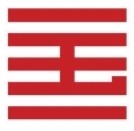
China Academy of Art
In art design, the variation of Chinese characters has unique aesthetic value and can also express special meanings. For example, the school logo of China Academy of Fine Arts is not only like the word "country" without left and right, but also like the abstract word "beauty", which means that the country is boundless. The logo design of Anyang Museum is also full of wisdom: the word "Anyang" is arranged vertically, the upper part of "An" is deformed into the shape of a mountain (short in the middle), which looks like the cornice of an ancient building, and the lower part of the word "female" is extended vertically in two strokes, imitating the shape of the museum wall to cover the traditional word "Yang", which means to collect rare treasures and accumulate the yang of the world. The words "Guo" and "An" convey rich humanistic information by non-verbal means of body variation, which is ingenious and profound. For another example, in the theme posters against corruption and promoting honesty, the forms of Chinese characters convey profound connotations through various changes: or "corruption" is inverted to express the meaning of "anti-corruption"; Or "greed" makes "Bei" a "prisoner", which means that greed is a prisoner; Or "honesty" and "corruption" are combined into one word, which contains dialectical philosophy. There is only a thin line between honesty and corruption. It is necessary to keep the bottom line and sound the alarm.
4. Changing words has another pursuit.
Chinese characters often use other characters in the process of use, which is related to folk culture and often implies profound meaning. For example, in the Liao Dynasty, the word book "Dragon Cave Hand Mirror" was changed to "mirror" because it avoided Zhao Kuangyin’s grandfather Zhao Jing’s taboo; In the late Ming Dynasty, in order to avoid the name of Zhu Changluo, the homonym "Taste" and "Luo" were used instead of "Chang" and "Luo". The substitution of Chinese characters reflects the cultural custom of "taboo for respect, taboo for relatives and taboo for sages" at that time.
In Chinese New Year greetings, people often change a word in an idiom into a word with the same sound or similar sound to that of the year’s zodiac, with the aim of getting a good impression, such as showing off the rabbit, prospering the dragon, making the sheep proud, making the chicken happy and making the pig happy. Sometimes, word-changing is for the pursuit of subtlety and elegance. For example, in letters, "Xian Di" is often written as "Lei Lee", which is even more elegant because "Xiao Ya Chang Di" is a poem that sings the love of brothers and sisters, replacing "Di" with "Di". There are also elegant considerations in changing the names of place names. For example, the names of Beijing hutongs were changed in batches to avoid vulgarity, the "sow" hutong was changed to "Meizhu" hutong, the "Yangwei" hutong was changed to "Yangwei" hutong, and the "Wang Widow" diagonal street was changed to "Wang Guangfu" diagonal street. In addition, Macau changed the ancient name "oyster mirror" to "Hao mirror", and Taiwan Province changed the place name "chicken coop" to "Keelung". Seeking elegance by changing customs reflects the cultural orientation of the times and the ideas of local people. However, place names are valuable intangible cultural heritage, bearing the ancient people’s concept of living together and cultural traditions. If it is not to avoid vulgarity and seek elegance, it is best not to change the words of place names at will.
Chinese characters have the function of super-language, and their glyphs vary. When they are replaced by words, they often mean something beyond words and have another mind. This implied cultural meaning needs our careful understanding.
Guangming Daily (April 21, 2024, 05 edition)