What’s so good about the credits?
The writer of this article is @ Ghost Feet of Xiaowan Family.
The only function of movies is to make life more interesting than movies.
Friends who often go to the movies often encounter a problem: do you want to watch the credits?
Indeed, the credits are the collective appearance of the behind-the-scenes workers of the whole film, regardless of size or type of work.
Watching the subtitles at the end of the film is a basic respect for the creators, but the subtitles, numerous names and various titles and positions that last for several minutes are really unattractive to the general audience.
"Eggs" is an important form to enhance the attraction of credits.
Then, let’s have a little popular science today, and talk about what doorways and attractions are there in the credits besides the egg link.
Kasi lineup
Generally speaking, the credits are the most concerned about.
From the audience’s psychological point of view, the cast at the beginning of the film is more like a preview-"These stars will be seen next", while the cast at the end of the film, especially including the correspondence between actors and roles, is more like a aftertaste-"How is his/her performance?"
Of course, when it comes to the cast, we can’t avoid an important question. How to arrange the positions?
The most traditional and fair way is to arrange according to the order of appearance, which is often seen now. This can really avoid the dispute of who comes first, but it also blurs the primary and secondary relationship between starring and guest appearances, which is somewhat confusing.
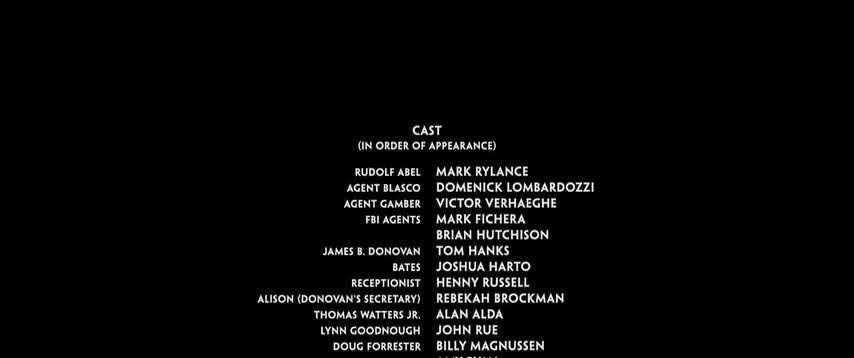
Bridge of spies.
In fact, in contemporary works, in order to avoid disputes and highlight the leading role, more complicated ways will be chosen to present the cast.
For example, making gorgeous animations, the ending of Avengers 4 produced a special signature+animation for six first-generation members, which naturally sold a wave of feelings, but also played down the "primary and secondary" issues and avoided unnecessary discussions.

Old Hong Kong films are arranged vertically to avoid the problems before and after, and Japanese film and television circles rank them with strict qualifications, all in order to weaken the attention of fans and fans.
Is the order of names really that important? For the audience, what can always be remembered is the character who has not appeared for a long time but surprised the audience, rather than the protagonist who has been floating on the screen without leaving any impression.
As the old saying goes, gold shines everywhere.
Suffix abbreviation
In addition to the credits, another major part of the credits is the credits, which are people who have quietly contributed to the film behind the scenes.
However, looking at a long list of names, I don’t know if any of my friends have found out that the words "ASC" or "HKSC" are usually marked in brackets after the photographer’s name. What does this abbreviation mean?
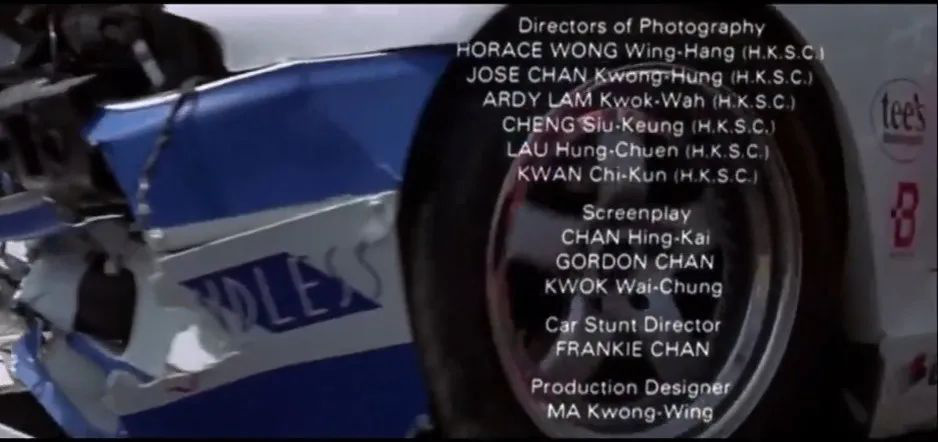
At the end of Thunderbolt, six photographers have suffixes after their names.
ASC is the abbreviation of american society of cinematographers. This suffix indicates that the photographer is a member of ASC. Why should this identity be marked?
Because this association is not an ordinary organization that can join after paying a fee, it can’t apply for membership, and it can only be recommended.

For example, for ASC, the minimum requirements for membership are: having served as a photography director for at least five years in the past eight years, having excellent professional reputation and personality, and being recommended by three active or retired members.
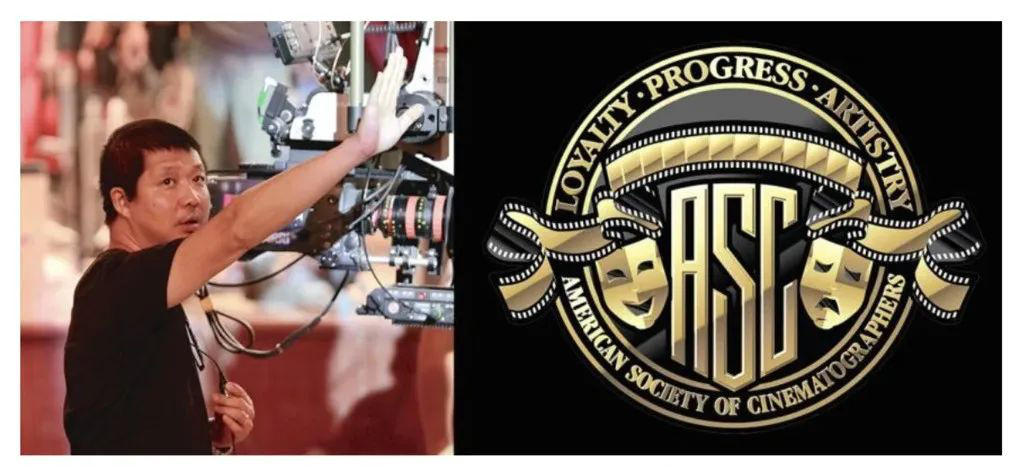
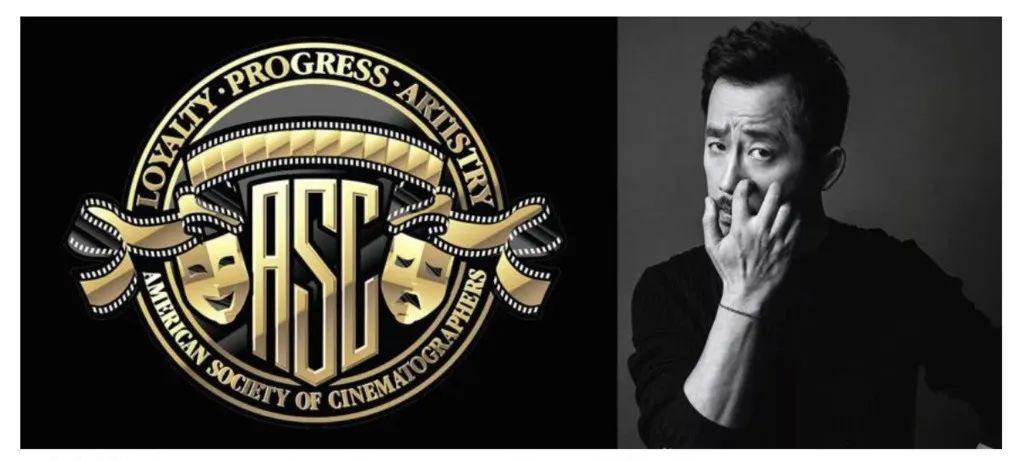
Cao Yu (The Eight Hundred) and Luo Pan (mr. six) became ASC members after Gu Changwei and Zhao Xiaoding.
In other words, it is necessary not only to have works, but also to be recognized by peers (but also competitors), so the number of ASC members is not much. At present, there are only more than 400 full members.
Only members can add ASC suffix to their names and become a title representing professionalism.
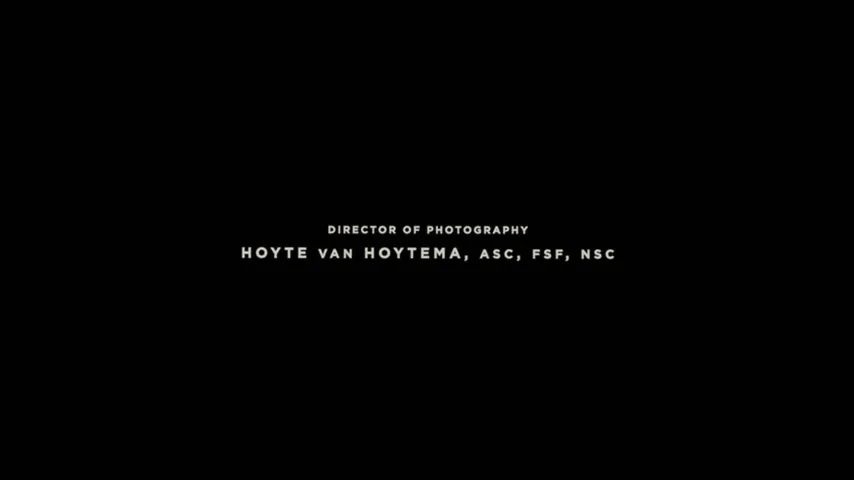
The photographer of Dunkirk is a member of the Association of USA (ASC), Sweden (FSF) and Netherlands (NSC).
Similarly, HKSC refers to the Hong Kong Photographers Association, while CNSC refers to the China Photographers Association, but it is generally not used as a suffix.
Other common suffixes are ACE (American Film Editors Association), CSA (American Film Casting Association) and PGA (American Film Producers Association).
Animal protection certification
After all kinds of names, the subtitle table ushered in the most "boring" part, such as the copyright statement of songs and music, all kinds of thanks and so on.
However, there are many interesting things in this part. For example, the most common statement is that "no animals were harmed during the filming". There is actually a story about this statement.
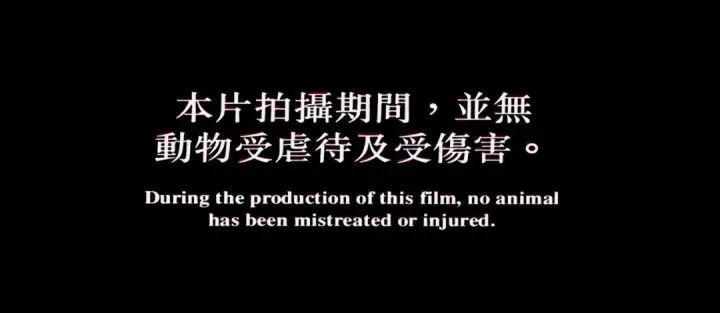
During the filming of the 1939 film Dang Kouzhi, there was a scene in which a horse fell off a cliff, and the filming at that time was really completed at the expense of a horse.
The angry public denounced the studio for this, and the industry therefore designated supervision measures for animal protection, and only certified films can be subtitled.
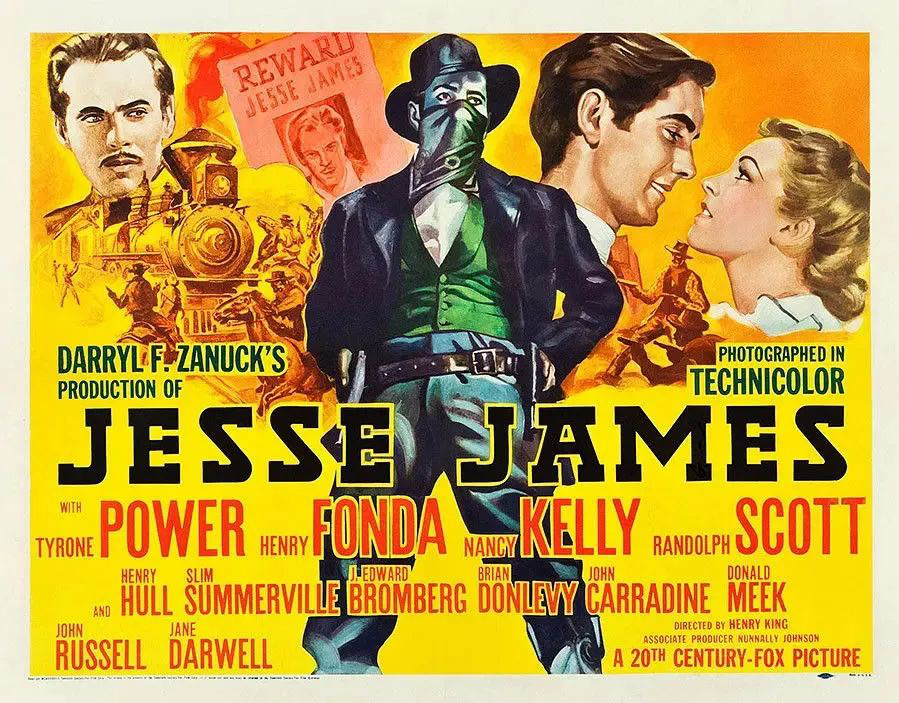
However, although this is a serious statement to protect animals, it does not prevent movie people from joking with it. It is not uncommon for people to "do things" in this line.
For example, the closing credits of Harry Potter stated that "no dragon was injured in the filming process", while "Insect Task Force" joked in the closing credits that "the following animals were extinct" in the filming process.
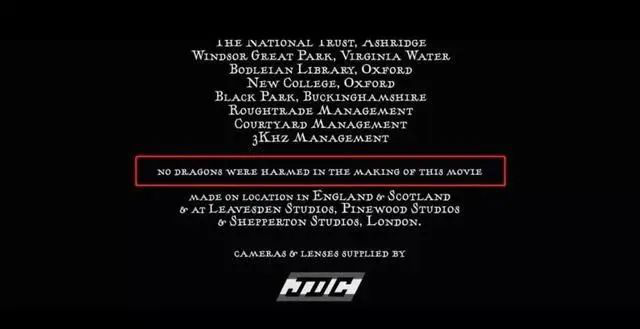
"No dragon is hurt" at the end of "Harry Potter and the Goblet of Fire"
Jokes are jokes, and the animal protection statement is not just a line of subtitles.
People should not decide the fate of other animals or species at will because of their own actions and ideas. The animals appearing in the film are also "workers" who pay for the film and deserve respect.
Disclaimer prompt
Friends who have experienced watching videos or DVDs may not be unfamiliar with this line: this story is pure fiction, and if there are similarities, it is a coincidence.
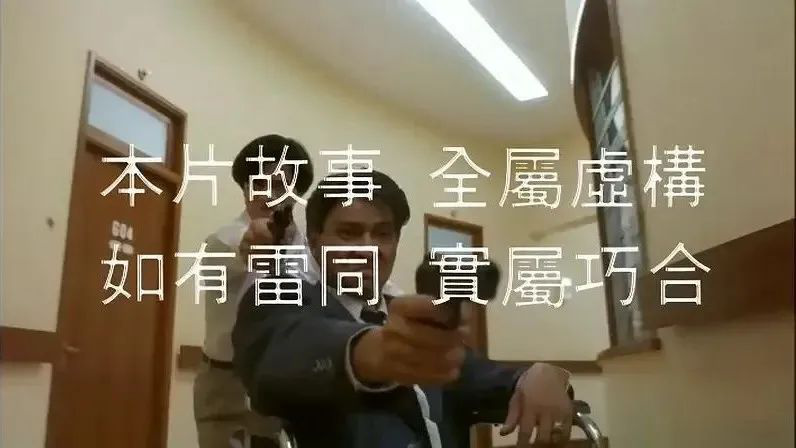
Of course, the biggest function of this sentence is a disclaimer to avoid legal disputes caused by linking the content of the film with the actual events. Film and television works all over the world will make such disclaimers at the end of the film (of course, there are also works that conversely emphasize that the film is "adapted from the real events").
Let’s not say whether such a disclaimer can really avoid risks. There have been many stories around this line.
Compared with the famous "The Storm of the Haojiang River", this action film was shot at the expense of Yin Guoju, the leader of the 14K gang in Macau at that time. Based on his own story, it tells the growth path of a gangster.
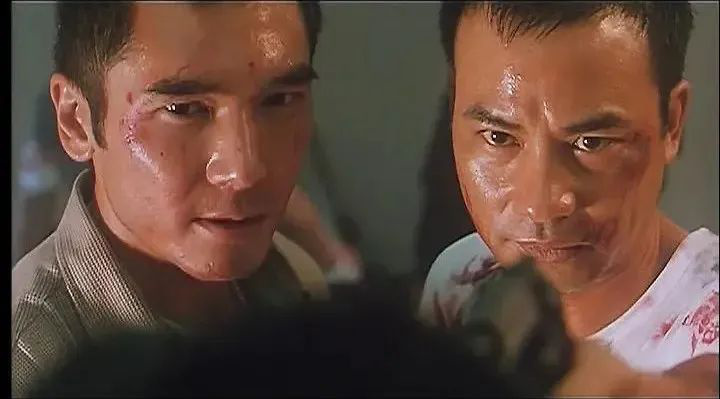
The film is naturally marked with a "statement" of "pure fiction" at the end, but the real details in the film still provide a lot of clues for the police. The film was released in May 1998, and in the same month, Yin Guoju was arrested on several charges and sentenced to 15 years in prison.
This line of words doesn’t work, so it seems that there is still a question mark.
copyright statement
At the end of the film, there is another part that is indispensable, that is, copyright notice and warning. Pirated recording and photographing have always been a great harm to film creation, and the statement prohibiting pirated recording often appears in movies.
The usual copyright notice appears at the end of the film together with the name of the production company, "All rights reserved".
However, there are also movies that play tricks on this matter. For example, in the 1987 masterpiece Robocop, there are small eggs hidden in the copyright statement at the end of the credits:
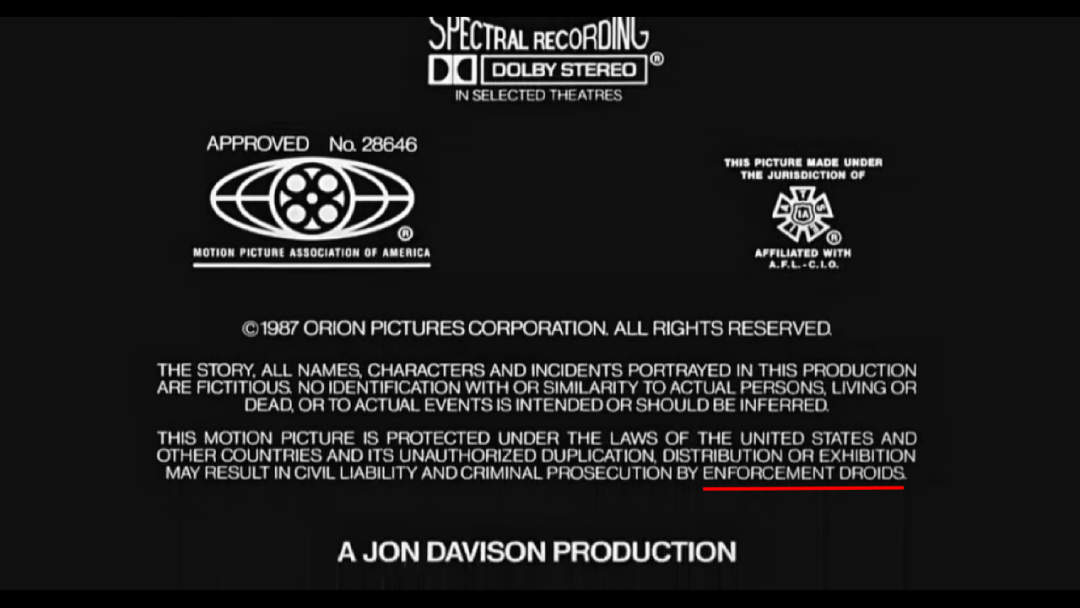
"This film is protected by the laws of the United States and other countries ….. illegal acts will be arrested by law enforcement robots", and "law enforcement robots" are the prototype of the robocop in the film, and the audience who just watched the film will naturally not forget it.
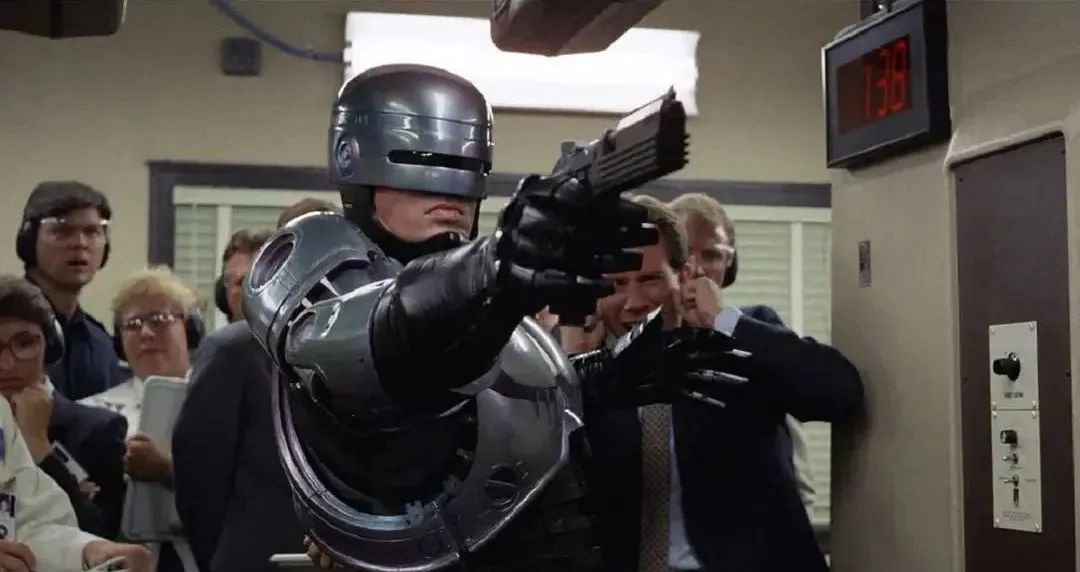
Of course, it is not certain whether the audience can notice this little joke.
Do you want to watch the credits or not?
In the final analysis, whether the credits are read or not, in fact, there is no need to go online. If you want to continue to relive the story, you might as well look for the small eggs in the subtitles with music, and if you have other arrangements, you can just leave.
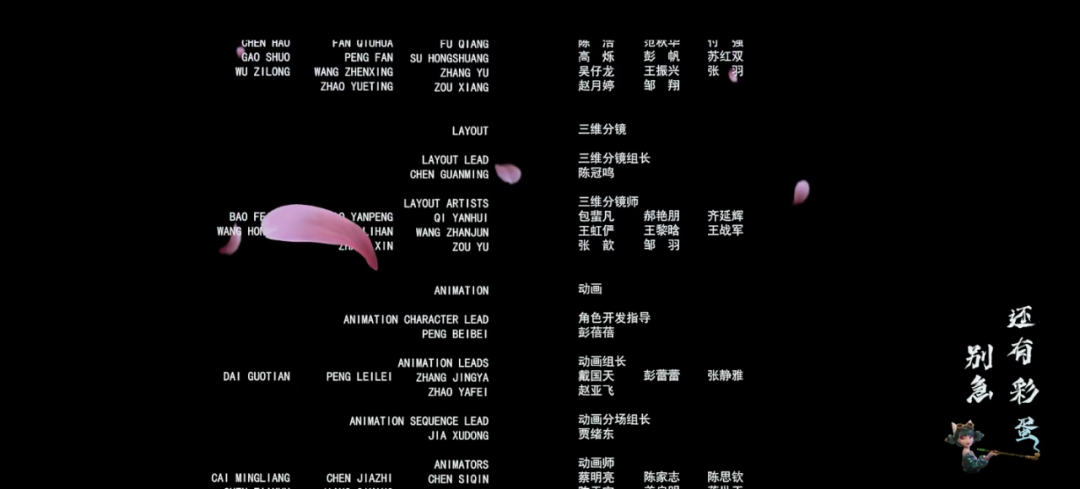
Subtitles at the end of "The Green Snake Robbed"
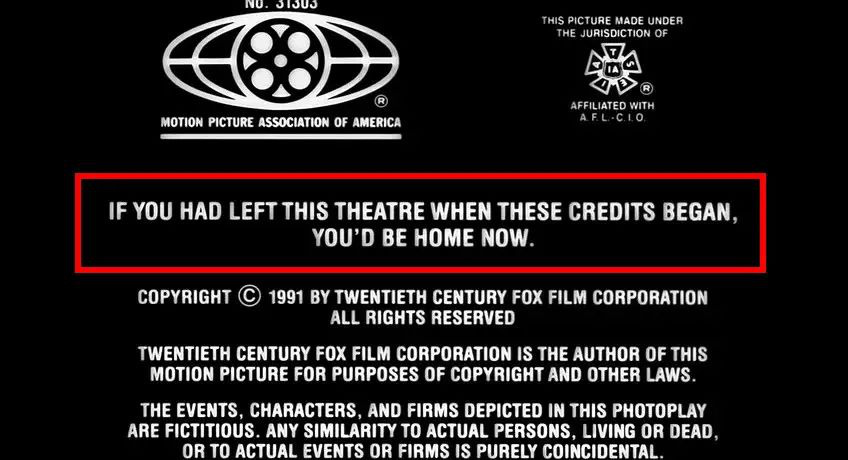
Perhaps compared with the audience, the filmmakers themselves have long been comfortable with this. In the closing subtitles of the classic comedy "The Condor" (1991), the creators themselves vomited-
"If you left the cinema during the subtitles, you would be home by now."
Note: Some pictures in this article are from Douban and the Internet. If there is any infringement, please contact us actively.
Past articles of ghost feet seven
Click to read
Stick to the file, this piece is very dare.
9.3 points animated version of Mr. and Mrs. Smith, addictive
To put it bluntly, the next dark horse is in these new films.