Military training makes youth shine in quenching.

In the mid-1980s, when the people of China were pushing forward the reform, opening-up and modernization with unprecedented enthusiasm, the "green train" of military training for students in colleges and universities in China was restarted. As one of the practices running through the reform and opening-up, military training for students came into being in the process of reform, and it is also full of reforms. In the past 33 years, it has explored and formed an effective working system.


In the pilot project, the number of colleges and universities participating is increasing year by year.


In January 1985, in Beijing, the capital, six ministries and commissions jointly issued a notice, and in September of that year, military training will be piloted in some colleges and high schools across the country. In that year, the first batch of pilot schools selected by various localities were mostly national and regional key institutions with basic conditions for military training, and famous schools such as Tsinghua University, Peking University and Fudan University were all on the list.


At that time, organizing students’ military training was an important part of the joint construction of the army and the people. The training units regarded training as a political task and selected officers and men with good military quality and strong command ability to enrich the ranks of instructors. In 1985, 82 outstanding officers and men from Beijing Garrison were sent to Tsinghua for a 20-day military training for freshmen. In military training, young students and military groups have had close contact, and the good tradition and style of the PLA began to enter the campus.


All provinces, municipalities and autonomous regions attach great importance to students’ military training and have set up military training leading groups. Taking Shenzhen as an example, the leaders of the party and government organs in this city deeply feel that military training for college students can not only strengthen students’ national defense concept, but also cultivate high-quality talents for Shenzhen. To this end, the municipal government allocates special funds for military training for Shenzhen University every year, and gives preferential policies.


In 1985, there were 52 military training pilot colleges and universities; In 1986, there were 69 pilot universities; In 1987, there were 105 pilot universities; In 1989, there were 143 pilot universities … On the basis of summing up experience, more and more universities were included in the pilot.


The reason why students’ military training quickly entered the campus and continued to heat up is the call of the times and the historical necessity. In 1985, our army was disarmed by 1 million. Reducing the number of standing soldiers is a strategic decision made by the party and the state according to the domestic and international situation, and it is also a practical action for the army to obey the overall situation of national economic construction. Under this background, it is of more prominent significance to strengthen the construction of reserve forces. Military training for students is undoubtedly an important way to national defense education and reserve troops.


Popularize and fully incorporate into the teaching plan of colleges and universities


In November 2001, a national conference on military training for students was held. The meeting pointed out: "The military and local leaders at all levels should fully understand the great significance of carrying out military training for students from the perspective of the overall strategic situation and the development of the times, and regard it as a major event that benefits the country and strengthens the army." This meeting marks that the military training of Chinese students has officially entered the stage of popularization and development from the pilot.


If we say that the military training of students in 1980s and 1990s was only "taken as a phased work", then the promulgation of "Military Course Syllabus of Ordinary Colleges and Universities" in June 2002 meant that the military training of students was formally "incorporated into the teaching system" and "built as a course". This syllabus stipulates: "military courses will be included in the teaching plan of colleges and universities, and the examination results will be recorded in the student files."


As an important work to strengthen the construction of national defense reserve forces, students’ military training has brought gratifying changes to school construction and students’ thoughts in years of practice.


Huo Qiang, a teacher at Bengbu Medical College, said: "After the students came back from military training, the dormitory was neat, the class was punctual, and the organizational discipline was greatly improved." Yu Xinyi, a freshman in guangxi university of chinese medicine, said: "Instructors set an example for me with their good looks. They can do the training courses, and I have to complete them with high standards!" At the presentation ceremony, parents applauded for a long time when they saw the students wearing green military uniforms with standard military posture and full spirit. Colleges and universities organize teaching quality surveys, and students who have undergone military training almost invariably scored "Excellent" in the column of "Military Training Course".


Gradually, more and more leaders of large and medium-sized schools take the initiative to ask for expanding the scale and time of military training. The number of young students who want to join the army and apply for military schools has increased significantly, and more and more college students volunteer to make contributions to the places where the motherland needs them most. In 2016, Zhang Liandong, a student from beijing university of chemical technology, took the initiative to serve in the border defense forces in the northwest. In the video sent to his classmates, Zhang Liandong hit the floor said: "I am at the border, please rest assured the motherland!"


In the past 33 years, military training for students has developed from 52 colleges and 102 high schools in 1985 to more than 2,000 colleges and 22,000 high schools in China, with an encouraging speed. Some foreign media said: "Such a magnificent social project and such a great achievement is a miracle."


The system of norms, laws and regulations is improving day by day


The development of new things is never smooth. From pilot to popularization, while the military training for students in China has gained room for further development, problems such as shortage of instructors, single military training course and commercial training have gradually emerged.


"Students’ military training is meticulous and complicated. Taking the data of 2018 as an example, the number of military training has reached more than 20 million, and the number of people is beyond imagination. Under this circumstance, only by adhering to the standardization construction can we adapt to the new challenges brought about by the new situation, new tasks and new changes. " The staff of the Military Training Office of the whole army told the reporter that in the new century, especially since the 18th National Congress of the Communist Party of China, the standardization of military training for students has been continuously promoted: in 2014, the Notice on Further Strengthening the Education and Management of the Officers and Men Trained by Students in Military Training put forward clear requirements for the selection, assessment, supervision and management of the trainees; In 2017, the Opinions on Deepening the Reform of Students’ Military Training proposed to strengthen the system construction of students’ military training, such as organization and leadership, training and teaching, teaching staff, training capacity and quality monitoring; In 2018, the national reform of deepening students’ military training was launched in an all-round way, and it was clearly stated that social forces were not allowed to undertake training, market-oriented operation and commercial training.


In the practice of exploring the standardized construction of students’ military training, the military and the local authorities have explored many effective and good methods.


-In Beijing, the way of base-based training with the functions of "training, learning, eating, living and ensuring" is getting wider and wider. Since the first military training base for students in China was built in 1990, 11 military training bases have been put into use in Beijing, with an annual training capacity of more than 300,000 people.


-In Guangdong, colleges and universities have launched integration of defense and civilian technologies training pilot projects in clinical medicine, communication engineering and other majors to train professionals for national defense and army building.


-In Guizhou, many universities have added anti-air raid and anti-biochemical courses to military training to enhance students’ actual combat experience.


-In Guangxi, the military and civilian areas have moved away from peak-to-peak military training, and training in stages and batches has greatly eased the pressure on the garrison troops to undertake training.


-In Fujian, Jiangsu, Anhui and other places, the military actively selects outstanding reserve officers and soldiers, militia backbones and retired soldiers to participate in military training, and all personnel are certified after passing the examination.


Students’ military training is related to the cultivation of teenagers’ comprehensive quality and the future of national defense construction. In the past 33 years, Chinese students’ military training has been seeking breakthroughs and innovations in the reform, and has increasingly moved towards a scientific, standardized and legal development path, which has received good political and social benefits, strengthened the cause of military development and trained a large number of high-quality talents.
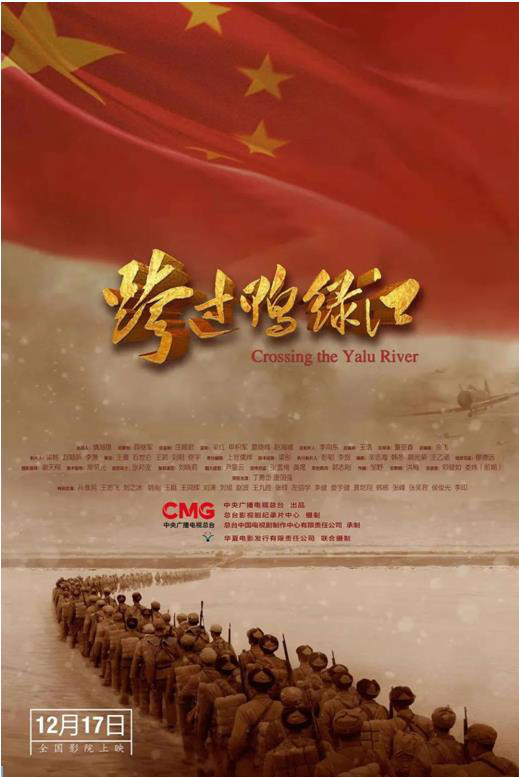
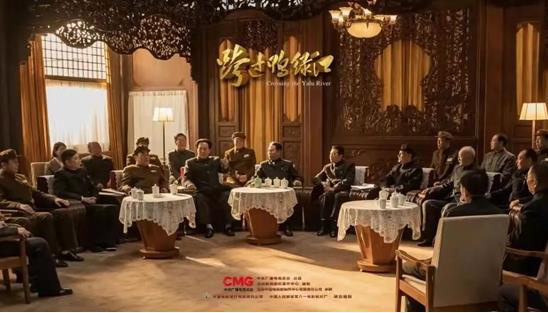
The film Crossing the Yalu River: A New Image of the Epic of the War to Resist US Aggression and Aid Korea

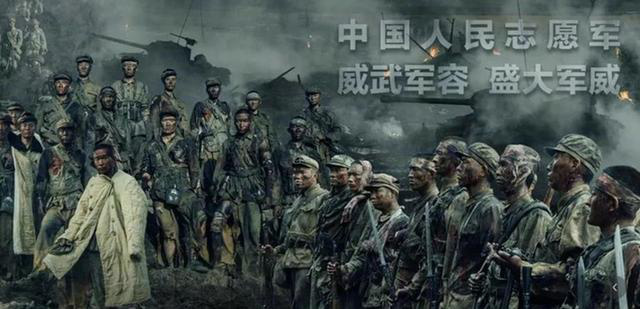
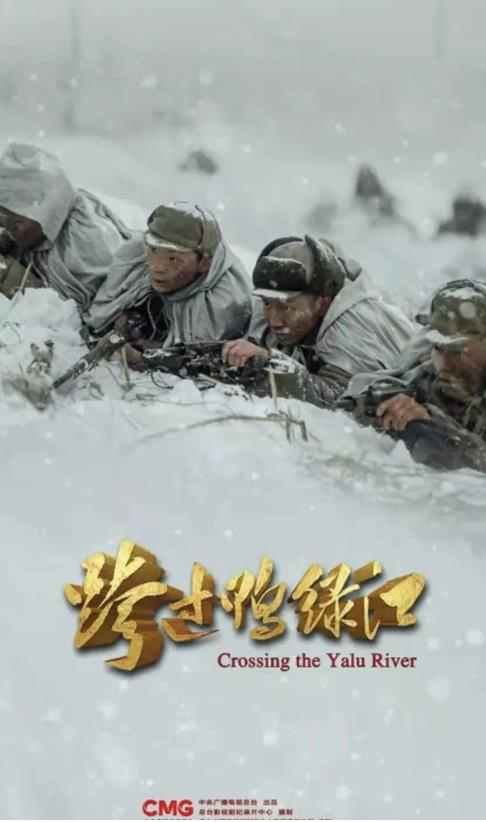
The film Crossing the Yalu River is an epic film about the War to Resist US Aggression and Aid Korea produced by the Central Radio and Television General Station.

From the perspective of Peng Dehuai, commander and political commissar of Chinese people’s Volunteer Army, the film tells the story from the outbreak of the War to Resist US Aggression and Aid Korea to the signing of the armistice agreement, shows the epic war between Chinese people’s Volunteer Army and the United Nations forces led by the United States, and presents us with a complete historical picture of the War to Resist US Aggression and Aid Korea.

This film has made a brand-new creative image processing for the War to Resist US Aggression and Aid Korea, which has three outstanding features: "all", "high" and "special".

The first is "all", that is, history is comprehensive;


In the past, most of the film and television works about the War to Resist US Aggression and Aid Korea focused on the presentation of a certain battle or a certain hero, while the film Crossing the Yalu River presented the War to Resist US Aggression and Aid Korea almost completely on the screen with a panoramic vision. This includes not only the domestic vision from the decision to resist U.S. aggression and aid Korea, to five battles and important battles among them, to the final victory of Chinese people’s Volunteer Army and the signing of an armistice agreement with the United States, but also the international vision that the U.S. military planned to launch the Korean War, Li Qiwei took office to take over, and the Soviet Union provided support to China.

The film gives a complete and comprehensive display of this period of history. From this point of view, this film can be called an epic masterpiece of the film to resist US aggression and aid Korea, and it also reflects the generosity and broad vision of the "Made in Taiwan" for the panoramic presentation of this war.

Secondly, it is "high", that is, the station is ambitious;


The film Crossing the Yalu River does not simply describe the problems of "losing and winning" and "fighting and peace";

But standing in the history of human development, under the background that the people of China have just achieved national independence and people’s liberation, it reflects the people of China’s pursuit of freedom and happiness and their desire for peaceful development after a hundred years of humiliation.

Such a strong endogenous motivation and strong national emotion can trigger and arouse a wide range of common emotional resonance of human beings;

This is also the reason why every volunteer soldier dares to fight and sacrifice in this war, and can exchange his life for battle and battle victory under extremely difficult conditions. The portrayal of characters in this film reflects the sincere feelings of pursuing a happy life and resisting aggression and oppression;

Under such common human feelings, propositions such as "war and peace", "justice and hegemony" and "individual and country" have been answered and expressed, which also reflects the height of the central radio and television general station in the production.

Finally, it is "special", that is, the expression perspective is unique;


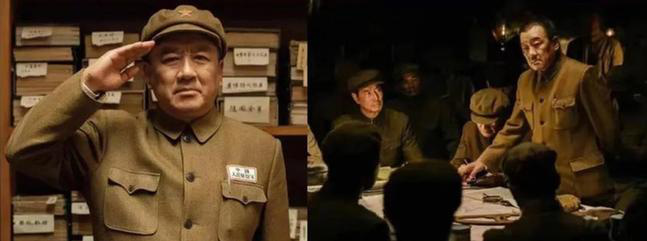
Although the film Crossing the Yalu River is a panoramic display of the grand epic, its expression perspective is to find Peng Dehuai, the commander of Chinese people’s Volunteer Army, and to review and express the war from Peng Zong’s personal perspective. Among them are the contrast between General Peng and American generals, and the true feelings of General Peng and his comrades-in-arms … … All these make us see a unique image of Commander Peng Dehuai.

The image of Peng Dehuai created by Ding Yongdai in Crossing the Yalu River is also the most vivid and vivid in many film and television works, with clear love and hate, daring to fight and dare to rush, and at the same time, it is a temperature, sharpness and wisdom image of Peng Dehuai. On the other hand, in this unique perspective, the film realizes the three-dimensional shaping of the characters by comparing Peng Dehuai with different roles;

For example, compared with Li Qiwei, Liang Xingchu, Deng Hua and others, Peng Zong’s true feelings of complicated entanglements in his heart. Through the contrast and contrast of these characters, Peng Dehuai’s image in the film is shaped to be full of flesh and blood. At the same time, it is also this unique perspective of expression. The film vividly embodies and vividly expresses the complex relationship between characters and the outstanding highlights in the whole War to Resist US Aggression and Aid Korea.

Generally speaking, the film Crossing the Yalu River is a stunning masterpiece full of passion and sincere feelings, and it is a high-level, powerful and temperature-resistant blockbuster to resist US aggression and aid Korea, which embodies the strength of "Made in Taiwan".

The appearance of this film not only enriches the image expression of the War to Resist US Aggression and Aid Korea, but also provides an excellent text for the general audience to understand the history of the War to Resist US Aggression and Aid Korea more deeply and comprehensively.

The ideology, artistry and commerciality of the film have been highly unified, and its social and market benefits are expected, and its creative experience is worth pondering and exploring. (Special Commentator: Hu Zhifeng)

Just now! Sudden in the Middle East!

Over the weekend, the situation in the Middle East heated up sharply.

According to the latest news, the United States quickly deployed warships in place to "protect" Israeli and American troops in the region, hoping to prevent Iran from launching a "direct attack" on Israel. A US Department of Defense official revealed that the United States is sending more military units to Israel to strengthen regional deterrence and strengthen the protection of US troops.

According to the latest report of CNN, the United States has observed that Iran is moving military assets, including drones and cruise missiles, which indicates that "Iran may be preparing to attack Israeli targets from its own territory". One of the people familiar with the matter said that the United States observed that Iran had prepared as many as 100 cruise missiles.

Facing the risk of further escalation of the situation in the Middle East, the global market is becoming even more tense. Among them, the international oil price fluctuated greatly, and the global benchmark Brent crude oil once exceeded $92/barrel; Wall Street’s so-called "panic indicator" VIX index rose to its highest level since last October.

The United States quickly deployed warships in place.

On April 13th, the reference news quoted the website of The Wall Street Journal as saying that the United States quickly deployed warships to "protect" Israeli and American troops in the region, hoping to prevent Iran from launching a "direct attack" on Israel.

Earlier, a person familiar with the matter warned about the time and place where Iran might launch an attack.

It is reported that the commander of the US Central Command, General Curilla, discussed the possible Iranian attack with Israeli Defense Minister galante in Israel on the 12th.

According to the Israeli Defense Ministry statement, galante said: "We are prepared to defend ourselves on the ground and in the air, and work closely with our partners. We know how to respond."

U.S. officials said that the U.S. action included the redeployment of two destroyers, one of which was already in the area and the other was redeployed to the area. American officials also said that at least one of them was equipped with the Aegis missile defense system.

According to the US Army Times website reported on April 12, US officials confirmed on April 12 that in the face of reports that Iran may launch an attack on Israel, the Ministry of National Defense is mobilizing more troops and equipment to bases in the Middle East.

A Pentagon official said that these transfers are aimed at "strengthening regional deterrence and improving the protection capability of the US military". The Pentagon did not disclose information about the number of troops or the specific assets transferred to the area.

Earlier in the day, White House national security spokesman John Kirby also refused to disclose the specific details of the changes in the US military posture in the region, but said that government officials are paying close attention to the situation.

Kirby said that the United States has taken concrete actions to "ensure" that the US troops stationed in the region "make proper preparations" in the event of an attack.

At present, the United States has deployed about 40,000 military personnel in the Middle East. Another 1,000 people are going to the area to help build a floating pier near the coast of Gaza.

According to reports, Iran’s Supreme Leader Ayatollah Ali Khamenei said that he would retaliate against Israel’s air strike in Damascus on April 1, which killed at least 13 people, including a senior Iranian officer.

In addition, the State Council is also taking urgent action to issue safety warnings to all government employees and their families of the US Embassy in Jerusalem.

The Israeli military said that if the Iranian side retaliates against the air strikes on Iranian consular offices in Syria, the Israeli army will fight back. On the afternoon of the 12th, US President Biden warned Iran "not" to take action, and emphasized the US security commitment to Israel, saying that Iran would not succeed.

In the current tense situation, Hezbollah armed forces in Lebanon took the lead. On the evening of April 12, local time, rocket warnings sounded several times in northern Israel, and the "Iron Dome" defense system intercepted several times. According to Iranian media, "at least 50 rockets" were launched from southern Lebanon to northeastern Israel.

The Israeli army statement said, "About 40 rockets were fired from Lebanon to northern Israel, some were intercepted, and the rest landed in an open area. There are no reports of casualties." The Israeli army also claimed to have shot down two unmanned aerial vehicles (UAVs) loaded with explosives launched by Hezbollah in Lebanon at Israel.

Iran warning

On April 13th, the World Wide Web quoted the American news website "Axios" as saying that three American officials told the media that Iran sent the following message to Biden’s government through several Arab countries this week: If the United States intervenes in the conflict between Israel and Iran, the US troops stationed in the region will be hit.

A US Department of Defense official said that the United States is sending more military units to Israel to strengthen regional deterrence and strengthen the protection of US troops.

According to the report, a senior American official said that the United States insisted that it did not participate in the air strike. In this regard, the message conveyed by the Iranian side is, "Whoever attacks us, we will attack him, so don’t conflict with us, and we won’t conflict with you."

An American official told Axios that from the information received through several Arab countries, it is not clear whether Iran is threatening to attack the US military if it helps Israel intercept Iranian missiles, or whether it will only attack the US military if it participates in Israel’s retaliatory actions.

According to the US official, the overall assessment of the US intelligence community is that Iran will only attack the US military if the United States and Israel jointly fight back.

"prepared 100 missiles"

On April 13th, local time, according to the latest news from CNN, people familiar with American intelligence revealed that the United States observed that Iran was moving military assets, including drones and cruise missiles, which indicated that "Iran may be preparing to attack Israeli targets from its own territory".

According to the report, it is uncertain whether Iran really launched the first round of attacks from its own territory, or whether it is deliberately posing in an attempt to prevent Israel or the United States from launching a possible counterattack against its territory.

One of the people familiar with the matter said that the United States observed that Iran had prepared as many as 100 cruise missiles.

The report also said that a person familiar with the matter said that Iran hoped that their attack on Israel would look "significant" in retaliation for Israel’s attack on the consulate of the Iranian Embassy in Syria last week. But at the same time, Tehran also wants to avoid being involved in direct wars with Israel and the United States. That’s why American intelligence agencies have assessed that Iran may also use agents to launch the first attack.

CNN also said in another report that a senior government official and a person familiar with the matter revealed that the United States currently expects Iran to attack multiple targets in Israel, and Iranian agents may also participate in the attack. The targets may include targets in Israel and around the region.

The global market is tense

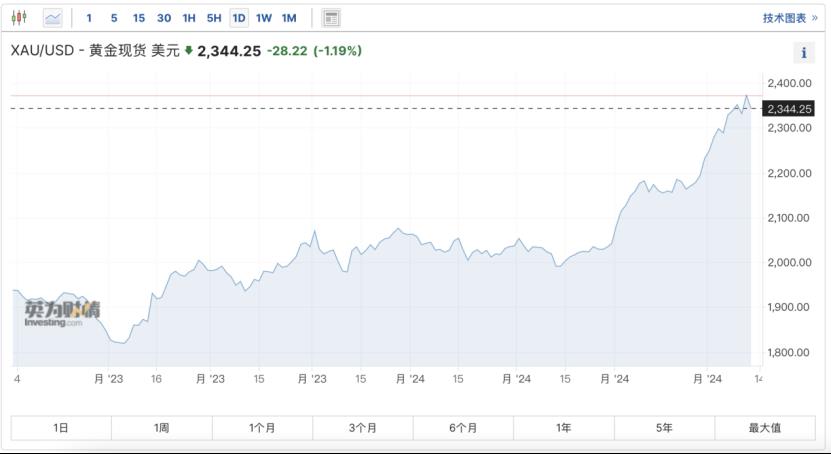
With the warming of risk aversion, the price of gold has hit record highs recently, which makes Wall Street "doubt life".

Among them, spot gold rose by 1.3% this week, that is, it rose by $30.5 per ounce. At one point this week, it rose to $2,431.53, and then it fell back. The latest price was $2,344.25, with a cumulative increase of 14% this year.

At the same time, the fluctuation of international oil prices is also intensifying. Brent crude oil, the global benchmark, once broke through 92 US dollars/barrel and jumped to the highest level since October last year. Since the beginning of this year, oil prices have soared by 19%.

The rising tension in the Middle East has disrupted the oil market. Ed Yardeni, the founder of Yardeni Research, a well-known wall street leader, pointed out that oil prices may reach $100 under the influence of this situation, and the situation in the Middle East has also weakened the upward momentum of US stocks.

The U.S. stock market also suffered a selling tide overnight. At the close, the Dow fell by 1.24% and fell below 38,000 points for the first time since January 24. The S&P 500 index fell by 1.46%, the biggest drop since Federal Reserve Chairman Powell’s speech on January 31 hit the expected interest rate cut in March. The Nasdaq fell 1.62%, the biggest drop since March 5.

As the tension between Israel and Iran worsens, Yardeni Research analysts say that if there is a real conflict between Israel and Iran, this may be the top of the US stock market.

It is worth mentioning that Wall Street’s so-called "panic indicator" VIX index rose to its highest level since October last year, and analysts warned that the market has always underestimated geopolitical risks.

Editor: Lin Gen

Proofreading: Yao Yuan