Directly hit the peak of Beijing railway return passenger flow: crowds are like streams, and the rhythm is orderly.

(People’s Daily Health Client reporter Zhao Mengmeng/Wen Niu Hongchao/Photo) On October 7, the national railways ushered in the peak of return passenger flow, and it is estimated that 19.05 million passengers will be sent. Similarly, the Beijing Railway ushered in the peak of return passenger flow, and the passenger flow was concentrated at the arrival time. The hubs such as Beijing West Railway Station, Beijing South Railway Station and Beijing Railway Station were crowded, and there were passengers dragging suitcases and carrying backpacks everywhere. The air was mixed with dialects, luggage rollers and broadcast prompts, painting a busy and orderly scene.
Beijing Railway Station: The front of the station building is full of fireworks, and the subway entrance is full of warmth.
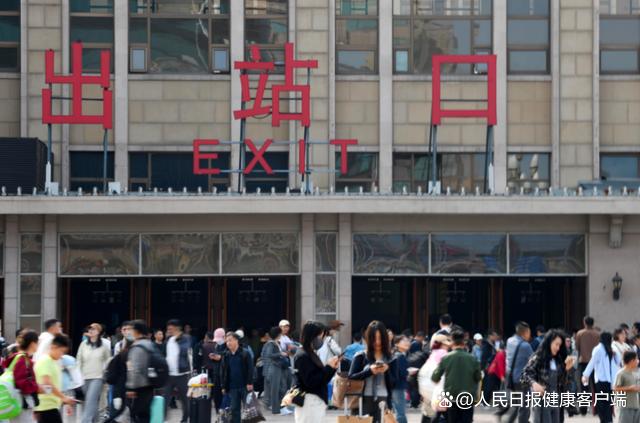
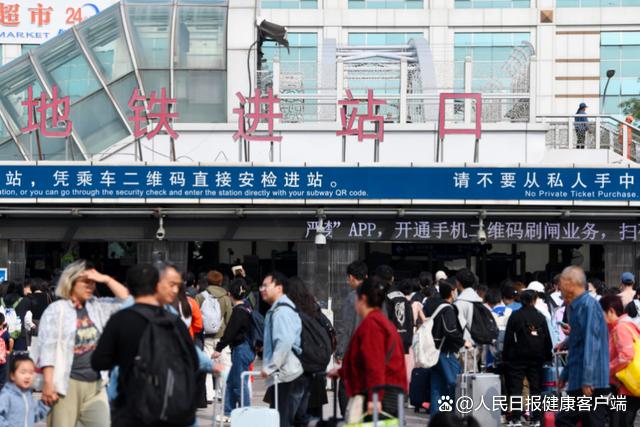
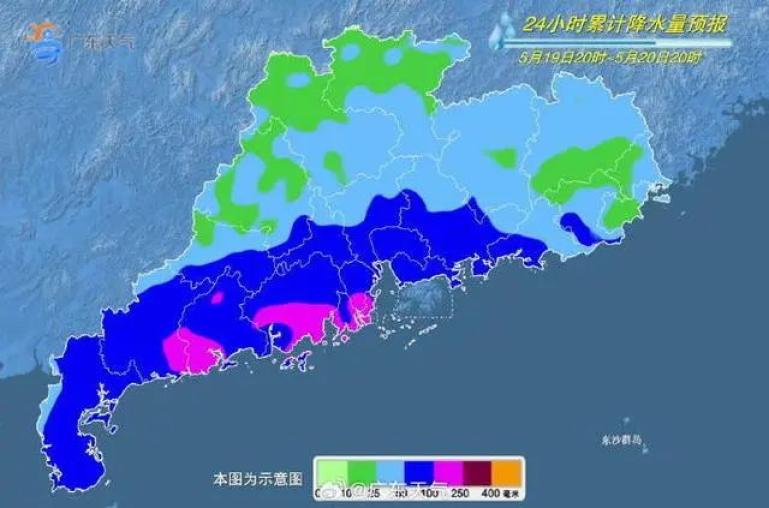
On the exit square of Beijing Railway Station, the passengers returning to Beijing are bustling, and the air is full of lively fireworks. In front of the station with a sense of retro and solemnity, someone took the joy of reunion, dragging a suitcase and carrying a bag with relatives and friends; The child curiously looked at the strange and familiar city and was dragged by his family to shuttle between the building columns; There are also passengers who stop and look around while contacting the docking station.
Under the striking red characters of "subway entrance", passengers are lining up in an orderly way. Young people skillfully turn on their mobile phones and prepare to scan the code to enter the station. Parents carefully lead their children and protect their luggage through the crowd. Despite the dense passenger flow, the team has always maintained order, and the warmth of returning home quietly flows in the crowd.
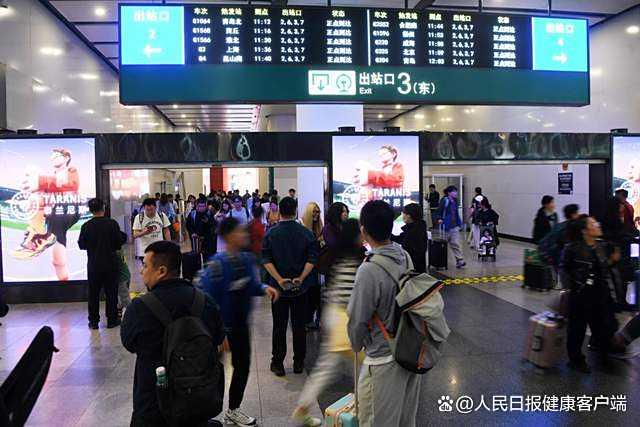
Beijing South Railway Station: underground transfer hall, transfer and rush to play "Concerto"
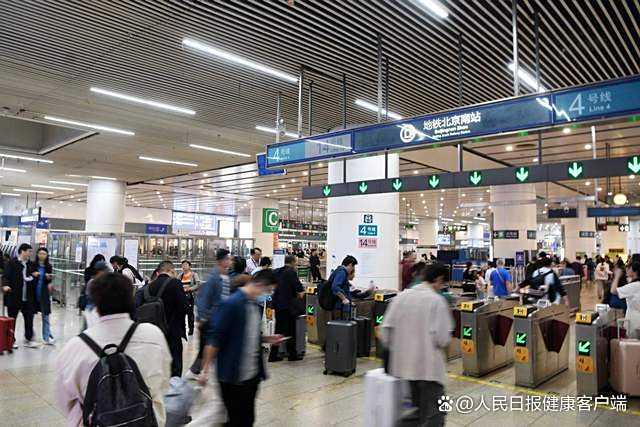
In front of the East Gate 3 of the underground transfer hall of Beijing South Railway Station, the outbound passengers dragged their suitcases and flocked to the subway gate area like streams flowing into rivers. Under the signs of Line 4 and Line 14, there are crowded passengers who scan their heads and enter the station … The crowds are surging and rushing, or they are going to all corners of the city to transfer to the subway, or they are going to the ground transportation hub to connect with the follow-up trip, which conveys the busy atmosphere of the return peak everywhere.
Beijing West Railway Station: The connection area is orderly, and the outbound passage is crowded with people.
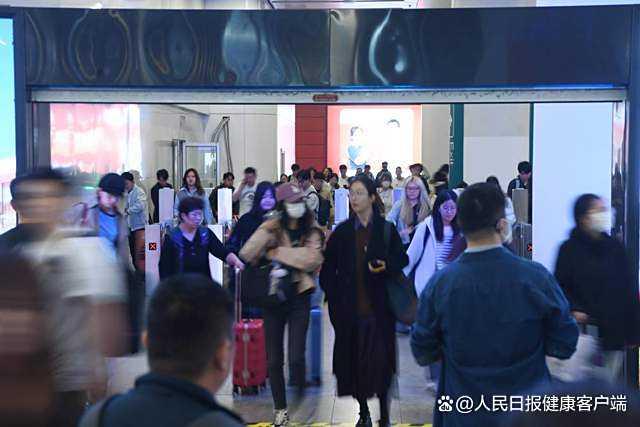
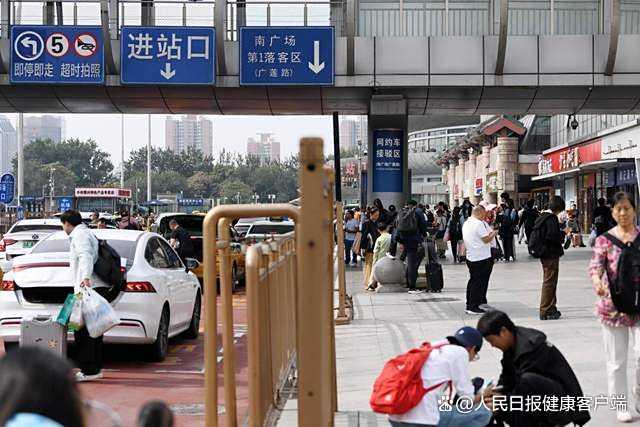
The car connection area of Beijing West Railway Station network is a busy point for centralized evacuation of return passengers. Passengers drag their suitcases, or wait quietly in designated areas, or prepare to board the bus after confirming the information with the driver with a smile. Under the guidance of the staff, the parked vehicles are orderly and crowded, moving in the direction of "reaching the destination smoothly".
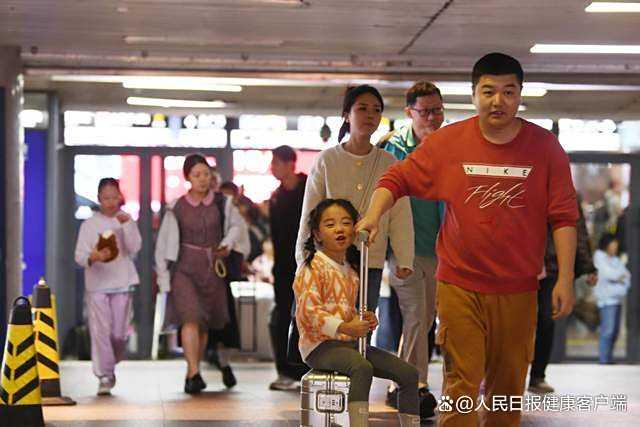
The south exit passage of Beijing West Railway Station is crowded with people. Children use the suitcase as a pulley car to continue the happiness of the festival with the help of parents; Between the shoulders, the young man put his backpack on his back. The sound of the wheels of the suitcase and the sound of conversation are intertwined into a "return symphony", and the return scene is outlined here.
Transportation department: 8 subways are delayed, and bus and taxi are guaranteed.
In order to cope with the large passenger flow that arrives in Beijing at night, the Beijing transportation department has deployed in advance and coordinated multiple lines to "support the bottom" for passengers’ return trip. In terms of rail transit, eight lines of Beijing Metro Lines 2, 3, 4, 7, 10, 14 and 19 and Daxing Airport Line have extended their operation hours, among which the last bus of key lines around Beijing West Railway Station and Beijing South Railway Station will arrive at 2 am at the latest, and all efforts will be made to get through the "last mile" of passengers arriving in Beijing late at night.
Synchronous ground transportation: the bus system will increase night shift capacity to ensure that passengers can smoothly connect with the bus when they get off the train; Taxis and network cars start the "point-to-point scheduling" mechanism, and more than 3,000 security vehicles circulate around the stations, so that passengers can wait for the bus less and get home early through dynamic deployment.
Reporting/feedback

The leverage of the insurance trust "three generations under one roof" has not changed, and the service has been iterated.

China Net Finance October 8 (Reporter Lu Kai) After continuous development in recent years, the insurance trust has quietly completed its own iterative development, which provides better corporate financial services by combining the natural leverage advantage of insurance.
Leverage to incite great wealth
Insurance trust is similar to family trust and belongs to the original trust business. Compared with non-standard financing trust business such as real estate trust and political trust, insurance trust has become an important direction of trust business transformation. At the same time, compared with the entry threshold of family trust, the insurance trust takes the insurance amount of the policy as the establishment threshold, and adopts the "down payment+installment" model, which greatly reduces the starting threshold of family trust, not only ensures that the scale of trust assets meets the regulatory requirements, but also reduces the pressure on start-up funds. At the same time, it is attracting more and more attention from high net worth individuals and middle-class families through "leverage".
Since the first single insurance trust of CITIC Trust in 2014, the net profit of insurance trust has gradually increased from 0 to 1, and then from 1 to N. The number of clients who set up insurance trust has increased from 10 in 2014, nearly 100 in 2015, 500 in 2016 and over 1,000 in 2017, reaching nearly 10,000 by the end of June 2021. During this period, the scale of insurance trust has also risen.
Statistics show that in 2017, six trust companies carried out insurance trust business, with a scale of 352 million yuan and a business number of 1023. Today, the scale of insurance trust has advanced by leaps and bounds. In June this year, the new insurance trust was 6.237 billion yuan, up 38.29% from the previous month. However, the new scale of insurance trust is still less than the new scale of family trust of 11.995 billion yuan in the same period.
By comparing the main characteristics of insurance trust and family trust, it is not difficult to find that although both of them belong to service trust, even from the perspective of industry practice, there is a widespread problem of confusing family trust business with insurance trust business, and some people even think that insurance trust belongs to family trust, but there are still great differences between them.
We analyze the main differences between them layer by layer, and it is not difficult to find that there are great differences between insurance trust and family trust in many aspects, such as trust property, threshold for establishment, requirements for the establishment of trust parties, and characteristics of trust property management and application. First of all, the trust property of insurance trust is the right to claim insurance, while the trust property of family trust is rich in forms. At present, the mainstream financial assets in the market are monetary funds, asset management products, insurance policies and corresponding rights.
In terms of the threshold of trust establishment, the supervision has clear scale requirements for the establishment of family trust, and the amount or value of family trust property is not less than 10 million yuan. However, there is no special regulation on the scale of insurance trust, but it still needs to meet the requirements of trust property scale of general trust. At present, in the practice of the industry, the threshold of establishing trust scale for insurance trust is usually higher than RMB 1 million to meet the needs of future wealth management and inheritance.
At the same time, the supervision has clear requirements for the parties to the family trust, but it is mainly bound by the Trust Law and other relevant legal provisions; However, in addition to meeting the trust-related legal and regulatory requirements, the establishment of relevant parties in insurance trust also needs to be restricted by insurance law and insurance contract.
Finally, in terms of the management and application of trust property, although the characteristics of family trust put forward higher requirements for the corresponding management and application, its management, application and disposal of trust property began with the establishment of the trust and the confirmation procedures for transferring the corresponding assets to the trust were not much different from those of traditional trust. However, the insurance trust has different requirements from other trust products in terms of information disclosure, process requirements for claims funds to enter the trust account and trust property management requirements after claims funds arrive, which also provides the possibility of cross-integration with other trust businesses, especially family trusts.
For the insurance trust with a trust scale of more than 10 million yuan, it can be set as a family trust, or the insurance policy and other property can be put into the family trust together. For the trust property with a trust scale of less than 10 million yuan, it can leverage the insurance to incite greater benefits, and it is in the process of mutual cross-integration that the insurance trust is continuously and iteratively developed.
"Three generations under one roof" service upgrade
From the analysis of the current practice, there are three existing insurance trust business models: 1.0, 2.0 and 3.0. In practice, both 2.0 and 3.0 models can be regarded as upgrading iterations on the basis of 1.0 model, and there is no clear updating relationship among them. Instead, they jointly promote the growing insurance trust market under different application conditions.
In the earliest 1.0 business model, the principal insured himself and entrusted the policy beneficiary right or insurance premium of life insurance or annuity insurance he held as trust property to a trust company to set up a trust. With the consent of the insured, the trust company was changed into the policy beneficiary, and when the payment conditions agreed in the policy were met, the insurance company paid the insurance premium to the trust company. As the trustee, the trust company manages and uses the trust property according to the agreement in the trust contract, and gradually delivers the trust property and income to the trust beneficiary designated by the trustor. Under this model, the insurance leverage can also lower the threshold for the establishment of family trust, but the trust company as a whole is in the stage of inferior participation.
In view of the above situation, compared with the 1.0 operation mode and the insurance trust 2.0 mode, the participation stage of the trust company is greatly advanced. After the insurance products and trust products are established, with the consent of the insured, both the applicant and the beneficiary of the policy are changed into trust companies. During the duration of the policy, the trust company will continue to pay the premiums on its behalf by using the trust property, and as the insurance beneficiary, it will be entrusted with the management and distribution of insurance benefits. Since the subsequent policyholder is changed to a trust company, the risks such as the policy being divided as an inheritance or being forced to surrender as the property of the policyholder after the death of the policyholder are avoided. In this way, on the basis of making full use of the leverage advantage of insurance money, the trust has the natural advantage of risk isolation legal framework.
In the insurance trust 3.0 model stage, the trustor sets up a trust with its own funds and entrusts the trust company to buy insurance. As the trustee, the trust company pays the premium with the trust property and signs an insurance contract with the insurance company. This is not so much an insurance trust, but actually it is more like a customized service based on the family trust.
The 3.0 model can provide all-round custody services for customers’ policies from three dimensions: insurance stage, policy holding and claim settlement. It can also expand the types of insurance from traditional life insurance to multiple insurance categories, make insurance an integral part of trust property asset allocation, and further play the role of insurance trust in realizing wealth management. As a result, many insurance trust models have been derived, such as "family insurance policy" model, "insurance trust+will" model, "insurance trust+pension" model and "insurance trust+charity" model. With the continuous iteration of insurance trust, its service quality is constantly upgrading, and investors’ awareness of it is also constantly improving.
The future is promising
In addition to the "gradual" development of the insurance market mentioned above, relevant information shows that the insurance trust market has entered a rapid growth period in the past year or two, and more and more high-net-worth users, especially female users, are increasingly favoring insurance trusts. From the perspective of the proportion of premiums, women account for about 53% and men account for about 47%; From the number of policies, women account for 44% and men account for 56%; From the perspective of the age distribution of premiums, most of them are people aged 41 to 50, accounting for 43%.
At the same time, the insurance market is still facing stage challenges. Compared with customers’ recognition and acceptance of family trust, it needs to be strengthened, and the market needs to be further cultivated and developed, which puts forward higher requirements for improving the professional ability of employees and improving the basic system of insurance trust.
However, we should also see that under the background of tightening supervision and industry transformation, insurance trust business is one of the important businesses for trust companies to cope with industry transformation. Although there are still some shortcomings in this field, such as unclear laws and regulatory policies, and lack of effective profit model, compared with the previous business processing time of several months, the financial technology widely used in the industry has effectively helped the development of insurance trust business, and the insurance trust has been greatly improved in modularization, standardization and informationization. In particular, the professional ability of employees is gradually improving in marketing mode, service mode and management mode. In the future, with the progress of society and the changes in China’s wealth market, the real market demand will be further released.
Some experts in the industry once said: For high-net-worth customers, insurance trust can enrich the forms of insurance payment and effectively solve the problem of insurance distribution and inheritance in the future. At present, domestic private banks, insurance companies, trust companies and other institutions have begun to extend the service chain through insurance trust, which will be welcomed by more and more high-net-worth people in the future. China Net Finance will continue to pay attention to the future development of insurance trust.
Reporting/feedback

Heavy rain! Break the record! The National Defense General and the Ministry of Water Resources responded quickly! Some citizens are throwing hammers at the wall to release water …

Heavy rain, thunderstorms and strong winds are coming!

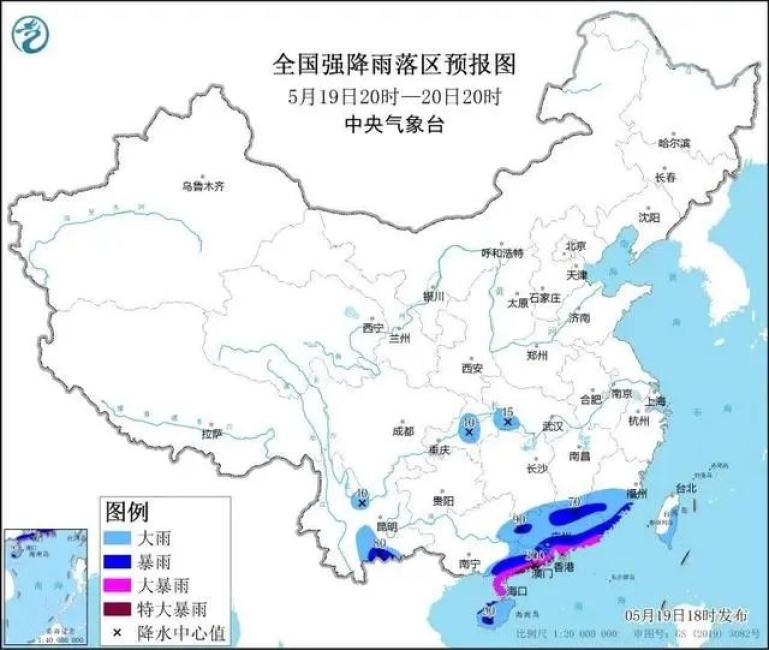
The Central Meteorological Observatory issued an orange rainstorm warning at 10: 00 on May 19: It is estimated that there will be heavy rainstorms in parts of southern Guangxi, most of Guangdong, southern Fujian, southeastern Yunnan and northern Hainan Island from 14: 00 on May 19 to 14: 00 on May 20. Among them, there will be heavy rainstorms in parts of southern Guangxi and southern Guangdong, and heavy rainstorms (250-300 mm) in the coastal areas of southeastern Guangxi and southwestern Guangdong. Some of the above areas are accompanied by short-term heavy rainfall (the maximum hourly rainfall is 20 ~ 50 mm, and the local area can exceed 70 mm), and there are strong convective weather such as thunderstorms and strong winds.

At 18: 00 on May 19, the Ministry of Water Resources launched a Class IV emergency response to flood prevention in Guangxi, Guangdong and Fujian provinces, requiring the three provinces and the Pearl River Water Resources Commission of the Ministry of Water Resources to pay close attention to rain and water conditions, strengthen monitoring and forecasting, issue early warning in time, strengthen emergency duty, discuss and judge and submit information, and do a good job in reservoir safety, flood prevention and response in small and medium rivers to ensure the safety of people’s lives and property. The Ministry of Water Resources sent two working groups to Guangxi and Guangdong to assist in the prevention of storms and floods.

At 12: 00 on the 18th, the National Defense General launched a four-level emergency response to flood control in Guangdong and Guangxi provinces and the Pearl River Defense General, and sent a working group to Guangdong to guide the prevention and response of heavy rainfall.

Six rivers in Guangxi experienced super-alarm floods, and the torrential rain broke records.

Affected by the heavy rainfall since 18th, the rivers of Qinjiang River, Maoling River, Fangcheng River, Hongshui River, Wuming River, Sitang River and Zhupaichong, tributaries of Yujiang River, in Guangxi, experienced 1-6m flood, among which 6 stations of 6 small and medium-sized rivers such as Sitang River, Xiyunjiang River, Qinglong River and Xihe River, tributaries of Luojiang River, experienced 0.31m-1.68m flood exceeding the police. Relevant hydrological departments in Nanning, Baise, Guilin, Fangchenggang and other cities have issued flood warnings in advance.

Early warning was issued in many places in Guangxi. At 3: 15 on May 19, Nanning Meteorological Observatory issued a yellow warning signal for lightning; At 5: 45 on the 19th, Nanning Meteorological Observatory upgraded the orange rainstorm warning signal to red. It is reported that there is guilt in Nanning city and many cars are soaked. Many people were trapped on the road by stagnant water, and some citizens smashed the wall to release water. At the same time, many meteorological stations issued rainstorm warning signals. Yulin Meteorological Observatory issued an orange rainstorm warning signal at 7: 03 on the 19th. Chongzuo Meteorological Observatory issued an orange rainstorm warning signal at 7: 35 on the 19th. Fangcheng Meteorological Observatory changed the rainstorm red warning signal to orange at 7: 16 on the 19th.

On May 19th, Guangxi Daily quoted the news released by the science popularization blogger @ China Meteorological Enthusiast that the maximum rain intensity in Nanning exceeded 1 hour and 100mm; The hourly rainfall of Longmen Port in Qinnan, Qinzhou is 189.6 mm, and the sliding rainfall of 60 minutes is 204.7 mm, breaking the record of rainfall intensity in Guangxi. In addition, the sliding rainfall of 60 minutes exceeded the hourly rainfall and sliding rainfall of 720 torrential rain in Zhengzhou.

According to the latest news, in view of the fact that the process of heavy rainfall affecting Hezhou City in Guangxi has ended, the major rivers have retreated below the warning water level and the water potential is stable, Hezhou Water Resources Bureau decided to terminate the flood prevention level IV emergency response in Hezhou City from 19: 30 on May 19. County (district) water conservancy bureaus and large reservoirs are requested to continue to do a good job in the prevention of secondary disasters that may occur after heavy rainfall and the investigation and rectification of hidden dangers, and continue to do a good job in the inspection of reservoirs on duty.

There is still a risk of heavy rain in Guangdong on the 21st.

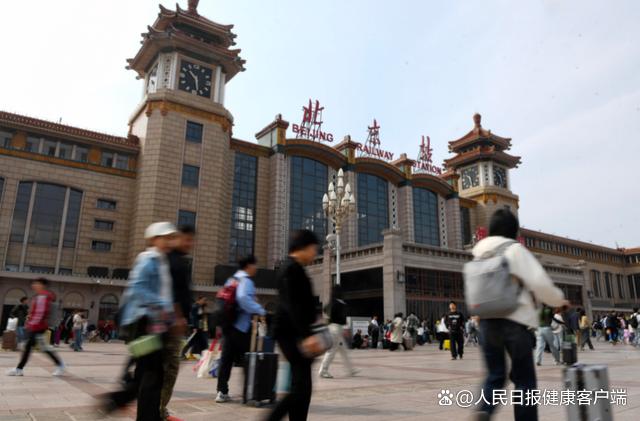
The Guangdong Meteorological Observatory predicted on May 19th that there would still be rainstorm risk in Guangdong on May 21st. It is estimated that there will be heavy rain, local heavy rain or heavy rain in southern Pearl River Delta and cities and counties in eastern Guangdong on the 20th, heavy rain and local heavy rain in Heyuan and Meizhou, and showers and local heavy rain in other cities and counties in Guangdong.

It is estimated that there will be heavy rain to heavy rain in cities and counties in eastern Guangdong and Meizhou on the 21st, and there will be cloudy showers in other cities and counties in Guangdong. It is expected that the precipitation in Guangdong will weaken from the 22nd to the 23rd, but there will still be many (thunder) showers. Among them, on the 22nd, the heavy rain in the cities and counties in Guangdong turned to showers, and the rest cities and counties in Guangdong were cloudy with showers and partial heavy rain. On the 23rd, most of Guangdong was cloudy with showers and partial heavy rain.

Guangzhou Meteorological Observatory predicted on May 19th that there will be heavy rain and local heavy rain in Guangzhou, accompanied by short-term heavy precipitation, local short-term gale of magnitude 8, lightning and other strong convective weather, and the concentrated influence period of precipitation will be from the morning of 20th to the day.

It is expected that the impact of heavy precipitation on Guangzhou will weaken on the 21 ST, and the rain in Guangzhou will turn to showers that day; It is estimated that from 22nd to 26th, Guangzhou will be cloudy to cloudy, with thunderstorms and local heavy rain.

Guangdong Meteorological Bureau reminded on May 19 that the existing forecast conclusion shows that the rainstorm process in Guangdong will last until the 21st, when it will be the "Dragon Boat Water" statistical period, and all parts of Guangdong need to do a good job in preventing continuous heavy precipitation and its secondary disasters.

Heavy rain fell in some areas of Hunan, and the water levels of 11 reservoirs exceeded the flood limit.

On the 19th, it was learned from Hunan Meteorological Bureau, Hunan Provincial Water Resources Department and other departments that since the 18th, there have been heavy rains in 20 counties (cities, districts) in Hunan, and local winds of magnitude 8 have appeared. Affected by recent rainfall and the increase of upstream inflow, the water levels of rivers, lakes and reservoirs in some areas have risen, and the water levels of 11 reservoirs have exceeded the flood season limit. According to the monitoring of the meteorological department, moderate to heavy rain has occurred in parts of western Hunan and southern Hunan since 7: 00 on the 18th, including heavy rain in 20 counties (cities, districts) of Huaihua, Xiangxi Tujia and Miao Autonomous Prefecture, Changde, Shaoyang, Yongzhou and Zhangjiajie, and strong winds of magnitude 8 in 2 counties (cities, districts). According to the statistics of the water conservancy department on the 19th, the total storage capacity of 12 major large reservoirs, such as Wuqiangxi and Zhexi, was 15.48 billion cubic meters, 11.3% more than the same period of last year and 1.2% more than the average of the same period of many years. The meteorological department predicts that there will be moderate showers or thunderstorms on cloudy days in western Hunan and northern Hunan on the 20th, with heavy rain in the central part of Changde. From the evening of 20th to 21st, the precipitation will weaken, and it will turn cloudy in northern Hunan, with showers or thunderstorms in other areas.

Shandong issued a warning warning of the risk of severe convective weather disasters, and traffic will be affected.

Shandong Meteorological Observatory issued a severe convective weather forecast on May 19th: due to the influence of the upper trough, it is expected that there will be a severe convective weather process in the central and northern parts of Shandong Province from the afternoon of 19th to the night. There are thunderstorms or showers in northwestern Shandong, central Shandong and the peninsula, accompanied by 8-10 thunderstorm gusts, hail and short-term heavy precipitation in some areas. The cumulative average precipitation in Shandong Province is 3 ~ 5 mm, and the rainfall distribution is uneven. Among them, Dezhou, Binzhou, Dongying, northern Jinan, northern Zibo, northern Weifang and western Yantai have small to moderate local heavy rain (5 ~ 15 mm, local 30 ~ 50 mm), and the maximum hourly precipitation is 20 ~ 30 mm. Liaocheng, western Heze, Tai ‘an, southern Jinan, southern Zibo, southern Weifang and southern Yantai. The strong convective process has adverse effects on traffic, outdoor activities, agricultural facilities and offshore production.

Comprehensive from: CCTV News, Xinhua News Agency, Guangxi Daily

Original title: "Rainstorm! Break the record! The National Defense General and the Ministry of Water Resources responded quickly! Some citizens smashed the wall with hammers to release water … "

Read the original text