Procuratorial public interest litigation urged a number of law enforcement agencies to work together to dismantle the illegal construction of the roof.

Thirty-eight merchants illegally built illegal buildings on the roof, prosecuted public interest litigation and urged a number of law enforcement agencies to work together to dismantle them-

The fire hazard on the roof "vanished"
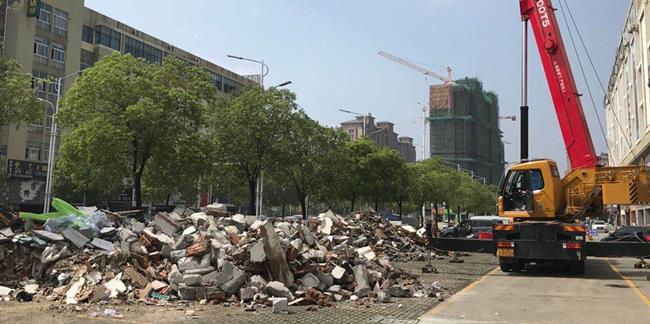
Demolished foam sandwich panel
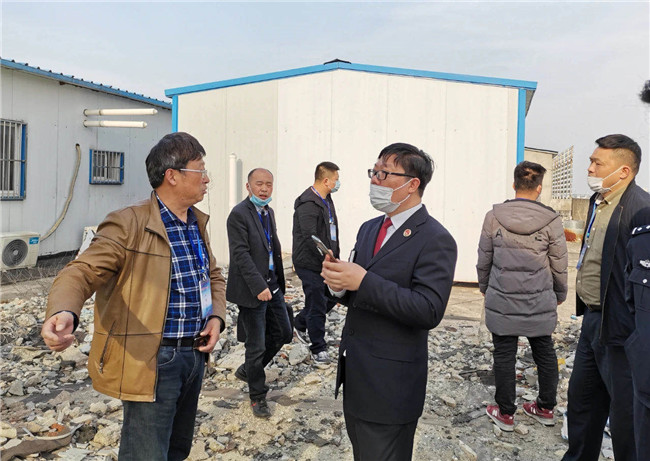
Prosecutors register security risks one by one during the investigation.
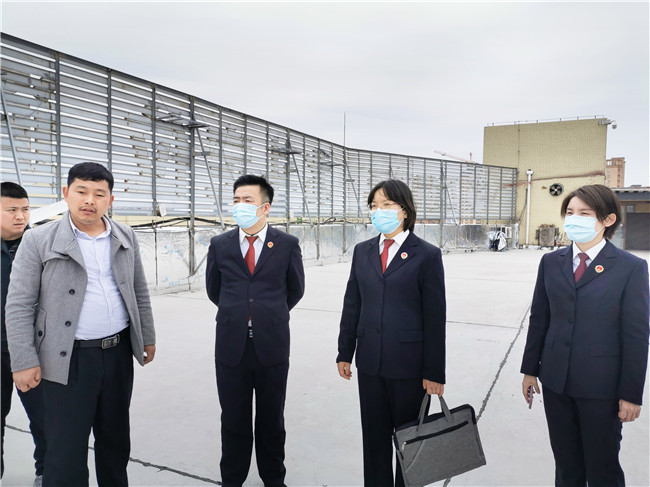
Prosecutors follow up and supervise the demolition of illegal buildings on the roof.

The Zhongjia Decoration City in Taizhou, Jiangsu Province, is quite lively because of its dual-purpose residence and dense personnel. However, 38 merchants have successively built illegal buildings on the roofs of six buildings for hotel management, goods storage and office work without the permission of the construction project planning.

Since April 2020, the procuratorial organ of Taizhou City has set up a public interest litigation case-handling team to file a case for review, and joined forces with law enforcement departments such as Taizhou City Administration Bureau and Fire Rescue Detachment to promote the demolition of 11,095 square meters of illegal buildings. Now, standing under the Zhongjia Decoration City, you can no longer see the illegal buildings on the roof, and the merchants downstairs don’t have to worry about the fire caused by illegal buildings.

In March 2021, the case was selected as a "typical case of public interest litigation in the field of safety production" jointly issued by the Supreme Inspection and Emergency Management Department.

In the event of a fire, the consequences are unimaginable.

One day in March, 2020, Jingtai Road Sub-district Office in Hailing District, Taizhou City received an anonymous complaint phone: "There are a lot of flammable materials such as paint piled up on the roof of Zhongjia Decoration City, and our residents living downstairs are on tenterhooks every day. Come and take care of it, or the consequences will be unimaginable in the event of a fire!" Liu Lusheng, director of the Comprehensive Law Enforcement Bureau of Jingtai Road Street, said that this is not the first time they have received such a complaint call.

It is reported that Zhongjia Decoration City covers an area of about 295 mu and is located in the core area of the eastern market group in Hailing District, Taizhou City. The new and old National Highway 328 meet here, three kilometers away from Taizhou Railway Station, and the traffic is very convenient. Since its operation in March 2010, more than 600 merchants have settled in. Zhongjia Decoration City is used for both commercial and residential purposes. Some merchants privately build colored steel houses on the roof to stack building materials and goods, including some inflammable and explosive materials. At first, illegal construction was only sporadic, but over time, it reached more than 10 thousand square meters. The common people have great opinions on this.

"Prosecutor Chen, the problem of disorderly construction on the roof of Zhongjia Decoration City has not been solved until now. The security risks are serious and the opinions of the masses are great. I know that the procuratorate can file a public interest lawsuit. Can you come forward to coordinate and urge the administrative law enforcement agencies to pay attention to this problem?" On the afternoon of March 28th, 2020, Chen Hongjun, the person in charge of public interest litigation in Hailing District Procuratorate, received a phone call from Xiao Li, a street worker in Jingtai Road. Chen Hongjun has long heard that the problem of disorderly building on the roof of Zhongjia Decoration City is a "long-standing problem". Chen Hongjun asked Xiao Li about the situation in detail. Xiao Li said helplessly that the street office had no law enforcement power and could only communicate with merchants as much as possible, but it still did not see rectification.

Chen Hongjun immediately reported the clue to the procurator-general Shen Yujun. Subsequently, under the guidance of street worker Xiao Wu, Chen Hongjun and his colleagues conducted a preliminary investigation on the illegal construction of the decoration city. When climbing the roof from the safe passage, because the passage is full of wooden boards, aluminum alloy window frames and other sundries, everyone can only stand on tiptoe sideways and walk up the stairs carefully.

Climbing on the roof, the chaotic illegal buildings caught everyone’s eye. "You see, this is built by the following owners." Xiao Wu pointed to an illegal building on the left and told Chen Hongjun. Through the window of the illegal building, Chen Hongjun found that it was full of paint buckets.

"This hotel has built a whole floor on the roof, all of which are decorated into guest rooms. It is completely invisible that it is an illegal building." Chen Hongjun followed Xiao Wu’s direction and saw that the top of the opposite building, No.39, was also covered with illegal buildings, almost equal to the area of the sixth floor, which was very unsightly.

Xiao Wu took Chen Hongjun and others to the sixth floor of a unit in Building 24, and happened to meet Manager Zhang of the construction company. Xiao Wu greeted Manager Zhang, and then a group of people went to the roof. Here is another office of this company, with offices, reception rooms, etc., which are completely consistent with the downstairs decoration style.

"Mr. Zhang, you have stamped such a large area on it. Have you been approved by the relevant departments?" Chen Hongjun asked.

"No, no, how can this be approved?" Manager Zhang’s answer is also frank.

Chen Hongjun asked, "Why did you add this layer?"

"When it was built, it was because the roof was not well waterproof, and there was always water seeping down when it rained." Manager Zhang replied.

"Then why not make a waterproof again? There are great security risks in illegal construction. I hope you will take the lead in dismantling it. " Chen Hongjun further said.

"I really have no choice but to dismantle it. Others will dismantle it, but I will definitely not take the lead." Manager Zhang gave his own set of rhetoric.

After a preliminary investigation, Chen Hongjun made a basic judgment: some owners of Zhongjia Decoration City actually built illegal buildings on the roof for their own benefit, which not only seriously affected the appearance of the city, but also had major fire hazards.

Go door to door and find out the crux of the problem.

According to Article 64 of the Urban and Rural Planning Law, if a construction project planning permit is not obtained or is not carried out in accordance with the provisions of the construction project planning permit, the competent department of urban and rural planning of the local people’s government at or above the county level shall order it to stop construction. Obviously, it is impossible for the top building of Zhongjia Decoration City to obtain a planning permit for the construction project, which is bound to be illegal construction. However, the supervision of illegal construction does not belong to the "4+1" field of public interest litigation. On what grounds should procuratorial organs intervene and promote the demolition of illegal buildings?

After Chen Hongjun reported the initial investigation to the leaders of the hospital, Hailing District Procuratorate thought that it was necessary to deeply analyze the impact of illegal buildings on public safety and solve the problem of how to choose between personal self-interest and public interest. On April 1st, 2020, according to the analysis and research, the institute formulated a public interest litigation investigation plan: collecting relevant evidence to confirm that the roof construction of Zhongjia Decoration City did not obtain the construction project planning permit, confirming the illegality of its construction, and at the same time conducting household surveys to identify potential safety hazards and collect fixed evidence. In order to solve professional problems, it is necessary to hire a third-party professional organization to conduct simultaneous demonstration.

According to the investigation plan, Liu Junhe, assistant procurator, brought back the architectural archives of Zhongjia Decoration City from Taizhou Urban Construction Archives with the notice of obtaining evidence. Nearly 1,000 scanned building files were read page by page by Chen Hongjun, Liu Jun and others, and the project establishment, permission, construction and acceptance of Zhongjia Decoration City were comprehensively reviewed. It was confirmed that the buildings on the top of Buildings 22, 24, 25, 38, 39 and 40 of this decoration city were not within the scope of project establishment and permission, and it was undisputed that they were illegal buildings.

On April 6, Chen Hongjun led the public interest litigation case-handling team to formally enter Zhongjia Decoration City, and went to Zhongjia Decoration City with Jingtai Road Street and third-party organizations to carry out house-to-house investigation on illegal buildings.

"Look, this is a foam sandwich panel, which is flammable and combustible building materials. Rock wool board should be used as a flame retardant building material. " "This distribution box is bare and unobstructed, and the wires are aging without sleeves, which is also a great safety hazard."……Experts from third-party organizations carefully search for potential safety hazards in illegal buildings.

The case-handling team fixed the security risks pointed out by experts one by one and recorded them one by one. At the same time, another team is also carrying out information verification and related data collection of illegal owners. "I built the house upstairs, how do you people’s procuratorate also tube somebody else to build a house? Is it too wide? " The owner is quite dissatisfied with the "sudden arrival" of the prosecutor. "You are illegally building and have an impact on social welfare. We have to take care of it." After understanding the public interest litigation function of the prosecutor, the owner copied the relevant information and handed it over.

For four whole days, by verifying the owner’s information, construction time, area, building materials, use and other materials of illegal construction, the case-handling team conducted on-site investigation on the safety hazards such as fire protection, electricity and lightning protection in various illegal constructions, and basically found out the illegal construction and the existing public safety hazards: 38 owners built illegal buildings on the roofs of six buildings without the permission of the construction project planning, resulting in a series of safety hazards such as flammable building materials, blocked safety passages and incomplete fire-fighting facilities. The third party organization also issued a safety hazard inspection report, and found that there were 52 safety hazards in the above illegal construction, such as flammable foam sandwich panel building materials, no fire-fighting facilities, and damaged lightning protection grounding network.

Procuratorial suggestions condense the joint efforts of public welfare protection

Because the case involved the performance of duties by higher administrative organs, Hailing District Procuratorate always kept close contact with Taizhou Procuratorate, reported the progress of the work at any time, and submitted the case to the Municipal Procuratorate for handling after the investigation. On July 31, 2020, Taizhou City Procuratorate delivered pre-litigation procuratorial suggestions to Taizhou City Administration Bureau and Fire Rescue Detachment respectively, suggesting that they deal with illegal construction and fire safety violations on the roof of Zhongjia Decoration City respectively according to law.

Sun Guiyin, director of Taizhou City Administration Bureau, called Hailing District Government Office, Urban Management Bureau, Lightning Protection Office and other departments to hold a special rectification meeting on illegal construction of Sino-Jia Decoration City the day after receiving the procuratorial suggestions, and invited the procuratorial organs to send personnel to participate and discuss the rectification countermeasures. Because the demolition of illegal construction involves the property interests of many merchants, the procuratorial organ took the initiative to organize the Hailing District Urban Management Bureau, the fire rescue brigade and the street office to hold a joint meeting to unify the understanding of the problems that may be encountered in the remediation process and make detailed preparations to ensure the smooth and orderly progress of the demolition work. In August, Taizhou Urban Management Bureau made an administrative penalty decision on 24 illegal construction owners who had not been punished according to law, and ordered them to dismantle illegal construction within a time limit.

After receiving the procuratorial suggestions, Taizhou Fire Brigade asked Hailing District Fire Rescue Brigade to cooperate with it according to law. The District Fire Rescue Brigade quickly formulated an action plan and deployed it for implementation, and arranged business backbones to cooperate with Hailing District Urban Management Bureau, Housing and Construction Bureau and other departments to strengthen business guidance to Jingtai Road Street and police stations under its jurisdiction, and timely discuss and dispatch hidden dangers for rectification. At the same time, the Fire Rescue Brigade, together with relevant departments, issued the Notice of Market Fire Safety, which was not only distributed door to door, but also posted at the entrance and exit of Zhongjia Decoration City and other eye-catching locations, giving fire safety tips to all merchants in Decoration City, pointing out the hazards of various fire hazards and fire safety violations, and organizing fire safety knowledge training to urge them to implement the main responsibility of fire safety. In addition, the District Fire Rescue Brigade also stepped up supervision and law enforcement, inspected 38 merchants with illegal construction problems one by one, urged and rectified 12 fire hazards, issued 12 notices of ordering correction, handled 1 temporary seizure, and sent 2 letters of advice on law enforcement.

On August 14th, Jingtai Road Sub-district took the lead in organizing a number of functional departments to participate in it. By focusing on the way of "door-to-door publicity+friendly demolition assistance+investigation and punishment according to law", the illegal construction demolition work was jointly promoted, and waterproof construction was carried out at the demolition site, which solved the problem of roof seepage raised by merchants. Chen Hongjun and his colleagues followed up and supervised the demolition of illegal construction.

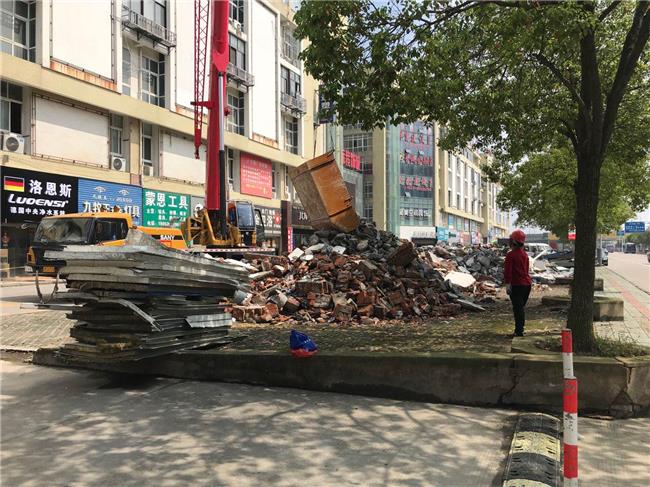
In Taizhou in August, the sun is like fire. At 9 o’clock in the morning, on the uncovered roof, the temperature had already soared above 30 degrees Celsius. The blue colored steel tiles were uncovered one by one, the heavy walls were smashed one by one, and the doors and windows were removed one by one. The whole removal process was basically smooth.

As of November 30, 11,095 square meters of illegal buildings on the top of the commercial and residential building of Zhongjia Decoration City were all demolished, and the fire safety hazards caused by illegal construction were completely eliminated. "If it weren’t for the persistence of the procuratorate and the joint efforts of fire protection, urban management and streets, I don’t know when the fire hazard on the roof will be eliminated." Boss Gu, who is engaged in building materials and sanitary ware business on the first floor, can’t help but sigh.

"We identified the supervision points, conducted a comprehensive and detailed investigation on illegal construction and public safety hazards, and finally promoted the complete dismantling of illegal construction, fundamentally eliminated the long-standing public safety hazards, effectively prevented and curbed the occurrence of serious accidents, and the safety of people’s lives and property was effectively maintained." Chen Hongjun said with some relief.

(Reporter Lu Zhijian   Correspondent Ge Dongsheng   Song Diyu)

On national mobilization from the perspective of anti-epidemic

Since the outbreak of the epidemic, under the personal command and deployment of the CPC Central Committee and President Xi, the people of the whole country have been united in the same boat and launched a people’s war, a general war and a blocking war to prevent and control the epidemic. In this struggle, the provincial military region system moved at the command, took the initiative to take the lead and participated in the whole process, and deeply explored the characteristics and laws of national mobilization in actual combat, which provided a useful reference for doing a good job in wartime national mobilization.

Enhance the infiltration of ideological mobilization and lay a good ideological foundation for comprehensive mobilization

The people of the whole country know the general situation, take care of the overall situation, listen to greetings, obey the rules, advance and retreat together, and take responsibility together. This high degree of collective consciousness stems from deep and solid ideological mobilization. In the fight against the epidemic, all localities have made full use of TV broadcasts, newspapers and magazines, mobile phone networks, electronic screens, banners and newspapers and other channels to carry out high-intensity, multi-frequency and full-time launch, continuously convey the concern and care of the CPC Central Committee, timely push forward the anti-epidemic process and decision-making arrangements, and regularly publicize the epidemic prevention professional knowledge and related requirements, and through strong penetration, realize door-to-door and brain-to-heart. On the basis of doing a good job of general mobilization for the public, government agencies, industry associations, university enterprises, and street communities have implemented several waves of directional mobilization in their respective industries. The Hubei Military Region vigorously carried out the activities of "the chief officer leading the battle, the main battle in party member, the militia participating in the war and the civilian fighting", and the military and civilians realized the ideological transformation from peacetime to wartime in a short time. This fight against the epidemic has highlighted the importance of ideological mobilization and demonstrated our strong national mobilization ability. Compared with the anti-epidemic, people faced threats more directly in wartime, suffered more casualties, and the battlefield management was more difficult. It was difficult to quickly form the conscious collective will of the whole people only by relying on short-term mobilization.

From the perspective of anti-epidemic practice, to improve the efficiency of national mobilization in wartime, we must rely on national defense education in peacetime, prepare in advance and infiltrate for a long time, and lay a good ideological foundation for the implementation of national mobilization. It is necessary to broaden the scope, adhere to the "five in one" of party committees, governments, schools, the army and society, build a national defense education system covering the whole people, and extend the audience of national defense education to all social strata and groups; To increase the depth, in addition to popularizing general national defense knowledge, we should also strengthen urban crisis education and risk training, and guide the public to firmly establish the awareness of preparing for famine and disaster; It is necessary to increase the intensity, use various media to moderately increase the content and frequency of national defense education, and form a long-term effect in a subtle way.

Give full play to the organizational strength of the backbone team and make good use of key groups at critical moments.

In this anti-epidemic campaign, cadres, militia, volunteers and other key groups in party member took on heavy responsibilities and became the main force of mass prevention, mass control and joint prevention and control. For example, more than 44,500 party member employees in Wuhan party and government organs, enterprises and institutions have sunk to more than 3,000 communities; About 120,000 volunteers and more than 13,800 grid workers participated in community prevention and control; The Hubei Military Region has mobilized more than 839,000 militiamen, and about 31,000 militiamen are active in the front line every day during the peak period. These key groups assume various responsibilities such as organizers, propagandists, administrators, waiters, rescuers, deliverymen, etc., and play the role of "backbone" and "ballast stone". In the future, the mobilization of the whole people in wartime will be larger in scale and more complicated in organization, and it is even more necessary for these key groups to play a key role in going deep into the masses.

From the practice of anti-epidemic, the implementation of national mobilization needs to combine the different characteristics of different groups and focus on construction in peacetime. For party member cadres, the key point is to strengthen grassroots practice, encourage and guide party member cadres to be grounded, learn skills and grow talents among the masses. Once something can quickly sink into the front line and enter the role, they can better play a leading role in organizing and mobilizing the masses; For militia groups, the key point is to strengthen the professional training of support and emergency response, and truly have the ability to fight in wartime and respond in an emergency; For volunteer groups, the key point is to build a management system centered on management institutions and service platforms, enhance information sharing, financial support and incentive publicity, and enhance their enthusiasm and professional ability to participate in national mobilization.

Enhance the leading role of public opinion propaganda and constantly condense the positive energy of anti-epidemic

During the anti-epidemic period, the public opinion field was quite active. Especially in the early days of the epidemic, the flood of information was overwhelming, and it was difficult to distinguish between true and false. The hostile forces fanned the flames and made malicious speculation, and the people were highly concerned and highly sensitive. Only one Yangtze River Yunrong media platform increased its users by more than 196,000 in a few days, with an average daily page view of more than 27 million, which was six times that before the epidemic. Although governments at all levels, various media and authoritative experts have strengthened the dissemination of positive energy information, some negative information has also produced amplification and acceleration effects in a short time. For example, rumors such as "Wuhan is about to be fully taken over by the People’s Liberation Army" have a very bad influence. With the improvement of the epidemic situation, the information of positive energy has gradually gained the upper hand, and people’s psychology has also changed from tension and anxiety to calm and self-confidence. In wartime, the public opinion field will inevitably present similar characteristics and laws.

Judging from the practice of anti-epidemic, to win the people’s war in the future, the people’s will to fight will be the key target of the enemy, and we must firmly grasp the initiative of public opinion from the beginning. Make full use of various media channels, especially the authoritative platform, to release the dynamic information of war in time and accurately, so that the masses can understand the real situation at the first time; Collect people’s demands, respond to people’s concerns, identify the focus of people’s attention with empathy, and answer people’s questions in people’s language; It is necessary to decisively and effectively control, strengthen the application of information means such as big data and public opinion monitoring software, and block the spread channels of various rumors and false information.

Strengthen the control power at the grass-roots level and give full play to the role of the party organization as a fighting fortress

During the epidemic prevention and control period, closed management was implemented throughout the country, and every community, community and village team was an independent position and a battle fortress. The grass-roots community (village) was responsible for the living security, material procurement, medical treatment, inspection and quarantine management of all residents in this position. According to statistics, more than 9 million people stayed in Wuhan during the "city closure" period, distributed in more than 7,000 communities, more than 1,400 communities and more than 1,900 villages (brigades). Each community worker faces about 350 people, and the task is extremely arduous. Community is the last link between policy provisions and real individuals, and it is also the key link to improve the national governance system and enhance governance capacity. Effective community work can ensure the smooth implementation of government decrees and promote all the people to work and live in an orderly way in wartime. This anti-epidemic campaign highlights the importance of community building, which is the key to the mobilization of the whole people.

Judging from the practice of anti-epidemic, in the future people’s war, to mobilize the whole people to participate in the war, it is especially necessary to strengthen the party’s leadership over the overall work at the grassroots level and give full play to the role of grassroots party organizations as fighting fortresses; Strengthen personnel training, incorporate community team building into national and local talent development plans, and build a team of professional community workers with excellent quality; Increase investment in community platform construction, give urban and rural communities more human, financial and administrative rights with appropriate responsibilities, and build community mobilization publicity and education platforms, material support platforms, and information and communication platforms to ensure that communities provide public services to the end of society, but also have the conditions for legal control and strong control.

Strengthen the support of material supply, focus on ensuring people’s livelihood and promote stability.

Judging from the means of epidemic prevention and control, the fight against the epidemic is a science and technology war, a public opinion war and a logistics war. To implement closed management, we must first solve the basic needs of the people. Under the strong leadership of the CPC Central Committee, the whole country played a game of chess, coordinated as a whole, coordinated materials across provinces and regions, and took many measures to ensure supply, transportation capacity and people’s livelihood, which better solved the basic living problems of the people. Take Wuhan as an example, the vegetable stock can continuously supply about 8,000 tons per day, and the stock of basic daily necessities of rice, flour, oil and meat in the city can meet the consumer demand for more than 30 days. The Hubei Military Region coordinated six garrison units to deploy 260 people and 130 transport vehicles to set up a transport support team, transporting 15,019 tons of various materials, and investing them in the frontline and grassroots communities to raise more than 270 tons of materials to alleviate the urgent need for support. Through the joint efforts of the military and the land and comprehensive policies, it has provided peace of mind for the people to stay at home and created a solid rear for the victory of the anti-epidemic.

Judging from the practice of anti-epidemic, to do a good job in mobilizing the whole people in future wartime, we must focus on ensuring people’s livelihood, so that the fighting can last. We must do a good job in strategic material reserves in different fields and specialties, not only in high-tech equipment and information resources, but also in basic people’s livelihood, so as to lay a solid foundation for resource mobilization in wartime. According to the module of jurisdiction, we should conscientiously do a good job in the investigation and statistics of war potential, and make all kinds of potential data, regional distribution and specific positioning accurate to provide support for wartime resource mobilization; It is necessary to establish a wartime control and interest adjustment mechanism, crack down on speculation such as hoarding and raising prices, take incentive measures, fully mobilize the enthusiasm of mass organizations to produce and supply combat materials in short supply, and provide a steady stream of stamina for material supply.

Improve the mobilization of intelligent information and provide intellectual support for wartime mobilization

In this anti-epidemic campaign, big data, cloud computing and other information technologies have shown their talents. All localities rely on government affairs network and mobile APP to accurately convey epidemic prevention policies, and use the medical material demand information platform to organize hospitals to meet the needs of production enterprises and open electronic "health codes" to provide data support for sketching regional epidemic maps, tracing patient trajectories, and assisting the government in making precise policies. Epidemic prevention and control has expanded the application of Internet, big data and communication technology as never before, and also examined the problem of insufficient support for smart cities to fight the epidemic. For example, it is difficult for national defense mobilization data to support epidemic prevention and control, and it is difficult to realize real-time network collection of national defense mobilization potential data, and military and land information is not shared. In the future war, information is an important operational factor, and information mobilization is the main position of war mobilization. We must rely on the construction of smart cities and do a good job in information mobilization.

From the perspective of anti-epidemic practice, to do a good job in information mobilization, we must incorporate smart emergency and smart mobilization into the construction of smart cities, build national defense mobilization command centers at all levels vertically, and cross the command information network of the professional office and industry system of the National Movement Committee; It is necessary to build a big data system platform, improve the management system of data collection, storage and distribution of mobilization potential and demand, and rely on cloud computing technology to achieve dynamic docking and scientific deployment; It is necessary to rely on universities, scientific research institutes and high-tech enterprises to compile and build national defense mobilization professional teams and militia reserve detachments, train information mobilization professionals, and provide intellectual support for accomplishing mobilization tasks in wartime.

(The author is the commander of Hubei Military Region)

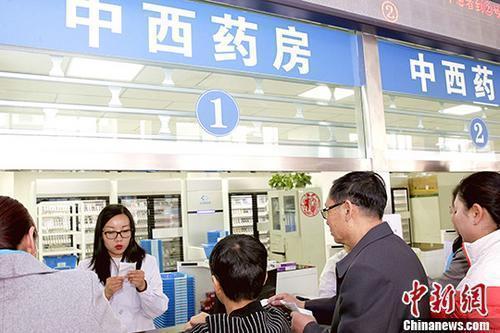
Medical insurance bureau: the proportion of reimbursement for serious illness in basic medical insurance for urban and rural residents has increased to 60%

  Beijing, May 10 (Reporter Zhang Ni) Recently, the National Medical Insurance Bureau and the Ministry of Finance formulated and issued the Notice on Doing a Good Job in Basic Medical Security for Urban and Rural Residents in 2019. According to the Notice, the per capita financial subsidy standard for medical insurance for urban and rural residents in 2019 was added to 30 yuan, reaching a level not lower than that of 520 yuan per person per year.

  In addition, the Notice also requires reducing and unifying the deductible line of major illness insurance, and realizing the parallel operation of the basic medical insurance for urban residents and the new rural cooperative medical system by the end of 2019.

  The per capita financial subsidy for medical insurance for urban and rural residents reaches 520 yuan.

  The "Notice" proposes that in 2019, the per capita financial subsidy standard for medical insurance for urban and rural residents will be increased by 30 yuan, reaching no less than 520 yuan per person per year, and half of the new financial subsidies will be used to improve the ability to guarantee major illness insurance (15 yuan will be added to the per capita financing standard in 2018); 30 yuan will be added simultaneously for individual contributions, reaching 250 yuan per person per year.

  According to the introduction of the National Medical Insurance Bureau, the medical insurance for urban and rural residents is based on the combination of individual contributions and government subsidies, and the fixed financing method is implemented. In recent years, governments at all levels have continuously raised the per capita financial subsidy standard for residents’ medical insurance, from 40 yuan in 2007 to 490 yuan in 2018, which has played an important role in reducing the payment burden of insured people.

  However, with the natural increase of consumer price index and the wide application of new medicine and technology, medical expenses have increased rapidly year by year, and the financing standard of medical insurance for urban and rural residents needs to be adjusted reasonably to support the long-term and stable play of institutional functions.

  In order to ensure the people to share the fruits of reform and development and steadily improve the level of medical insurance benefits for urban and rural residents, the Notice implements the policy requirements of benefiting the people in the 2019 Government Work Report, and clarifies that the per capita financing standard for medical insurance for urban and rural residents will be improved in 60 yuan in 2019 as a whole, in which 30 yuan will be added to the financial subsidy standard, reaching no less than 520 yuan per person per year, and half of the new financial subsidies will be used to improve the ability to support major illness insurance, that is, 15 yuan will be added to the per capita financing standard in 2018; 30 yuan will be added simultaneously for individual contributions, reaching 250 yuan per person per year.

  The proportion of reimbursement for serious illness in basic medical insurance for urban and rural residents has increased to 60%

  According to the "Notice", all localities should make good use of the new funds raised by urban and rural residents in the annual medical insurance to ensure that the basic medical insurance benefits are in place. Consolidate and improve the reimbursement ratio of hospitalization expenses within the scope of the policy, establish and improve the overall planning and payment mechanism of medical insurance outpatient expenses for urban and rural residents, and focus on ensuring frequently-occurring diseases and chronic diseases with heavy burdens on the masses.

  The "Notice" proposes to include outpatient drugs such as hypertension and diabetes in medical insurance reimbursement, and the specific plan shall be formulated separately. The implementation of individual (family) accounts should be cancelled before the end of 2020, and a smooth transition should be made to the outpatient department; If the personal (family) account has been cancelled, it shall not be restored or set in disguise.

  In addition, the Notice also emphasizes the need to improve the protection function of major illness insurance. Reduce and unify the deductible line of serious illness insurance, which is determined in principle by 50% of the per capita disposable income of residents in the previous year. If it is lower than this ratio, no adjustment may be made; The reimbursement rate within the policy scope is increased from 50% to 60%; We will increase the tilt of the payment of serious illness insurance to the poor, reduce the deductible for the poor by 50%, increase the payment ratio by 5 percentage points, and completely cancel the capping line of serious illness insurance for the poor, further reducing the medical burden of seriously ill patients and people in need.

  Realize the parallel operation of urban and rural medical insurance by the end of 2019.

  The Notice issued this time also clarifies that in areas where the basic medical insurance for urban residents and the new rural cooperative medical system have not been fully integrated and unified, it is necessary to realize the transition from the parallel operation of the two systems to a unified medical insurance system for urban and rural residents before the end of 2019.

  In the process of system unification, it is necessary to consolidate the coverage of medical insurance for urban and rural residents, ensure that the participation rate is not lower than the existing level, and the participation rate is continuous and stable, so as to ensure all coverage; Improve the registration and payment methods for newborns, children, students and migrant workers, and avoid repeated insurance; There are other medical security system arrangements, which are not included in the coverage of medical insurance for urban and rural residents; Properly handle special issues and policies, do a good job of policy convergence before and after system unification, stabilize the expectation of treatment, and prevent the tendency of pan-welfare.

  The Notice requires that all localities should focus on the uncoordinated and inadequate development of medical insurance for urban and rural residents, combine the integration of medical insurance-related functions, and unify the handling of services and information systems on the basis of ensuring the "six unifications" of coverage, financing policies, security benefits, medical insurance catalogue, fixed-point management and fund management, further improve the quality and efficiency of operation, ensure the comprehensive establishment of a unified medical insurance system for urban and rural residents, and achieve a more perfect system, fairer security and more sustainable funds.