The average speed is less than 10 kilometers per hour! How "blocked" is work in Wuhan?
According to the Report on Urban Traffic in China in the First Quarter of 2023 released by Baidu Map in conjunction with Traffic Big Data Research Center of Tsinghua University Data Science Research Institute and Beijing Traffic Development Research Institute, in the first quarter of 2023, the traffic vitality of major cities in China recovered, and the traffic congestion index of nearly 80% of the 100 cities during the peak commute increased compared with the same period in 2022, with the TOP3 three cities increasing in turn: Wuhan, Shanghai and Changchun.
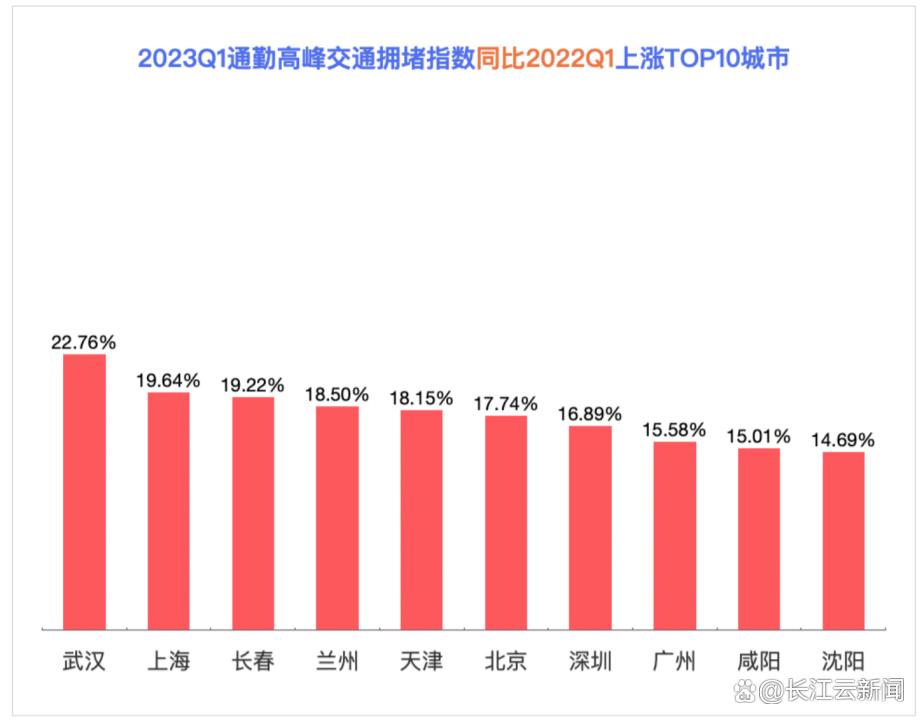
Congestion index: refers to the ratio of the time spent in the congestion period to the time spent in the unblocked period when passing a certain distance. The higher the index, the more congested the road section is. According to traffic data, at 18: 00 on March 22 this year, the average speed of the West Road of Wuhan Garden Expo Park was only 5.55 km/h, which was equivalent to the walking speed. The congested sections such as Hangkong Road Interchange and Zhuodaoquan North Road followed closely, and the average speed was less than 10 km/h. On that day, Wuhan’s commuter congestion index ranked fourth in the country.
The South Third Ring Road has become a "difficult" third ring road.
The Third Ring Road-the first real expressway in Wuhan, with a total length of 91 kilometers, is the main channel for Wuhan people to commute across regions. Since the beginning of this year, many citizens have found that there are more cars on the Third Ring Road, especially on the South Third Ring Road and Xiongchu Avenue, and it takes longer to drive on the road.
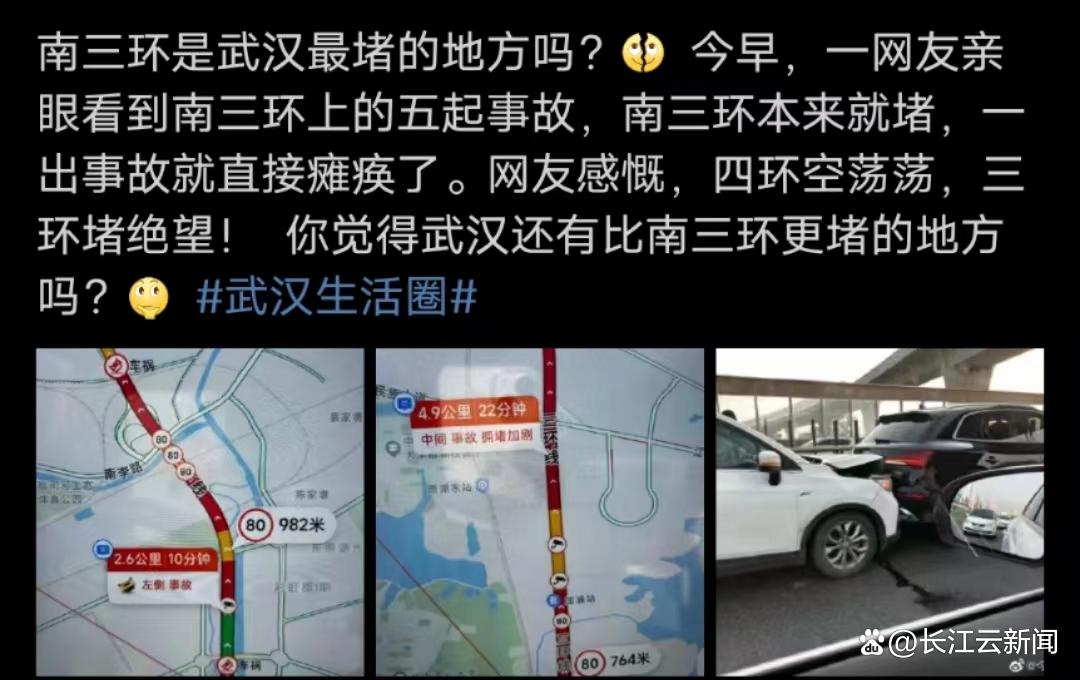
The reporter found out that the biggest commuting pressure in the morning and evening is between Qingling Interchange and Guanggu Interchange, including Wenhua Avenue Interchange, Miaoshan Interchange and Guanshan Avenue Interchange, which are also called "difficult" by old drivers. Compared with the same period of last year, the congested road sections and transit time here have increased. According to the traffic control department, the traffic flow of the South Third Ring Road has exceeded its normal capacity, with the morning peak flow of nearly 21,000 vehicles on weekdays and the running speed of only 7.7 kilometers per hour; The evening peak flow is 22,000 vehicles, and the running speed is 11.3 kilometers per hour. The morning and evening peaks are in a state of serious congestion, and the average congestion time is more than 4 kilometers.
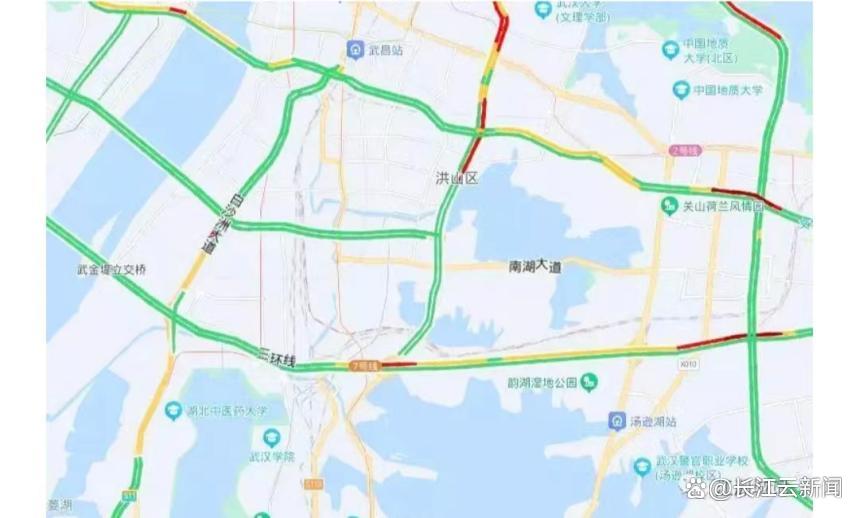
According to the traffic police department, at present, the phenomenon of "separation of occupation and residence" in Hanyang, Sixin, Hongshan and Baishazhou areas in Wuhan is more obvious, while the connection between high-tech zones and other urban areas is too "dependent" on the main roads such as the Third Ring Road and Xiongchu Elevated Road, and the Third Ring Road also undertakes the dual traffic functions within the region and transit, resulting in prominent structural congestion and obvious tidal traffic, which is mapped to the surrounding roads.
In order to alleviate the congestion, the traffic control department of Wuhan has set up directional lanes on the two-kilometer section from Miaoshan Interchange to Laowuhuang Interchange on the main line of the Third Ring Road to reduce the interweaving of vehicles on the main line; In addition, the traffic organization was optimized and improved at the intersection of the high-rise ramp and the main line in Yangjiawan, which improved the traffic speed of vehicles on the bridge.
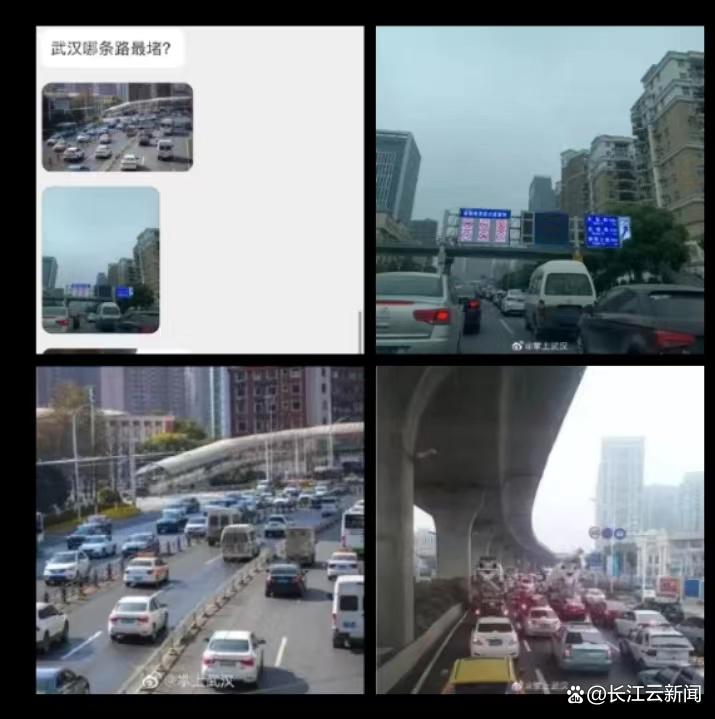
According to reports, since 2022, the traffic control department of Wuhan public security has counted 10 long-term blocking points, 10 regular blocking points and 15 short-term blocking points to improve traffic order and improve traffic efficiency in the form of "small incision+micro-transformation". At present, the blocking points such as Zhuyeshan roundabout, Youli interchange and Yuehu Bridge Qiaokou section have all been alleviated. With the continuous implementation of minimally invasive traffic congestion control, other blocked road sections in Wuhan are expected to be gradually cleared.
Traffic police appeal: civilized driving does not "add congestion"
According to statistics, by the end of February, the number of motor vehicles in Wuhan had exceeded 4.3 million. Among the eight cities with more than 4 million motor vehicles in China, Wuhan is the only city that has not adopted restrictions on purchase and normalization.
In order to cope with the huge traffic pressure on the road network with an average daily traffic volume of more than 2.4 million vehicles, Wuhan has deployed more than 3,000 police officers on duty every day in the elevated ring roads, bridges and tunnels, roads around scenic spots, and highways, and made every effort to intervene and deal with road congestion in advance.
"unblocking and ensuring smoothness" depends not only on the traffic police, but also on the participation of the whole people. Wuhan traffic police tip: uncivilized traffic jams, driving to watch mobile phones and other driving behaviors are likely to cause vehicles to rub and lead to traffic disorder. Traffic accidents not only cause personal and property losses, but also affect road traffic capacity. Call on citizens to drive vehicles in a civilized and standardized manner!
Changjiang Cloud News reporter Qian Kai