What is the core of "China Program" to innovate technologies and strategies to curb tuberculosis?
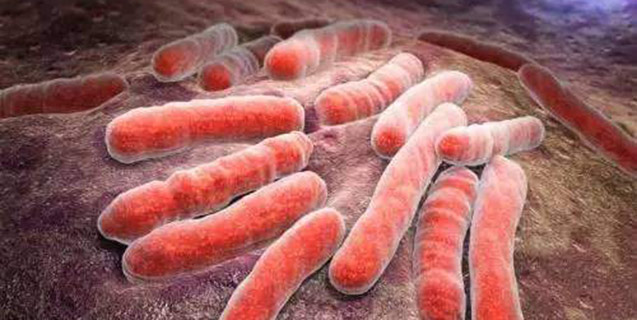
CCTV News:Recently, the word "plague" has touched the sensitive nerves of the public. Infectious diseases spread through respiratory tract make people unprepared, and tuberculosis is one of them. "The harm of tuberculosis to human beings, even the most terrible infectious diseases, such as plague and cholera, should be listed next." Robert koch (1843-1910), winner of the Nobel Prize in Medicine and Physiology and discoverer of tuberculosis, once counted that in Europe at that time, one out of every seven people would die of tuberculosis. Today, tuberculosis, an ancient disease, is still one of the top ten fatal diseases in the world, and it has been the first cause of death of a single infectious disease since 2007. The United Nations Agenda for Sustainable Development in 2030, which was launched in 2016, proposes to end the epidemic of tuberculosis by 2030.
In recent years, China has made great progress in the prevention and control of tuberculosis, and the burden of tuberculosis has dropped significantly, achieving the United Nations Millennium Development Goals five years ahead of schedule. However, as a key area of tuberculosis, China has about 900,000 new cases every year. According to the estimation in 2018, the number of new cases of tuberculosis in China is 866,000, which is more than 20,000 fewer than that in 2017, ranking 28th among 30 countries with high burden of tuberculosis. In June 2019, the National Health and Wellness Commission and other eight departments jointly issued the Action Plan to Stop Tuberculosis (2019-2022), proposing that by 2022, the incidence of tuberculosis in China will drop from 59.3/100,000 in 2018 to 55/100,000, and the mortality rate will remain below 3/100,000. China will further improve TB prevention and control measures and accelerate the implementation of its international commitment to stop TB.
Preventive treatment is the key to the global latent tuberculosis infection population of about 1.7 billion.
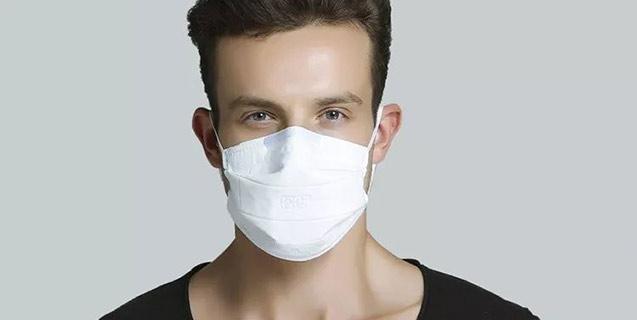
Tuberculosis has not been eradicated for so long because of its unique transmission and pathogenic mechanism. Autumn and winter are the periods of high incidence of tuberculosis. A "sneeze" on a bus or subway car may make you a latent tuberculosis infection. What are the reasons?
When an active tuberculosis patient spits, coughs or sneezes, droplets can directly enter the alveoli of normal people. Pathogenic mycobacterium tuberculosis can invade alveoli and reproduce in the nucleus of macrophages it contacts. Blood circulation can bring infection to other remote parts of the body, such as peripheral lymph nodes, kidneys, brain and bones. It is worth noting that the latent infection of mycobacterium tuberculosis is asymptomatic, but there is a 10% chance of developing into an active patient in his life. According to the "Global Tuberculosis Report 2019" released by the World Health Organization, there are about 1.7 billion people with latent tuberculosis infection in the world, accounting for about a quarter of the whole population.
There is a saying widely circulated in the medical field: I got AIDS, but I died of tuberculosis. It is understood that AIDS patients, especially those without drug protection, have a 20 times higher incidence of tuberculosis than ordinary people. According to related literature, tuberculosis patients can infect 10-15 people through close contact in one year. If not treated properly, up to two-thirds of tuberculosis patients will lose their lives.
At present, the known high-risk factors that promote latent tuberculosis to develop into active tuberculosis include: close contacts of active tuberculosis patients, organ transplantation, HIV infection, diabetes, pneumoconiosis, low immunity, use of immunosuppressive drugs and so on. People with high risk factors should be targeted for screening, and preventive treatment should be given in time if latent infection is found.
Vaccines may completely eliminate an infectious disease. Not long ago, at the 50th Global Lung Health Conference held in Hyderabad, India, GlaxoSmithKline and International AIDS Vaccine Action announced the IIb clinical research results of a new tuberculosis vaccine candidate. The data showed that the vaccine significantly reduced the incidence of tuberculosis in HIV-negative adults with latent tuberculosis infection, and the total efficacy of the vaccine was 50% within 3 years after vaccination. Faced with this data, people in the industry have different opinions. Domestic experts attending the meeting said that in the face of the incidence of tuberculosis in China, which is about 60 per 100,000, it is more significant to block the onset of infected people’s vaccines than to prevent infection. However, at present, the research and development of this new candidate vaccine has a long way to go from clinical phase II to real use in healthy people.
Compared with the complicated research and development of tuberculosis vaccine, it seems that new diagnostic tools, new drugs and new strategies can boost people’s spirits.
Ten-year change from 13 pills a day to 3 pills for comprehensive prevention and control of tuberculosis
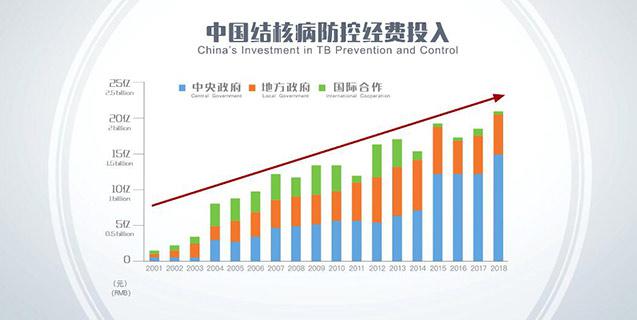
China has continuously increased its investment in tuberculosis prevention and control.
"In 2008, Melinda and I visited several tuberculosis patients in a village in Hainan, and one of the female patients showed me the 13 pills she needed to take that day. The process of taking medicine is very complicated. From then on, I began to pay attention to tuberculosis in China. " Not long ago, Bill Gates told a story about the "medicine box" at the 10th anniversary seminar of the National Health Commission-Gates Foundation tuberculosis prevention and treatment project.
For tuberculosis patients, as long as they can take enough medicine for a long time, they can recover. But the problem is that after one or two months of treatment, patients’ symptoms are relieved, and they feel that they are already well, and some will stop taking drugs on their own. In this way, the patient’s condition may be repeated, and it may develop into drug-resistant tuberculosis. From this point of view, the situation of tuberculosis prevention and control is still very grim, and countries with high burden of tuberculosis are exploring and innovating in technology and prevention and control strategies.
Before 1991, China’s disease prevention and control institutions at all levels were the main responsible institutions for tuberculosis prevention and control. In 1991, the former Ministry of Health issued the Measures for the Prevention and Control of Tuberculosis, which also included the designated medical prevention and health care institutions in the management of tuberculosis prevention and control business. Since 2009, the National Health and Wellness Commission has cooperated with the Gates Foundation to carry out the tuberculosis prevention and control project, aiming at constructing and implementing a new prevention and control model for tuberculosis and multi-drug resistant tuberculosis, and improving the quality of tuberculosis prevention and control in China, especially multi-drug resistant tuberculosis. Under the leadership of the National Health and Wellness Commission, through the joint efforts of both parties, the project has been explored and implemented in three stages in the past decade, and an operable, sustainable and reproducible comprehensive prevention and treatment model for tuberculosis has been established.
From 2016 to 2019, the China-Gai TB Prevention and Control Project has comprehensively promoted the comprehensive prevention and control model in Zhejiang, Jilin and Ningxia provinces, covering a population of 90 million, helping the three provinces to achieve the main indicators of the 13 th Five-Year Plan for TB Prevention and Control ahead of schedule, and the disease prevention and control effects and social effects have been manifested.
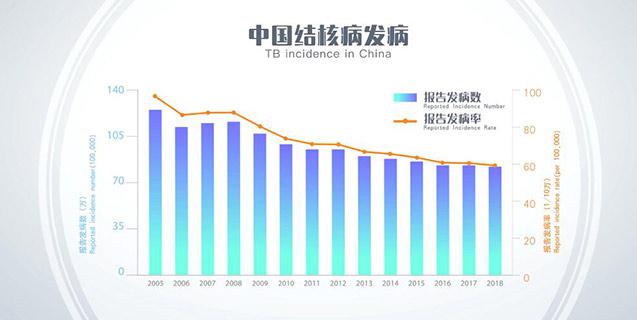
The incidence of tuberculosis in China is decreasing year by year.
Ten years ago, it took two months to diagnose drug-resistant tuberculosis, but now it takes only two hours to use new technology; Ten years ago, tuberculosis patients needed to take 13 pills a day, but now they only need to take 3 pills; Under the traditional second-line drug treatment, the average cure rate of drug-resistant tuberculosis is about 50%, but now, due to the new drugs introduced by the project, the preliminary results show that the cure rate of patients can be improved to 85%; Thanks to the government’s measures such as increasing special investment in tuberculosis and multi-sector financing, the individual’s contribution to the medical expenses of drug-resistant patients now does not exceed 10%. Continue to increase the central financial input, new diagnostic tools and new technologies emerge one after another, and constantly improve tuberculosis prevention and control strategies and intervention measures.
The future of drug-resistant tuberculosis patients
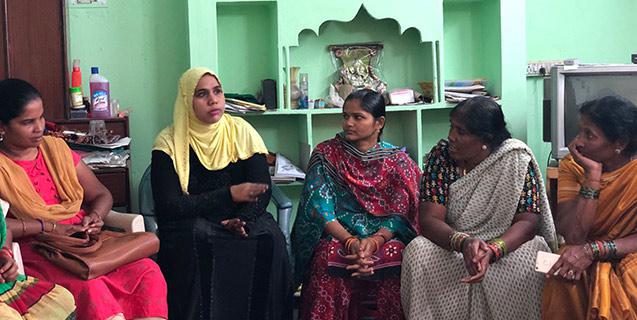
Indian community women’s organizations are committed to promoting tuberculosis prevention and treatment.
The troubles of reality often have nothing to do with technology itself.
October 27, 2019 is the traditional festival of Diwali (Indian New Year) in India. For local people, this is the most grand day of the year. For the Samiri family, this new year is worth celebrating. Because her brother Johnny, who suffered from MDR-TB, was discharged before the New Year! This also means that Johnny has stood at a new starting point in the treatment of tuberculosis. Although the obstacles are long, he said that he will stick to it.
18 years ago, Samiri and Johnny’s father died of tuberculosis, when Samiri was only 6 years old. Two years ago, tuberculosis invaded her body, followed by her brother … … In India, the incidence and death of tuberculosis and the number of patients with rifampicin (first-line anti-tuberculosis drug) resistant tuberculosis all rank first among the 30 countries with high burden of tuberculosis in the world, while China ranks second in the global proportion of new cases. At the same time, the number of patients with rifampicin-resistant tuberculosis in China ranks second in the world after India.
According to a report released by the World Health Organization in 2019, there were about 39,400 deaths due to tuberculosis in China in 2018. Then, how to further accelerate the containment of tuberculosis has become a common problem for countries with high burden of tuberculosis, such as India and China.
"Under the traditional second-line drug treatment, the cure rate of drug-resistant tuberculosis is about 50% on average. Because of the addition of new drugs in the scheme and the first new drug for tuberculosis in 50 years, the cure rate of patients has been greatly improved," said Gao Mengqiu, director of the Second Department of Tuberculosis, Beijing Chest Hospital affiliated to Capital Medical University.
It should not be ignored that according to the WHO report in 2019, in 2018, the proportion of new patients in China who were resistant to multidrug and rifampicin was 7.1%; The rate of multidrug resistance and rifampicin resistance in retreatment patients was 21%.
New drugs and drug resistance are twins. It is inevitable that drug resistance will occur with new drugs. "It is said that the drug resistance of betaquinoline has reached 8% in some countries." Li Liang, vice president of Beijing Chest Hospital affiliated to Capital Medical University, said that if drug use is not standardized, new drug resistance will soon form. He called for a protection mechanism for some new drugs to reduce or delay the emergence of drug resistance. He also revealed to reporters that for drug-resistant tuberculosis, the diagnosis and treatment norms will be introduced in the near future.
At the first special session of the 50th World Congress on Lung Health in China, the progress of innovative technologies of tuberculosis immunization prevention, detection, artificial intelligence screening and diagnosis in China became the core topic, and five innovative enterprises in China shared the new technologies and progress of tuberculosis research independently developed. "China needs to adapt to local conditions and have its own unique things to end tuberculosis." Li Liang said that the key is to do a good job in capacity building, on the one hand, strengthen the quality monitoring of clinical trials, on the other hand, strengthen the information construction. China has a huge patient population and a good "national team" — — "Trinity" TB prevention and control system, which is incomparable in any country in the world.
Some experts said that if the 1940s and 1960s were a golden decade for the invention of tuberculosis drugs, then from now on, we will enter a new golden age. It remains to be seen how long this golden age can last.