Editor’s Note: In the spring of 2023, in the atmosphere of a good start, Zhejiang started a year full of hope, opportunity, pride, strength and surprise. Opportunities and challenges coexist, vitality and pressure coexist, Qian Qian’s tens of thousands of strugglers are ready to go, and the job market will blow the first spring breeze in 2023. Recently, Zhejiang Online specially launched a series of reports on "Fighting for the New Year", telling the story of job hunting in the New Year and reporting the new atmosphere of the job market in the new year.
Zhejiang Online February 2 (Reporter Chen Lei Weng Yujun) People are diligent and spring comes early. Just after the Spring Festival holiday in the Year of the Rabbit, there has been an upsurge of "fighting for the economy" all over the country. Talent is the first resource to fight for the economy. From online and offline job fairs, returning to work by chartered planes to going out for cross-provincial recruitment, in order to seize the opportunity of post-holiday recruitment of enterprises, all parts of Zhejiang have been active at the beginning of the new year, starting a "grabbing war". What’s the new trend in the recruitment market this year? Zhejiang online visit learned that compared with previous years, the recruitment treatment of enterprises has improved this year, and the recruitment methods are more diversified. Looking outward, cross-provincial recruitment has also started ahead of schedule, and a "spring breeze" of recruitment in the job market is blowing strongly.
Service industry job recruitment sings "leading role"
The recruitment treatment of enterprises has improved compared with previous years.
"If you are interested, I will give you contact information and then go to the enterprise." On February 1st, job seekers came to Hangzhou Human Resources Market, which is located in Hanghai Road, Shangcheng District, Hangzhou, to consult suitable jobs.
Cosmetic packaging operators are 6500 yuan/month, and Chinese medicine factories are decocting drugs for a total of 5500 yuan/month … … In the market hall, Wu Guilan, a staff member, searched quickly in his mind and recommended suitable positions to consultants. Having worked for more than 30 years, Wu Guilan not only has a good memory, but also is familiar with the large and small enterprises and posts in this city.
Wu Guilan said that recently, she has promoted more than a dozen offline job searches every day. "It is not the peak yet. Generally, migrant workers outside the province will basically return after the fifteenth day of the first month." Wu Guilan revealed that the main people who came to consult recently were migrant workers who stayed in Hangzhou for the New Year and returned from neighboring provinces such as Jiangxi and Anhui, while those from Henan, Yunnan, Guizhou and Sichuan were still on their way. In terms of jobs, the service industry is relatively short of manpower recently, and catering, hotels and other enterprises recruit more people.
Compared with previous years, in recent years, Wu Guilan’s business has gradually shifted to online. "Especially the younger ones prefer online consultation, and the older ones come to the lobby more."
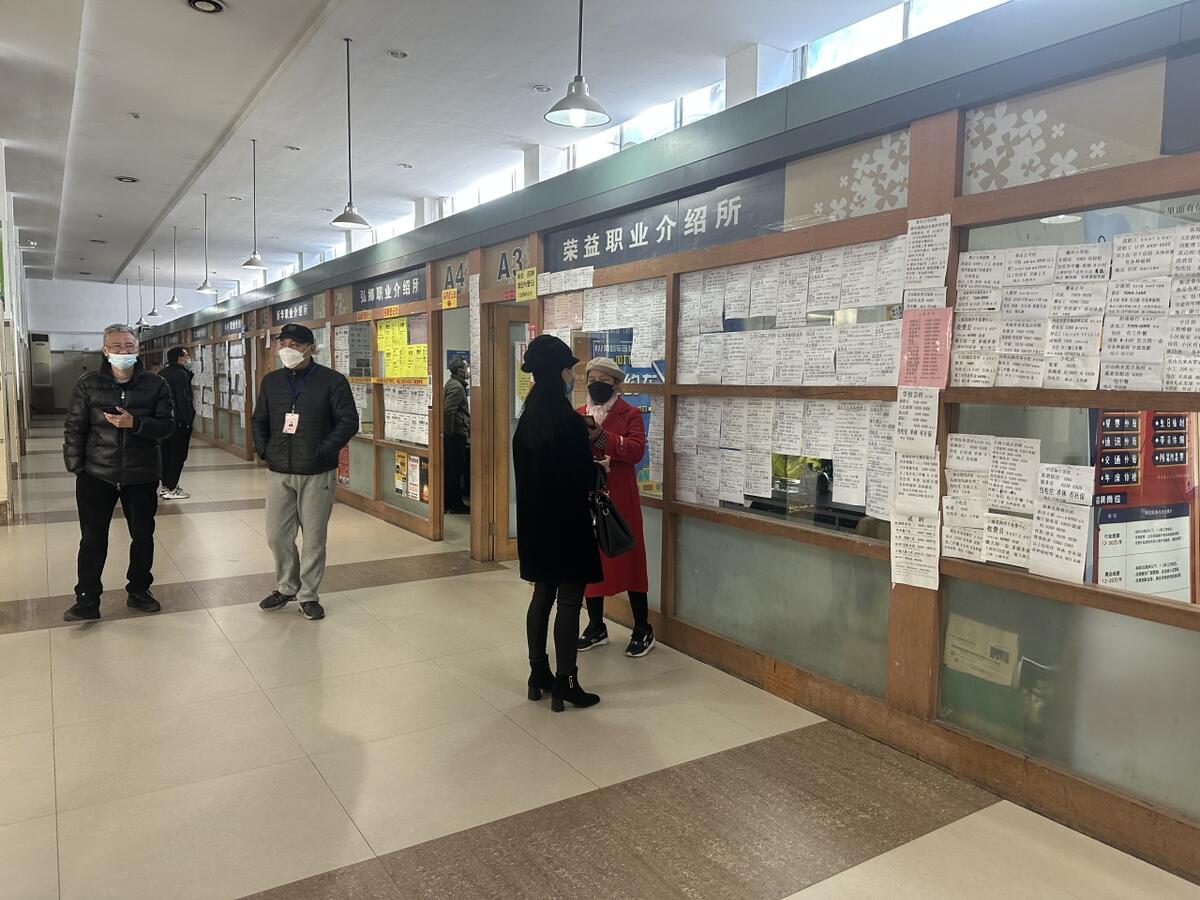
Service center lobby Zhejiang online reporter Weng Yujun photo
At present, although the recruitment in the Spring Festival has not yet reached its peak, many recruiters at the scene mentioned that they felt the rising job market atmosphere. "From the situation I have noticed, the wages and benefits of enterprise recruitment have been relatively improved compared with previous years, and the monthly salary increase is around 100 yuan -500 yuan." Liu Chen, a staff member, observed that many enterprises are optimistic about the market recovery recently, and hope to recruit workers as soon as possible through appropriate salary increase. In addition, Liu Chen mentioned that after the liberalization of epidemic prevention measures, the procedures for applying for jobs were simplified and the recruitment efficiency was greatly improved because there was no need to check health codes and provide nucleic acid reports. Zhejiang online reporter learned from the human resources market in Hangzhou that at present, the positions of chefs, restaurant waiters and hotel room service in this market are in short supply.
Inter-provincial recruitment is in full swing
Zhejiang will go to other provinces to carry out 320 recruitment activities.
It is not only the local offline job fairs that are busy, but also the eyes outside the province. Another "grabbing war" is in full swing. On the first day of the new year, Hangzhou launched the first shot of "grabbing people" in inter-provincial recruitment, and organized more than 20 Hangzhou enterprises to go to Xiangxi, Hunan Province to carry out recruitment activities, attracting 1,100 people to apply for jobs, and initially reaching 416 intentions. Zhejiang Online reporter learned from Hangzhou Employment Management Service Center that in the first week of the Year of the Rabbit, the center has organized four teams to go to Hunan, Sichuan, Henan and other places for recruitment, with an average of 1-3 recruitment in each place, and the rest teams are still being dispatched.
"The competition is fierce. When we went to Sichuan this time, we met the recruitment team from other places, and everyone was robbing people." A leading staff member who has just returned from cross-provincial recruitment in Guangyuan, Sichuan, is deeply touched by this "grabbing war". In her view, this fully demonstrates everyone’s confidence in the current economic situation, and all localities are making every effort to ensure the employment needs of enterprises in the new year.
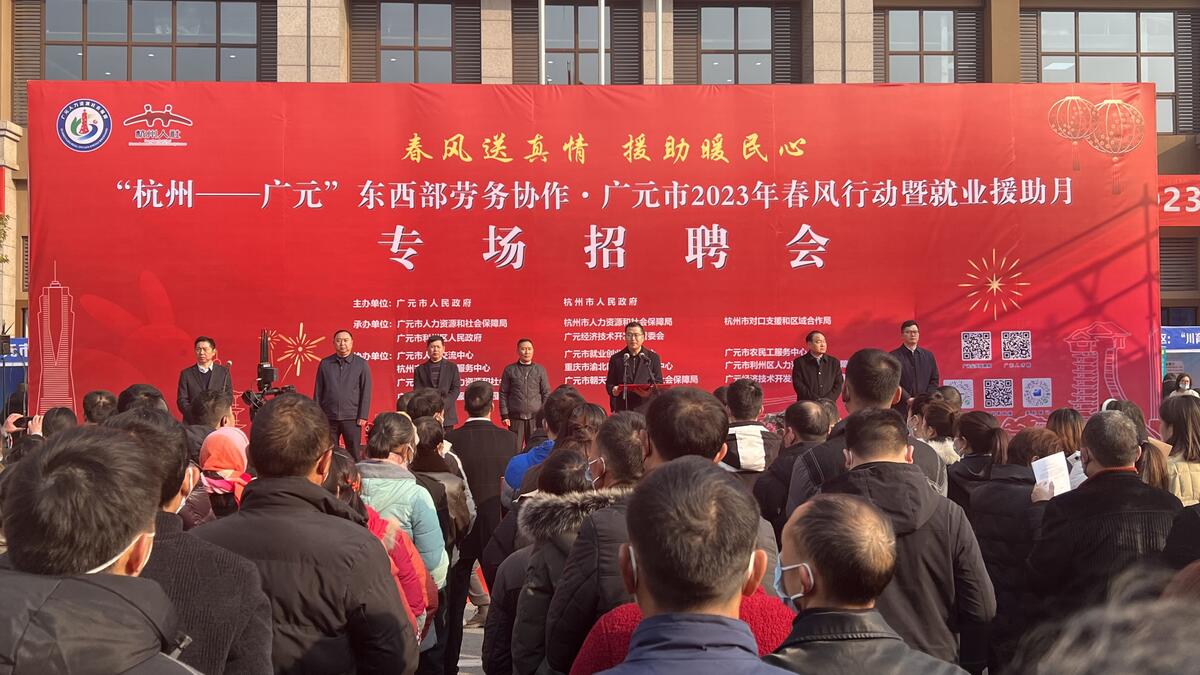
Photo courtesy of the interviewee at the special job fair held by Hangzhou in Guangyuan, Sichuan.
"This year’s inter-provincial recruitment is earlier than in previous years. During the Spring Festival, we are making preparations, and all localities have begun to fight for the economy. Everyone knows that people are the first factor." The relevant person in charge of Hangzhou Employment Management Service Center told Zhejiang Online reporter that Hangzhou organizes enterprises to go outside the province for recruitment every spring. This year, in order to seize the opportunity, Hangzhou communicated with recruitment enterprises and labor export places in advance, and after consultation, it rushed to the enterprise without stopping. "We have cooperated with Sichuan, Gansu, Henan and other labor exporting provinces before. In the first two years, there were many online contacts because of the epidemic. This time we went to face-to-face communication, and each team brought 10-20 companies." According to the person in charge, the enterprises that went out to recruit this spring are mainly manufacturing industries, and there are also many service industries. Among them, there is a big gap in operational positions, but the technical requirements are not too high. After employees are recruited, they can get on the job quickly through training. For example, on February 1st, the center organized 24 employment enterprises to attend the local labor cooperation job fair in Luoyang, Henan Province. The enterprises that went to recruit mainly concentrated in manufacturing, environmental protection technology, electronics, modern real estate, hotel management and other industries, and there was a great demand for employment, which will provide more than 3,000 jobs.
"From the current situation, the situation is more optimistic than in previous years. Some companies are willing to go out, and many people are willing to come over. The atmosphere of working hard will come up." The person in charge said that a series of inter-provincial recruitment actions have brought great confidence to enterprises. In her view, confidence is very important. When enterprises go out and see so many people coming up with it, they will be more motivated to win orders.
In fact, Hangzhou is not the only place to seize the opportunity of employment. At the beginning of the new year, Zhejiang began to organize enterprises to recruit workers across provinces intensively. Zhejiang online reporter noticed that on January 28th (the seventh day of the first month), the first day of the Spring Festival, the Zhejiang Provincial Department of Human Resources and Social Security organized 67 enterprises from Hangzhou, Ningbo, Wenzhou and Huzhou to go to Sichuan to participate in special job fairs, creating more than 11,000 jobs and attracting more than 2,300 people to reach initial employment intentions with employers. Next, Zhejiang will also organize enterprises to go to other provinces to carry out 320 online and offline recruitment activities, which will blow the spring breeze of employment further and wider.