Good book recommendation | Geography of Western Han Dynasty Houguo takes you to know the geographical distribution of more than 800 Houguo.
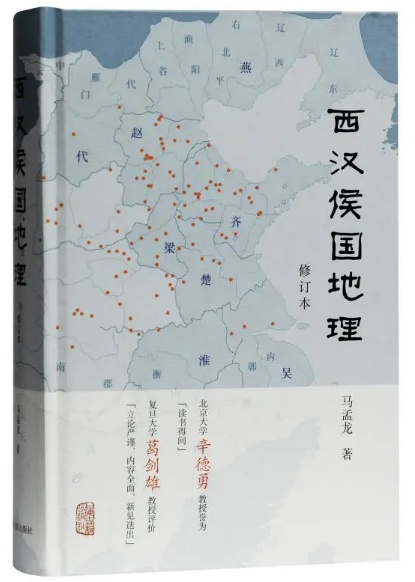
Geography of the Western Han Dynasty (Revised Edition)
By Ma Menglong
Shanghai Ancient Books Publishing House
brief Introduction of the content
During the Western Han Dynasty, more than 800 vassal states were sealed successively. It has been unclear whether there are characteristics in the geographical distribution of such a large number of Hou countries. Ma Menglong’s Geography of the Western Han Dynasty fully absorbed the previous research results, and combined with handed down documents and unearthed documents, made textual research on the geographical orientation of nearly 800 Hou countries in the Western Han Dynasty. At the same time, using the method of "horizontal cross-section", seven geographical distribution sections of Hou State in Western Han Dynasty with clear age limit are restored, and the distribution characteristics of Hou State presented by each section are analyzed. On this basis, it summarizes the general trend of the development and evolution of the regional distribution characteristics of the Western Han Dynasty. Finally, the book also studies a series of special topics about the geographical distribution and migration of the Hou state in the Western Han Dynasty, revealing some changes in the political system and policies of the Western Han Dynasty that were not noticed before. This book, born out of hundreds of excellent blogs in China, is the first monograph with the geographical distribution of the Western Han Dynasty as the research direction. It comprehensively shows the historical changes and geographical distribution of the 800 marquis countries in the Western Han Dynasty, with detailed textual research and new ideas. Xin Deyong praised it as "a good reader", which can provide reference for future research in this field.
Brief introduction of the author
Ma Menglong, Ph.D. in History, Fudan University, Associate Professor of History Department, majoring in historical geography. He has written such monographs as Geography of the Western Han Dynasty (Shanghai Ancient Books Publishing House, 2013), Establishment of the Unified Dynasty: Qin and Han Dynasties (Shanghai People’s Publishing House, 2015), History of Qin and Han Dynasties (Shanghai People’s Publishing House, 2018, "Details of China History Series"). He won the third prize of the 4th Tan Qixiang Yugong Fund Young People’s Historical Geography Essay Award, the 2014 National Excellent Doctoral Thesis Award, and the second prize of the 12th Shanghai Excellent Works of Philosophy and Social Sciences, and presided over the 2014 Social Science Youth Fund Project of the Ministry of Education, such as "Two-year Laws and Ranks of Han Tomb No.247 in Zhangjiashan and the Geography of Administrative Regions in the Early Han Dynasty".
Editor’s recommendation
○ The first monograph to comprehensively study the geographical distribution of Hou State in Western Han Dynasty.
○ Rediscovery of History of Han Geography
○ Initiated the Comprehensive Table of the Establishment and Evolution of the Western Han Dynasty, providing an all-round overview of the temporal and spatial information of the Western Han Dynasty.
○ A large number of new maps of the Western Han Dynasty were drawn.
○ Re-understanding and Revision of the Geographical Distribution Pattern of Hou State in Western Han Dynasty
○ A concentrated revelation of the migration phenomenon of the Western Han Dynasty.
○ Restoration of State-level Administrative Regions in Five Emperors and Six Counties in the Western Han Dynasty
○ Preface recommendation by Professor Xin Deyong of Peking University and Professor Ge Jianxiong of Fudan University.
○ The revised and supplemented length is one third of the book.
Postscript: To my years of studying in Fudan University.
The book presented to readers is my doctoral thesis. However, ten years back, I wouldn’t have thought that I could become a doctor, and naturally I wouldn’t have thought of having a doctoral thesis.
About the third year of undergraduate course, I accidentally turned to an Atlas of Chinese History in the school library. After browsing with great interest, I suddenly had the impulse to understand the origin of this atlas. By consulting my teacher, I learned that the compilation of this atlas relies on a special knowledge-historical geography. However, for a Chinese department teacher, she can’t clearly explain what historical geography is, and my impulse to learn is infinitely magnified, so another idea arises: to take an examination of graduate students in historical geography and find out what kind of knowledge it is.
For an undergraduate majoring in Chinese, it is not easy to explore a way of studying that has nothing to do with this major. After searching the graduate enrollment brochures of colleges and universities, I made a decision to apply for the graduate students of historical geography in the School of History of Nankai University. The reason for choosing Nankai University is simple. Nankai University is very famous. Nankai University is close to my home.
Shenyang University, where I studied as an undergraduate, is a municipal institution. Students here have two goals during their studies. Few people choose to continue their academic career by finding a job and falling in love. Even if some people apply for graduate students, most of them are provincial colleges such as Liaoning University. I, who applied for Nankai University, is almost ignorant to the average person. However, even I didn’t think that one year later, I actually became a master’s student at Nankai University.
When the joy of entering Nankai University dissipated, a serious problem faced me. Nankai University has no teachers engaged in historical geography research, and recruiting graduate students in historical geography is just an attempt. In the year when I graduated with my master’s degree, this research direction was cancelled, so the research direction of my diploma was changed to "Ancient History of China". During my study in Nankai University, I will be repeatedly asked a question by my classmates: "Since you want to study historical geography, why don’t you apply for Fudan University?" I’m always speechless. For a person with a history background, this may be common sense, but for a person with a Chinese background and from a traditional college without any academic research, this is a question that has never been thought of.
At Nankai University, I met another difficulty. At that time, the school was engaged in educational reform, and the master’s educational system was changed to two years. When I was just familiar with the school and research major, I had to prepare for graduation. The two-year academic system has great disadvantages. This reform stopped after three or four years of implementation, and our graduate students have undoubtedly become "victims" of the reform.
In the year when I graduated with a master’s degree, I was faced with such a dilemma: I knew little about historical geography and the professional foundation of ancient history in China was not solid. I gave up the idea of continuing to study for a doctorate at Nankai University, and prepared to go back to my hometown of Shenyang to find a job, thus ending my short "academic career". However, while I was busy writing my graduation thesis and contacting my work unit, another idea flashed in my mind: since I once loved historical geography, why not go to the Institute of Historical Geography of Fudan University under the name of applying for a doctorate? I still dare not act rashly. Through my classmates, I asked the e-mail address of Mr. Ge Jianxiong, director of the Institute of Historical Geography, and sent an e-mail to express my wish to apply for a doctorate in historical geography. Surprisingly, I received a reply from Mr. Ge the next day. He encouraged me warmly and recommended some professional books. Mr. Ge is an authority in the field of historical geography, and his encouragement has greatly increased my confidence. I conveyed the good news of Mr. Ge’s encouragement to my classmates, and I was eager to try. However, a classmate’s words were like a pot of cold water, which completely extinguished my newly ignited enthusiasm. He said, "When you meet Mr. Ge, will he still remember you?" Yes, people like me who write to Mr. Ge don’t know how many every day. They are so naive.
In April 2007, I appeared on the campus of Fudan University. My mind is like a "tourist". I took photos in front of the plaque of Fudan campus and Institute of Historical Geography as a souvenir, and I didn’t feel nervous about preparing for the exam. Two days later, during the doctoral interview, I got a glimpse of Mr. Ge. At this point, all my tasks have been completed, which is a confession to my former wish.
A few weeks later, I learned the result of the failed exam. This is not unexpected. I have not been affected in any way, and I still concentrate on the preparation of my master’s thesis defense. However, a few nights later, when I opened my email as usual, I accidentally found a letter from Mr. Ge. In the email, Mr. Ge affirmed that I have the potential for academic research and hoped that I would not give up. Finally, he offered to welcome me to Shanghai if I wanted. He could provide me with living expenses and accommodation, and I could help him with the project while preparing for the entrance examination for doctoral students next year. Until today, when I wrote this passage, I still can’t calm down, as if I had returned to that night six years ago. When I saw this email, I couldn’t believe it was true. I read the mail over and over again for more than a dozen times. Up to now, I still don’t understand how Mr. Ge judged that I have a promising future through an interview of more than ten minutes. During the two years in Nankai, no one thought I had the ability of academic research except my master tutor, Mr. Yan Aimin. Therefore, I immediately accepted Mr. Ge’s invitation. However, my foundation is really poor. Mr. Ge knows that it is difficult for me to meet the examination criteria for doctoral entrance in a short time. Finally, he negotiated with the school to make me a doctoral student in the form of exceptional measures.
Although I am lucky to be a doctoral student, my foundation is too poor. In the first academic year, I often didn’t understand what the teachers were teaching, and I didn’t know what kind of research I should do in the future. The topic of my doctoral thesis was uncertain. For this reason, I am very distressed, for fear of failing to live up to Mr. Ge’s expectations. I was told that the topics of doctoral thesis mostly continued the master’s research, so I also reported a topic similar to the master’s thesis. However, Mr. Ge thinks this topic is difficult to develop. He advised me not to rush to determine the topic, but to make good use of the resources of the school to make up for my own shortcomings. Mr. Ge deserves to be a teacher with 50 years’ teaching experience. It is under his patient guidance that I gradually calmed my impatience.
I thought I had to rack my brains to determine the topic of my doctoral thesis, but in the end it appeared in front of me in a very accidental form. In 2008, the monthly Cultural Relics published several bamboo slips unearthed from the Songbai Han Tomb in Jingzhou City, Hubei Province. At that time, Mr. Liu Rui, an associate researcher at the Institute of Archaeology of the Chinese Academy of Social Sciences, was pursuing a doctoral degree in the History Department of Fudan University. He quickly noticed the value of these bamboo slips and wrote a research article in a short time. We have become very good friends because of our common research interests. Mr. Liu Rui modestly sent me the article and asked me to make some criticisms, which made me flattered, because Mr. Liu is already a well-known young scholar in the academic field, and I am only a graduate student who has just started. I read the article carefully and checked the historical materials one by one. In the process of reading, I think Mr. Liu’s analysis of some Hou countries in wooden slips is biased. A few weeks later, Mr. Liu was invited to introduce his research results at the Institute of Historical Geography. At the report meeting, I systematically raised my doubts. Mr. Liu didn’t feel unhappy because of my reckless behavior, but he and several teachers and friends present enthusiastically encouraged me to write my views. Encouraged by everyone, I used a summer vacation to write the first paper I independently completed on my academic road, "A Preliminary Study on the Issue of Wooden Slips in No.35, Songbai Han Tomb, Jingzhou".
When the article was finished, my enthusiasm had not yet dissipated, and I did not know how deep the article was, so I submitted it to the academic journal "Research on the History of China", which is very influential in the academic circles. What is even more unexpected is that just three months later, I received a notice of using the manuscript. The first academic paper was accepted by authoritative journals, which greatly stimulated my research enthusiasm. A preliminary study on the issue of the marquis state of No.35 wooden slips in Jingzhou Songbai Han Tomb only discusses three marquis states, while in the Western Han Dynasty, more than 800 marquis states were divided successively. I think, if we can sort out all the more than 800 marquis countries, there will be more discoveries. I decided to choose "Study on the Geographical Distribution of the Western Han Dynasty" as the topic of my doctoral thesis.
When I told Mr. Ge the idea, he was still worried. Although there are many vassal states in the Western Han Dynasty, the information is scattered and unsystematic. In addition, Mr. Zhou Zhenhe has made a profound study on the vassal states in the Western Han Dynasty, so there is still great risk as a topic for doctoral thesis. However, in the face of my enthusiasm, Mr. Ge couldn’t bear to be hit. Instead, he suggested that I systematically collect information. Even if I can’t reach the length of my doctoral thesis in the future, I can form several articles, which may be used as academic training. With Mr. Ge’s acquiescence, I immediately devoted myself to data sorting. I stayed in the reference room almost every day for a whole year, sorting out all the geographical locations and abandoned ages of more than 800 Hou countries sealed in the Western Han Dynasty. In the process of sorting out, as expected, new problems have emerged, many of which have never even been noticed by predecessors. I kept reporting these findings to Mr. Ge, and finally one day, Mr. Ge said in an email that this topic could be used as a doctoral thesis.
In the next three years, the writing of doctoral thesis was carried out step by step in my plan. While writing my thesis, I also summarized the findings in the research process and sent them to major publications one after another. However, at this time, I am no longer lucky before. Articles that think they are insightful will either sink into the sea or get a cold rejection letter after being submitted, and some articles will be returned directly by the editor without even being sent for external review. At this time, I realized that as a graduate student who just started, it is very difficult for the research results to be recognized by the academic community. Under the impact of rejection letters, my mind changed from expectation to loss, but the writing of my doctoral thesis continued. In 2011, I completed my doctoral thesis defense on schedule. Although the defense committee agreed that the thesis was original and gave high grades, I had to face the reality that I only had one published thesis, and such achievements had no advantage in job hunting.
In the first half of 2011, I kept sending resumes to major universities, but there was no news. I once fantasized that I could go back to Nankai University to do historical geography research, and my master tutor, Mr. Yan Aimin, also rushed to various departments for this purpose, but the result was still that I was eliminated in the primary election. In the increasingly utilitarian social environment, no school is willing to give a graduate student who has only published an academic paper, which I can understand. So when I graduated from my doctorate, I was once again faced with the dilemma of interrupting academic research. At this time, it was Mr. Ge who helped me. He learned that Fudan History Department had a plan to train young scholars as a teacher reserve and recommended me to the leaders of the History Department. I also want to thank Mr. Zhang Qing, director of the history department, and Mr. Jin Guangyao, secretary of the Party Committee. They have taken great risks in providing financial support to me, a nobody.
From the second half of 2011 to the first half of 2013, I worked in the postdoctoral mobile station of Chinese Department as a reserve teacher of history department. These two years are the transition period of my academic research. By virtue of my status as a reserve teacher of the History Department, I have been able to meet a group of young scholars of the Fudan History Department, represented by Mr. Yu Xin, and have the honor to join their research groups. It was through the communication with them that my research field of vision jumped out of the limitation of the evolution of administrative districts and began to pay attention to the interactive relationship between the changes of administrative districts and political systems, knowledge and beliefs. In addition, my postdoctoral tutor in Chinese Department, Mr. Chen Shangjun, is a master of historical philology. Under his guidance, I realized the basic role of philology in historical research. In particular, Mr. Chen’s series of classic studies on the writing process of the History of the Old Five Dynasties triggered me to pay attention to the compilation process and data sources of the basic historical materials of the study of Qin and Han Dynasties, and gained some new understanding. Therefore, I began to devote more energy to the research direction of unearthed documents and using unearthed documents to revise handed down documents.
I know that two years’ post-doctoral work experience is the last chance to continue the academic research. I dare not slack off at all, and devote almost all my time to academic research and writing academic papers. Perhaps thanks to the expansion of research horizons and the improvement of research methods, my research results are gradually accepted by various academic journals, not only professional journals of historical geography, but also journals of history, cultural relics, archaeology and literature. With the increase of published results, I obviously feel that my situation in academic circles is gradually improving. Many friends provided information and help for my career, and even colleges and universities contacted me and offered me job opportunities. In April, 2013, the leaders of Fudan History Department thought that I had made some achievements in two years, and I had met all the assessment criteria for the reserve of teachers. They decided to recommend me to stay as a teacher, and the resolution was passed by the professors of all departments. I finally realized my wish and was able to continue on the road of academic exploration.
Looking back on the past ten years, the six-year experience of studying in Fudan University is the most critical stage in my life. In these six years, I have changed from a layman in academic research to a young scholar. It is Fudan University’s inclusive, free and open style of study that makes me grow rapidly. Fudan University trained me and finally accepted me. I have always been grateful to the school and my teachers and friends. My doctoral thesis is the harvest of my study in Fudan University, and it is also the witness of my growth on the academic road. Publishing my doctoral thesis is a way for me, a Fudan student, to pay tribute to my alma mater and Mr. Ge. The publication of this book has also received the help of many Fudan people. "The Book Department of Knowledge, Belief and System Studies in Medieval China" is a funding plan for the publication of books by the history department of Fudan University for young teachers in this department. As a teacher reserve, I could not enjoy this "welfare" originally. But Mr. Yu Xin, the head of the book department, generously included me in the funding plan. In order to ensure the smooth publication of this book, Mr. Yu Xin also took pains to communicate with the publishing house to solve various problems. Ms. Gu Lidan, the editor in charge of the book, graduated from the Research Center for Unearthed Documents and Ancient Characters of Fudan University. We are old friends. As the librarian of the Central Periodical Room, she did not shut me out as an "uninvited guest" who came from a foreign department and visited frequently, but gave me a warm reception. Up to now, the scene of me encouraging each other with her in the periodical room is still vivid. This book is a special monograph on evolutionary geography, and its content is difficult and difficult to understand, but Ms. Gu has checked a lot of mistakes from it.Her carefulness ensured the publication quality of this book.
At present, Ms. Zhao Wei’s film debut "To Youth" is in full swing. In her words, "To Youth" is a commemoration of their generation’s youth. Now my school years are coming to an end. During my six years in Fudan, I spent a wonderful time between the ages of 26 and 32, and realized my ideal of engaging in academic research. I would like to take my doctoral thesis as a souvenir of my school years in Fudan …
Data: Shanghai Ancient Books Publishing House.
Editor: Duan Pengcheng
Shangguan author: Shuxiang Shanghai